
Vandaag of morgen in huis

Kwaliteit gegarandeerd

Welkomstaanbiedingen ontgrendelen: GRATIS bezorging | Tot 80% korting | Gratis 30 dagen JoyPlus-proefperiode
Download de app
Working out at home sounds simple, until a weight bench wobbles, a treadmill makes too much noise or a power station turns out to offer hardly any adjustment. Anyone searching for home fitness equipment will also come across plenty of marketing claims about professional quality, quiet motors and extremely high weight capacities. The product details often tell a more nuanced story.
Pay particular attention to these three common pitfalls:
A good home gym therefore does not start with as many pieces of equipment as possible, but with equipment that suits your space, training level and routine.
Do not just measure the equipment itself; also measure the space around it. A power tower or pull-up bar requires extra height for pull-ups and enough distance from the walls. An adjustable weight bench must be able to tilt fully without hitting a cupboard or radiator.
For small flats, folding models or compact fitness equipment are practical choices. A walking pad that fits under a bed or desk takes up less permanent floor space. However, check that the walking area is long and wide enough for your stride.
For strength training at home, a sturdy frame, non-slip feet and reliable adjustment points are more important than a long list of accessories. Look at:
An adjustable dumbbell must be securely locked before every exercise. On a bench, the backrest and any hinges must be fully locked in place. Always follow the instructions and do not exceed the stated maximum load.
First decide which exercises you do regularly. For strength training at home, adjustable dumbbells and a bench can already offer plenty of options. A power tower or dip station is particularly suitable for bodyweight exercises such as dips, leg raises and pull-ups.
For cardio, you could consider a cross trainer for home use if you are looking for equipment with different resistance levels. A walking pad is better suited to walking or light jogging and can be useful in a home office. With motorised equipment, also check the noise level, treadmill maintenance requirements and available warranty information.
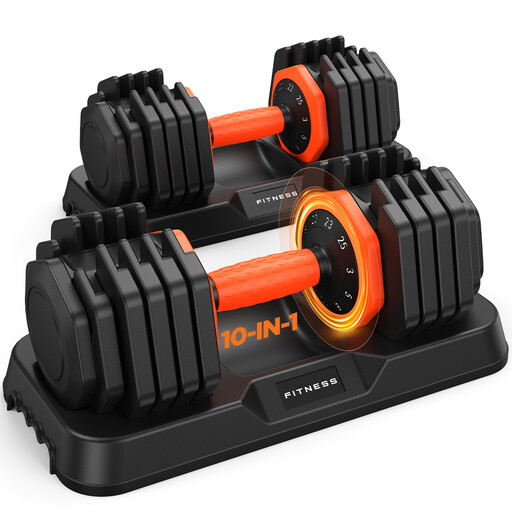
Why it suits this profile: This set offers several weight options without the need to store a complete dumbbell set. That makes it suitable for beginners with limited space.
The weight selection uses a smart-click mechanism. Before every repetition, check that you have heard the click and that the locking mechanism is engaged correctly.
Set of 2 x 11 kg, cast-iron construction, rubber non-slip grip and compact storage.
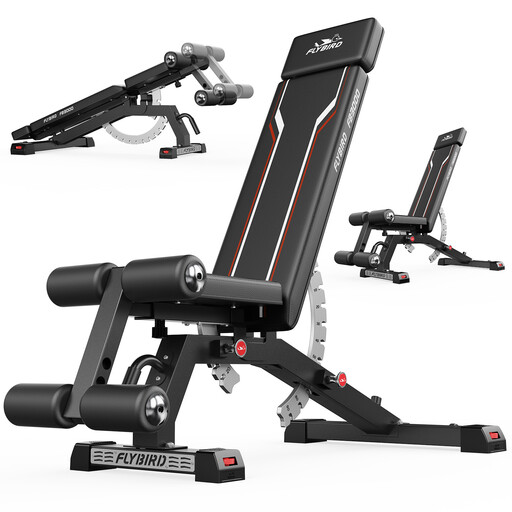
Why it suits this profile: This bench is designed for users who want one sturdy platform for dumbbell presses, shoulder presses and other exercises.
The bench folds away and has a quick adjustment mechanism. However, always check the angle, hinges and locking pins before applying a load.
Stated load capacity of 544 kg, adjustable positions and approximately 80% pre-assembled.
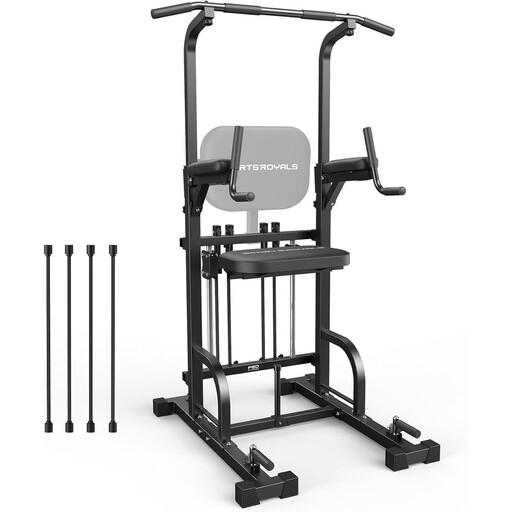
Why it suits this profile: This strength station is ideal for anyone who wants to combine several bodyweight exercises in one piece of equipment, including pull-ups, dips and leg raises.
The base has a double-triangle construction and three crossbars. Place the tower on a level surface and check all bolts after assembly.
Six height settings from 178 to 235 cm, multiple grip positions and a stated maximum load of 204 kg.

Why it suits this profile: A practical option for walking or light jogging at home, for example beside a desk or in a flat with limited storage space.
The design folds away and has transport wheels. The stated top speed is 3.8 mph, making it primarily suitable for walking and light jogging.
Handle with two height settings, 10% manual incline, remote control and stated weight capacity of 300 lb.
We have put together a complete, up-to-date list of products that fully meet these strict selection criteria and the applicable European safety regulations.
With just one adjustable dumbbell set, you can perform presses, rows, squats and lunges. Add a weight bench for greater variety in angles and support. A power tower or dip station expands your workout with pull-ups, dips and core exercises.
For cardio, choose based on your goal and the space available:
Leave enough space around each piece of equipment and use a stable, level surface. Check adjustment points regularly and clean handles, upholstery and running surfaces according to the maintenance instructions.
For a versatile starting set-up, adjustable dumbbells and a weight bench are often enough. Anyone who mainly trains with their bodyweight can choose a pull-up bar, dip station or power tower. It is better to choose a few pieces of equipment that you use several times a week than a large set that ends up unused.
That depends on the equipment and the exercises. Measure the footprint, but also allow extra movement space at the front, sides and above. A folding bench, walking pad or cross trainer with transport wheels can help when choosing fitness equipment for small spaces. Also check that the equipment will fit through doors and stairwells.
Lifespan depends on frequency of use, load, assembly and maintenance. Tighten bolts periodically, check locking mechanisms and remove sweat and dust. With a walking pad, belt alignment, lubrication and inspection of the power cord are also important. Use every piece of equipment within its stated specifications and stop if you notice unusual noises or visible damage.
