
Vandaag of morgen in huis

Kwaliteit gegarandeerd

Welkomstaanbiedingen ontgrendelen: GRATIS bezorging | Tot 80% korting | Gratis 30 dagen JoyPlus-proefperiode
Download de app
Home fitness equipment can be a practical addition to your daily routine. However, equipment can quickly end up unused in a corner if it does not suit the space available, your training goals or your level of use. For example, a compact home treadmill is not automatically suitable for running. An adjustable workout bench may seem versatile, but it takes up more room once you use dumbbells and other accessories around it.
When comparing fitness equipment, pay particular attention to three common pitfalls:
Measure the floor area and the height of the room. With a power tower or pull-up station, you also need to consider the ceiling height and the space above the bar. For a home treadmill, it is also sensible to leave clear space behind the running belt so that you can step off safely.
If you live in a flat, consider foldable fitness equipment or a walking pad with transport wheels. However, check the weight of the equipment. A machine that folds technically may still be difficult to move in practice.
Compare the stated maximum weight capacity with your own weight and the load applied during exercise. For example, only use a power tower on a level, stable surface and regularly check that the bolts are securely fastened.
With an adjustable workout bench, the available positions are more important than the maximum weight alone. A bench with flat, incline and decline positions supports greater variety for chest, shoulders, back and leg exercises. Check that the adjustment pins are securely locked before you begin.
A home cardio machine requires different considerations from home strength-training equipment. With a treadmill or walking pad, pay attention to:
For a home cross trainer, stride length, resistance levels and pedal size are relevant. A shorter stride length may be less suitable for taller users. A display showing time, distance and speed can help you track your sessions, but it does not automatically make the equipment suitable for every training goal.

Why it suits this profile: The bench supports several basic exercises without the need for a large strength-training station. The flat, incline and decline positions provide variety for beginner home workouts.
The adjustable design is more specific than a general claim about versatility. Check the locking mechanism yourself after assembly and do not exceed the stated weight capacity.
Alloy steel frame, three training positions and a stated maximum capacity of 1500 pound. Assembly required.
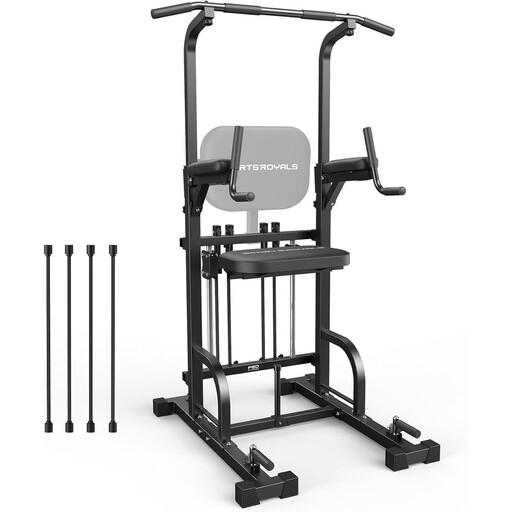
Why it suits this profile: This option is aimed at users who mainly want to train with their body weight and perform several exercises from a single station.
The height can be adjusted from 164,56 to 221,5 cm. Measure your ceiling height beforehand. Place the station on a level surface and check all connections after assembly.
Supports pull-ups, dips, leg raises and core exercises. The maximum load is stated as 204 kg; resistance bands have a range of 10 to 40 kg.
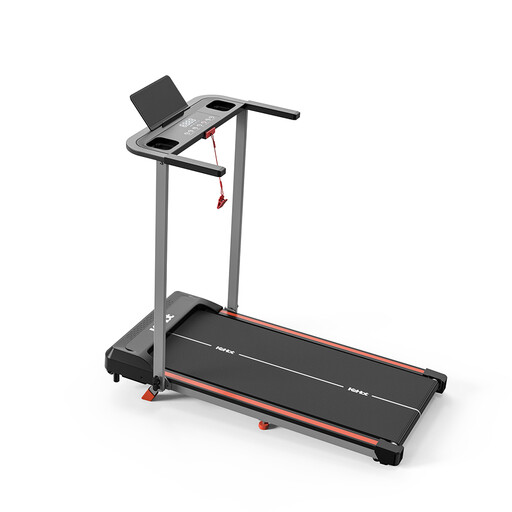
Why it suits this profile: Suitable for home users who want to alternate between walking and jogging and are looking for a foldable treadmill with workout data.
The specifications state a running belt measuring 38 × 100 cm and a speed of 1 to 12 km/h. This makes its intended use clearer than simply calling it “compact”.
Manual 9% incline, LED display, safety key and a stated maximum load of 150 kg. Compatibility with EQI SPORTS, Zwift and Kinomap is listed in the product information.
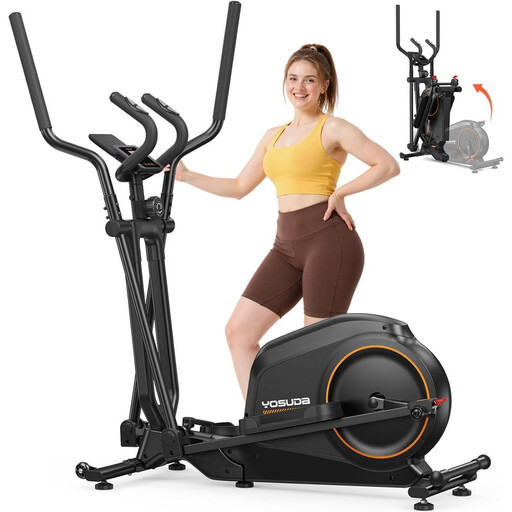
Why it suits this profile: This cross trainer is designed for users who want to store a cardio machine at home in a small property and need different resistance levels.
The storage footprint is stated as approximately 0,2 m². Check beforehand that this size fits your storage space, and allow for assembly and the transport wheels.
16 resistance levels, a 38 cm stride length, non-slip pedals and an LCD display. According to the product information, the noise level is below 20 decibels.
We have put together a complete, up-to-date list of products that fully meet these strict selection criteria and the applicable European safety regulations.
Before placing your order, check that assembly instructions, warranty information and contact details are clearly available. For equipment with Bluetooth or apps, it is worth checking which functions work without a subscription. Also consider power consumption and the recommended maintenance.
Place strength-training equipment on a stable floor and check adjustable parts before every session. With cardio machines, the treadmill, plug and safety key should be inspected regularly. Stop exercising if you notice a technical problem and consult the manual for repairs or maintenance.
A walking pad, foldable cross trainer or folding workout bench can save space. Measure the storage area after folding the equipment and check that you can move it safely. A power tower usually requires more vertical space and often remains in its fixed position.
In addition to the purchase price, you may need to pay for electricity, maintenance, accessories and a training app, if applicable. A mechanical strength-training station generally has different running costs from an electric cardio machine. Before comparing, check the motor power, electricity requirements and maintenance instructions.
Its lifespan depends on build quality, training frequency, load and maintenance. Clean moving parts according to the manual, tighten bolts in good time and do not exceed the maximum weight capacity. Store foldable equipment in a dry place and regularly check the treadmill or cross trainer for signs of wear.
