
Vandaag of morgen in huis

Kwaliteit gegarandeerd

Welkomstaanbiedingen ontgrendelen: GRATIS bezorging | Tot 80% korting | Gratis 30 dagen JoyPlus-proefperiode
Download de app
Training at home sounds simple until a piece of equipment takes up too much space, parts come loose quickly or the settings don’t fit your daily routine. When choosing home fitness equipment, it’s not just the number of features or an attractive product photo that matters. Focus on the dimensions, weight capacity, adjustability and how you’ll actually use the equipment.
Many buyers run into the same pitfalls:
Don’t just measure the space where the equipment will be used. Check that you can also store and move it, and use it safely. A walking pad under a desk, for example, needs to fit beneath the furniture and sit securely on a level floor.
Check the:
A compact home gym only works well if you can get the equipment out quickly. If you have to move a heavy piece of equipment every time, you may be less inclined to train.
The maximum user weight is a product specification you can check, but it doesn’t guarantee that every use will feel comfortable. Stability also matters when strength training at home. For a bench, check its weight capacity and frame construction, and make sure the adjustable parts can be secured properly.
For dumbbells, the fastenings and conversion parts are particularly important. Choose a weight that suits your current level, and check that all parts are tightened securely before each exercise.
An adjustable fitness bench with flat, incline and decline positions supports more exercises than a fixed bench. For Pilates, an adjustable resistance system is a useful option, as you can adapt the resistance to different exercises.
Decide in advance what your main goal is:
Be cautious when interpreting claims about training results. According to the relevant brands’ product descriptions, some equipment is designed for particular types of training; your experience will depend on your technique, how often you train and your personal preferences.
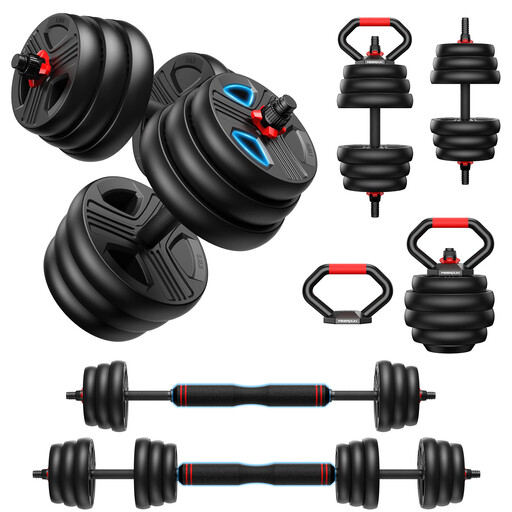
Why it suits this profile: This set is designed for beginners who want to do a range of exercises with one compact solution. According to the product description, it can be configured as dumbbells, a barbell, a kettlebell or a push-up stand.
You don’t have to buy several separate pieces of equipment straight away. Do check that the weight plates and fastenings are secured correctly before each workout.
10 kg total weight, cast-iron parts with an anti-slip coating and several possible configurations.

Why it suits this profile: This bench is a good choice if you want a solid base for strength training at home and different positions for a full-body workout.
The flat, incline and decline positions are clearly specified. Adjust the bench correctly each time and place it on a stable surface.
Adjustable design, an alloy steel frame and a stated maximum capacity of 1500 pounds.
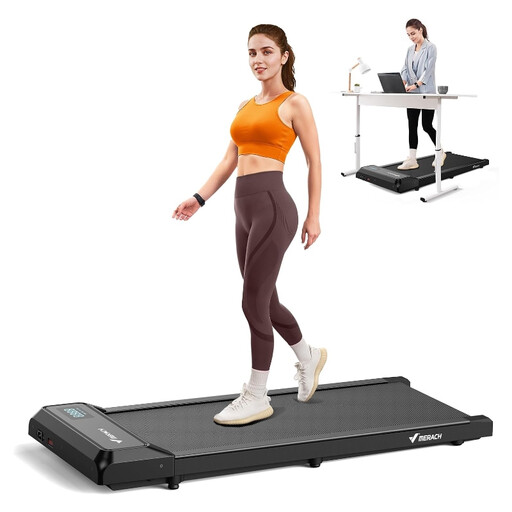
Why it suits this profile: This walking pad is designed for walking while you work or for use in a small home. Its maximum speed of 6 km/u is suitable for walking and light jogging.
At 54 x 115 x 12 cm and weighing 13 kg, it’s easier to find a place to store. Make sure there’s enough clear space around the equipment.
Maximum user weight of 120 kg, remote control, LED display and, according to the product description, connectivity with the MERACH app.
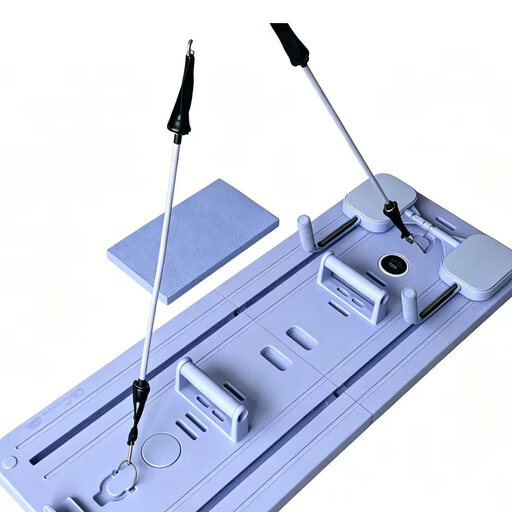
Why it suits this profile: This foldable Pilates reformer board is designed for users who want to combine resistance training and Pilates in one compact set-up.
Adjustable resistance helps you tailor the level of effort. Before buying, check that you have the 42 x 16 inch space needed for your workout.
Foldable design, adjustable resistance system and an integrated phone holder, according to the product information.
We’ve put together a complete, up-to-date list of products that meet these strict selection criteria and the applicable European safety regulations.
A walking pad, adjustable dumbbells or a foldable Pilates board usually take up less permanent space than large fitness stations. Measure your storage space in advance, and check that you can use the equipment safely without blocking furniture, doors or cables.
Lifespan depends on the materials, how often you use it, maintenance and the load it carries. Place equipment on a level surface, clean it regularly and check the fastenings, screws and moving parts. Never use equipment above its stated maximum weight.
The initial purchase is usually the biggest expense. With electrical equipment, you’ll also need to factor in electricity use. For example, a walking pad with a 300-watt motor uses a maximum of around 0.3 kWh per hour when the motor runs continuously at that power; actual consumption depends on speed, load and duration of use. Also check whether an app or additional service comes with optional charges.
