
Vandaag of morgen in huis

Kwaliteit gegarandeerd

Welkomstaanbiedingen ontgrendelen: GRATIS bezorging | Tot 80% korting | Gratis 30 dagen JoyPlus-proefperiode
Download de app
Buying home fitness equipment might seem straightforward – until you discover a machine doesn’t fit in your room, wobbles during use, or offers barely any adjustability. A low price doesn’t tell you much about ease of use, and a long list of features doesn’t automatically make a product right for your training goals.
This guide helps you compare home fitness equipment on dimensions, weight capacity, adjustability, stability and noise level. That way, you can put together a home gym that suits your space, budget and training style.
A weight capacity of, say, 1500 lb sounds impressive, but it doesn’t always tell you how stable an adjustable weight bench will be on your living room floor. Also check:
Never use a piece of equipment above its stated limit. Also follow the manufacturer’s assembly and safety instructions.
A power tower may be adjustable in height, but it still needs room around it for pull-ups, dips and leg raises. So don’t just measure the spot where the equipment will stand. Also take into account:
For a small home, a foldable or wheeled solution can be more practical than a large power station.
An exercise bike or walking pad is sometimes described as quiet. However, the noise level depends on the motor, the drive system, the floor and the way you train. A machine with a stated noise level of less than 20 or 45 dB can still transmit vibrations to the flat below when in use.
Place cardio equipment on a suitable floor and regularly check bolts, pedals, the treadmill belt and resistance components.
For a power station, dip station or pull-up bar, the frame matters more than the number of exercises on the box. Steel tubes, reinforcements and rubber feet help limit movement during use. Also check whether the frame has a powder coating or other protective layer. This tells you something about the material and maintenance, but doesn’t guarantee an unlimited lifespan.
With dumbbells, the weight, grip and shape determine how easy they are to use. Hexagonal ends prevent weights from rolling away quickly. A neoprene coating can offer a softer surface, while cast iron provides the weight. For the sets listed, a weight deviation of around 3% may occur according to the product information.
An adjustable weight bench with flat, incline and decline positions supports more exercises than a fixed bench. Check that the backrest actually locks into place and that the base stays sturdy in every position.
For a power tower, height settings and handle positions are relevant. The Sportsroyals models in this guide have six height settings according to the product descriptions. Before buying, check that the chosen version suits your height and ceiling height.
For home cardio, the drive system and the adjustability of the resistance are important points. An exercise bike with a belt drive may require less maintenance than some other systems. Magnetic resistance works without direct contact between brake components, but the construction and assembly still determine the noise.
A walking pad is mainly suitable for walking or gentle movement when the speed and treadmill length match that. Look at the speed range, the dimensions of the running surface, the incline and the user weight. A compact model is easier to store, but usually has a smaller running surface than a full-sized treadmill.

Why this fits the profile: A pair of light weights takes up very little space and is suitable for a first home strength workout or combining with home cardio.
The fixed weight keeps the choice simple. The hexagonal shape limits rolling when you put the dumbbells down.
2 x 2 kg, cast iron core, neoprene coating and a contoured grip according to the product information.
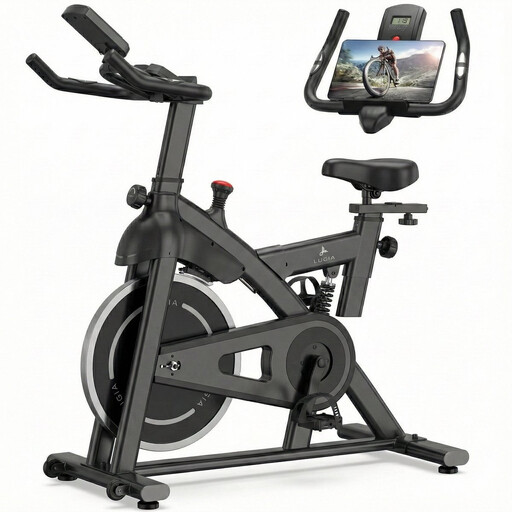
Why this fits the profile: This exercise bike is designed for users who place a high value on adjustability, resistance levels and a sturdy steel frame.
The product description mentions an adjustable saddle, wide stabilisers and a manual magnetic resistance system.
6 kg flywheel, 100 manual resistance levels, weight capacity of 150 kg and stated suitability up to 210 cm body height.
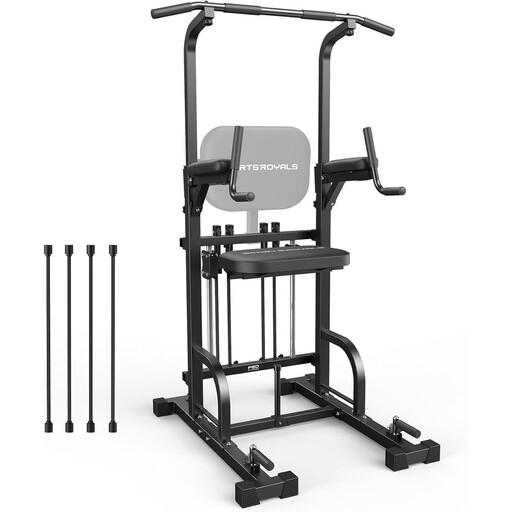
Why this fits the profile: For users who want to combine multiple bodyweight exercises in one power station for their home gym.
The stated H-shaped base has eight non-slip feet. However, placing it on a level, sturdy floor remains essential.
Weight capacity of 204 kg, six height settings from approximately 164.6 to 221.5 cm and support for pull-ups, dips and leg raises.
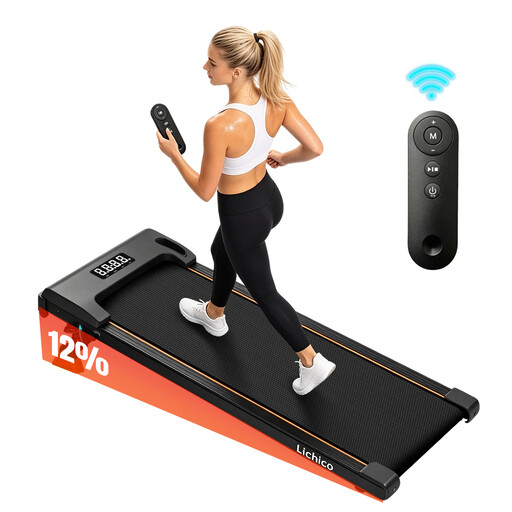
Why this fits the profile: A practical choice for walking at low speed in a home office or shared living space, where storability is important.
The dimensions are approximately 120 x 51 x 10 cm and the machine has front wheels. Check beforehand whether the running surface of around 100 x 40 cm suits your stride length.
Speed range of 0.5 to 6 km/h, manual incline from 0 to 9%, remote control and stated noise level under 45 dB.
We’ve put together a full, up-to-date list of products that fully meet these strict selection criteria and comply with current European safety regulations.
Start with one clear goal. For home strength training, a pair of neoprene dumbbells and an adjustable weight bench may be enough. If you want to do bodyweight exercises, consider a power tower or dip station. For home cardio, an exercise bike, fitness bike or walking pad are logical options.
Next, pay attention to the available space. Measure the height, width and depth, and reserve movement space around the equipment. Also check whether assembly is required. A machine that comes partially assembled saves time, but all bolts and adjustment points must be properly tightened before use.
Finally, maintenance is important. Wipe metal parts clean with a soft, damp cloth, keep belts and resistance components dry, and check fixings regularly. Put dumbbells back gently to limit damage to the floor and the equipment.
For a simple full-body workout, you can start with a set of dumbbells and an adjustable weight bench. A power tower adds exercises such as pull-ups, dips and leg raises. Choose based on your available space and training goal, not just on the number of features.
That depends on the equipment and the exercises. In addition to the floor area, also measure the ceiling height and the free space around handles and moving parts. A walking pad takes up little height, while a pull-up bar or power station needs extra space above and around the frame.
The running costs mainly consist of electricity consumption, maintenance and any replacement parts. A walking pad and exercise bike use electricity during training. With hand weights, a weight bench or a power tower, the ongoing energy costs are limited. Consult the product specifications for the motor power and follow the maintenance schedule from the manual.
