
Vandaag of morgen in huis

Kwaliteit gegarandeerd

Welkomstaanbiedingen ontgrendelen: GRATIS bezorging | Tot 80% korting | Gratis 30 dagen JoyPlus-proefperiode
Download de app
Home fitness equipment often seems simple to choose. A weight bench, power tower or fitness trampoline can be in your online basket in no time. Yet problems usually only arise after purchase: the equipment doesn't fit properly in the room, wobbles during use, or turns out to be less versatile than the product photo suggests.
So pay particular attention to three common pitfalls:
Start with the movements you want to perform regularly. For strength training at home, pull-ups, dips, push-ups and bodyweight exercises are important starting points. A power tower or dip station is then aimed at multiple upper-body exercises. If you're mainly looking to improve your fitness, you'd be better off looking at a mini-trampoline or fitness trampoline.
For a smaller UK home, the following points are practical:
A door pull-up bar can take up very little floor space, but its suitability depends on the construction and dimensions of your door frame. With a freestanding piece of equipment, the floor surface is at least as important as the steel frame.
Treat the stated maximum load as a hard limit. The Pooboo Power Tower, for example, lists a weight capacity of 480 lb. That's roughly 218 kg, but the manufacturer also warns not to exceed this limit and to use the equipment only on a flat, stable surface.
With trampolines, the specifications vary widely. One model is rated up to 120 kg, while a foldable model with a handle states a maximum of 70 kg. So don't choose based on size or price, but on the heaviest user and the planned training intensity.
A piece of equipment that is 99 inches tall, like the Pooboo Power Tower, requires more than just the space taken up by the foot supports. Also check that you have enough headroom above the equipment to move freely. With a 42-inch trampoline, it's not just about the diameter of roughly 106.8 cm; you need extra space all around to get on and off safely.
A folding fitness trampoline takes up less space when stored. That's useful in a flat, but check that the locking mechanism, handle and legs are properly secured before each use.
A steel frame appears on several products, but the finish and construction can vary. Look out for:
On the two SPORTSOUL trampolines, EN ISO 20957-1 is listed as part of the product specifications, alongside other stated standards. Treat this as information to verify and also compare the specific safety instructions for the product. According to the manufacturer's own product information, the trampolines are intended for home use, on a level surface and away from obstacles.

Why this fits the profile: This model is designed for users who want to combine cardio at home with easy storage. The trampoline arrives largely pre-assembled and the handle is adjustable.
The foldable design limits the space problem. The stated maximum load of 70 kg makes it important to check the user specification beforehand.
Foldable design, adjustable handle, 36 springs and integrated foam padding according to the product specification.

Why this fits the profile: This freestanding multi-function fitness station suits users who want to build strength training at home with multiple bodyweight exercises.
The functions are clearly described: bench, pull-up bar and dip station. The adjustable height helps to tailor the equipment better to the user.
Steel frame, adjustable height, non-slip structure and a stated weight capacity of 480 lb.
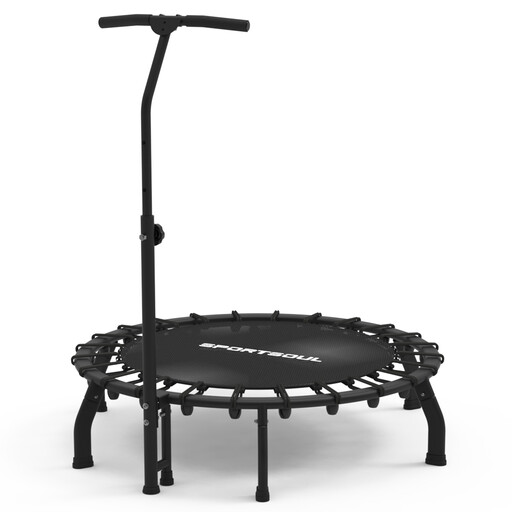
Why this fits the profile: This model focuses on cardio at home with a larger surface area than the foldable model and a stated maximum user load of 120 kg.
The weight capacity and dimensions are clearly stated. Only place the equipment on a level surface, keep obstacles away and use it with one person at a time.
Steel frame, PP jumping mat, elastic resistance bands and pre-assembled parts according to the product information.
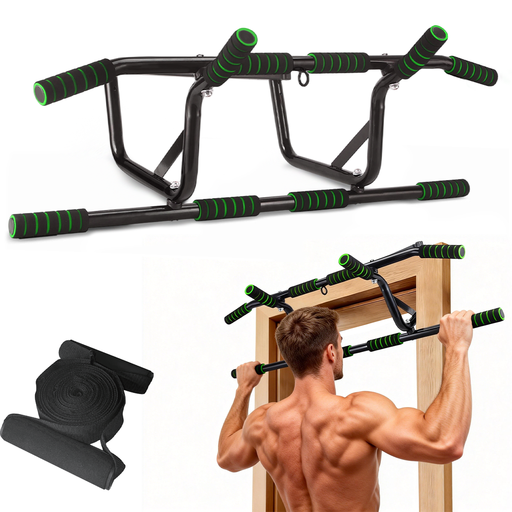
Why this fits the profile: A door model takes up virtually no floor space and can suit those wanting to start with limited home gym equipment.
Check before buying whether your door frame is suitable. The product name mentions drill-free assembly and a weight capacity of 200 kg; follow the assembly and safety instructions.
Multi-function design, ergonomic non-slip grips and included resistance bands according to the product title.
We've put together a full, up-to-date list of products that fully meet these strict selection criteria and current European safety regulations.
Place freestanding fitness equipment on a hard, level surface. Tighten bolts by hand first, check the alignment and then secure all connections firmly according to the manual. Test the equipment gently before using it under full load.
Then schedule a quick check:
The running costs of these pieces of equipment are generally low, as the models mentioned do not require a motor or electrical connection. The main recurring costs may come from replacing springs, mats, foam parts or fixings. So check whether spare parts are available before you order.
A door pull-up bar or a foldable trampoline takes up very little floor space. But first measure the door frame, ceiling height and the clear space around the equipment. A power tower offers more exercises, but will permanently take up floor space.
Check visible parts such as bolts, springs, grips and the frame before each use. With intensive use, a periodic thorough check is also advisable. Stop using a product if the mat, springs, foam padding or structure is damaged.
That depends on the maximum user load, available space and desired training level. A model with a handle can offer extra support, but doesn't replace a safe setup. Use a trampoline with one person at a time and follow the manufacturer's warnings.
