
Vandaag of morgen in huis

Kwaliteit gegarandeerd

Welkomstaanbiedingen ontgrendelen: GRATIS bezorging | Tot 80% korting | Gratis 30 dagen JoyPlus-proefperiode
Download de app
Working out at home sounds simple enough – until a piece of equipment takes up too much room, causes noise issues, or ends up sitting unused in the corner after a few weeks. When you’re looking for home fitness equipment, you need to compare more than just price and appearance. The dimensions, adjustability, maintenance requirements and type of training all determine whether a purchase will genuinely suit your home and routine.
This applies whether you’re choosing a small yoga mat, or a power tower, cross trainer or treadmill for home use. Below, you’ll find out what to look for and which options suit different user profiles.
A piece of equipment with lots of programmes or settings may look appealing, but features are only valuable if you actually use them. For gentle cardio training, a simple walking pad can be perfectly adequate. For strength training at home, an adjustable weight bench or dip station is often more practical than a large multi-function machine.
So start by checking your training goal:
Don’t just measure the spot where the equipment will go. You also need to allow for movement space, ceiling height and the route to where it will be stored. A power tower, for example, can be over two metres tall. With a cross trainer, you need to leave room for the moving pedals and handles.
For small flats, compact fitness equipment, a folding cross trainer or a walking pad with transport wheels is often a more sensible choice. With a folding model, check both the dimensions when in use and the dimensions once folded away.
Terms like “whisper-quiet”, “professional” or “maximum protection” don’t tell you much on their own. Look at measurable data such as noise level, weight capacity, dimensions, materials and the number of resistance levels. According to the product specifications for the YOSUDA cross trainer, the stated noise level is less than 20 decibels; the actual experience can depend on the floor, assembly and usage.
Also pay attention to assembly, warranty terms, maintenance and whether a Dutch-language manual is included. Before use, check that all adjustments are locked and that the equipment is on a level surface.
The weight capacity is not a guideline to exceed. The Sportsroyals Power Tower has a maximum load of 204 kg. The BCAN rebounder states a capacity of 500 lb, which converts to approximately 227 kg. Always check which value applies to the specific model you choose.
Also look at:
A steel frame can be suitable for regular use, but stability also depends on the base, rubber feet, connections and correct assembly. For strength training, secure fixing points and a level floor are important. After assembly, regularly check bolts and adjustment mechanisms.
With fitness accessories, the surface area matters. A TPE mat with a textured top and bottom can, according to the product description, provide grip on smooth floors. That doesn’t replace a safe surface: remove dust and moisture, and only roll the mat up after use when it is dry.
With a yoga mat or fitness mat, the thickness gives a different training experience. The Good Nite mat is available in 6 mm and 10 mm. The 6 mm version is designed for a balance between cushioning and stability; 10 mm offers a softer surface. A thicker mat isn’t automatically better for balance poses.
For cardio equipment, resistance levels and stride length are relevant. The YOSUDA cross trainer has 16 resistance levels according to the product specifications, a stride length of 38 cm and transport wheels. With a walking pad, speed, running surface, incline and storage height are more important than just the motor power.
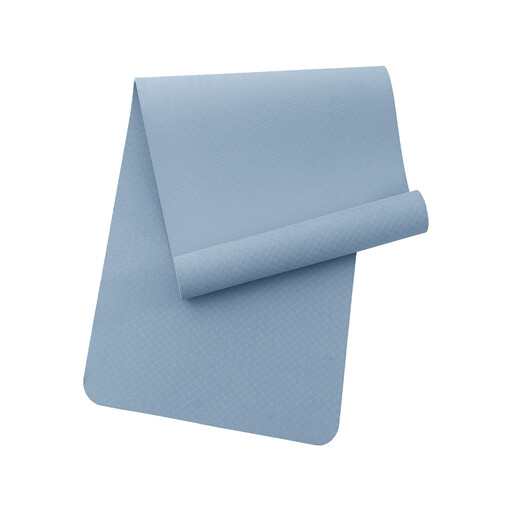
Why this suits the profile: A mat is an easy, low-cost way to start doing yoga, Pilates, stretching and floor exercises at home without installing a large piece of equipment.
The size of 183 x 61 cm and the included carry strap make storage and transport straightforward. The product description mentions a dual texture with lines on top and a wave pattern on the underside.
6 mm thick TPE, a size suitable for various exercises and easy to clean with a damp cloth according to the product information.
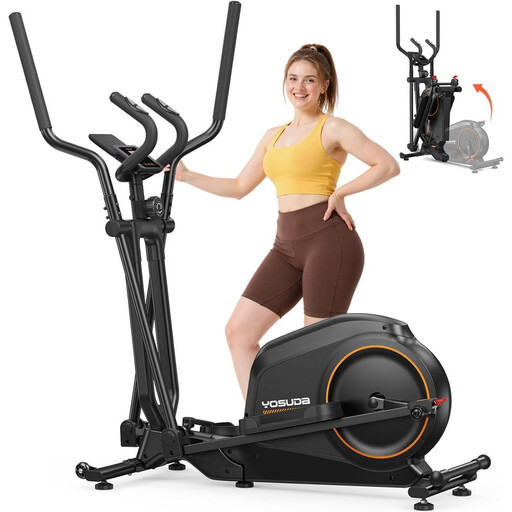
Why this suits the profile: Ideal for anyone who wants to schedule regular cardio and values resistance options, a display and a design that can be stored away after use.
The folding design and transport wheels address the space issue. However, check the stated stride length of 38 cm beforehand and whether it suits your height.
16 resistance levels, LCD display showing six training metrics and a stated noise level below 20 decibels according to the product specifications.
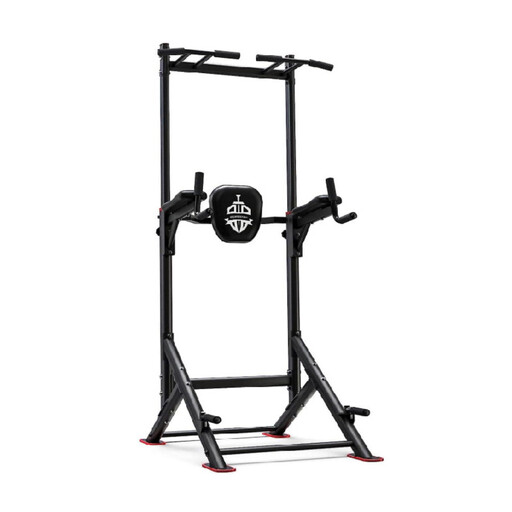
Why this suits the profile: This strength training machine combines pull-ups, dips, push-ups and knee raises for users who want to train using their own body weight.
The double triangular base, three cross braces and adjustable height from 178 to 235 cm provide concrete information about stability and fit. Assembly and checking the bolts are still essential.
Stated weight capacity of 204 kg, six height settings and multiple grip positions for different exercises.

Why this suits the profile: This model is designed for walking and light jogging in a home office or flat, with a folding handle and transport wheels.
The stated dimensions of 47.2 x 22.4 x 5.5 inches make storage easier to plan. Before buying, check whether the running surface of 35.4 x 15.7 inches is sufficient for your stride.
Speed range from 0.6 to 3.8 mph, manual incline of 10 per cent, LED display and 12 built-in programmes according to the product description.
We’ve put together a full, up-to-date list of products that fully meet these strict selection criteria and comply with current European safety regulations.
The lifespan of home fitness equipment depends partly on assembly, load and maintenance. Wipe mats, handles and frames down regularly with a soft, slightly damp cloth. For a walking pad, follow the maintenance instructions for belt tension and lubrication. Check cables, elastic bands, bolts and adjustable parts for wear.
Place cardio equipment on a level surface and, with a trampoline, leave enough clear space around it. With an adjustable weight bench or dip station, check before each session that the chosen setting is properly locked. Stop using the equipment if any part is loose, damaged or making unusual noises.
A yoga mat, fitness mat, walking pad or folding cross trainer takes up relatively little storage space. Measure the space both when in use and when folded away. With cardio machines, also pay attention to noise level, floor contact and transport wheels.
A quick check before each use is sensible for equipment with bolts, hinges, elastic bands or adjustable settings. Clean surfaces after use and follow the manufacturer’s manual for belts, bearings and moving parts.
The purchase price varies greatly depending on the type of product. A mat or a few fitness accessories requires less space and budget than a power tower or cardio machine. Also factor in electricity consumption, maintenance, floor protection and any assembly costs. Above all, choose equipment that fits your regular training routine; unused features offer no practical value.
