
Vandaag of morgen in huis

Kwaliteit gegarandeerd

Welkomstaanbiedingen ontgrendelen: GRATIS bezorging | Tot 80% korting | Gratis 30 dagen JoyPlus-proefperiode
Download de app
Training at home sounds simple, until a weight bench starts wobbling, adjustable dumbbells are difficult to secure or a rowing machine takes up more space than expected. If you’re looking for home fitness equipment, you’ll also come across plenty of marketing claims. A high maximum load, a large number of workout positions or a “professional” design only tells you so much unless the specifications behind it are clear.
Keep these points in mind to avoid a costly mistake and choose training equipment that suits your available space, fitness level and goals.
A weight bench with a high weight capacity may look appealing, but always check exactly what that figure means. It may refer to the combined weight of the user and dumbbells. Also look at the frame, adjustment points, legs and stability on your floor.
A high capacity doesn’t automatically make a bench suitable for heavy exercises. A compact weight bench still needs to stand firmly and be assembled correctly.
A multifunctional dumbbell set can support different types of training, but check how large the components are when you use them as a barbell or kettlebell. For a rowing machine at home, the assembled dimensions and vertical storage are especially important.
So measure not only the space where the equipment will stand, but also the room around it. Allow for doors, furniture and enough clear space to move safely.
Adjustable parts need to lock securely into place. On a weight bench, check the backrest and any supports; with adjustable dumbbells, make sure the fastenings and screw connections are secure. Also check whether the upholstery, rails and metal parts are easy to clean.
A product with lots of features may need a little more maintenance. That’s not a problem, as long as the assembly instructions are clear and you’re happy to check the connections regularly.
Make a note of the following in advance:
A wide, stable base is useful for a bench for strength training at home. A narrower model may be easier to put away, but needs more attention to stability. Place all equipment on a flat, sturdy surface.
An adjustable weight bench with flat, incline and decline positions supports more exercises than a flat-only model. Think dumbbell presses, rowing movements, abdominal exercises and different variations for your chest and shoulders.
For fitness beginners, a simple set-up may be more practical. A dumbbell set with clearly marked weights makes it easier to build up resistance gradually. If you’ve been training for longer, you may value a higher load capacity and extra workout positions.
For a weight bench, check the frame material, connections and upholstery. Steel or alloy steel is commonly used for load-bearing parts. For dumbbells, cast iron, the coating and the grip are important points to check. With a rowing machine, consider the type of resistance, rail, seat and transport wheels.
A product description can’t guarantee that a product is right for you. Always check the latest specifications, included components and safety instructions on the product page.
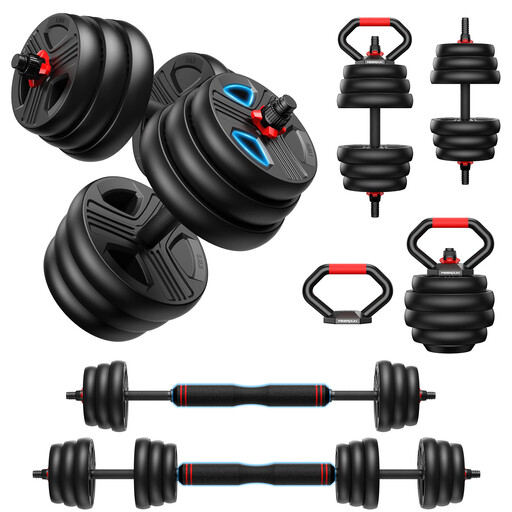
Why it suits this profile: This set combines several types of training in one compact solution for anyone starting strength training at home with limited storage space.
The adjustable system means you don’t need to buy several separate weights straight away. Before each exercise, check that all the fastenings are secure.
10 kg total weight, cast-iron components and configurations as dumbbells, a barbell, a kettlebell and push-up bars.

Why it suits this profile: This bench is designed for people who want one adjustable base for a range of exercises in a dedicated home gym.
The flat, incline and decline positions are listed in the specifications. After assembly, check that the bench is fully locked into the position you’ve chosen.
Alloy steel frame, dimensions of approximately 148 × 61 × 117 cm and a stated maximum capacity of 1500 lb.
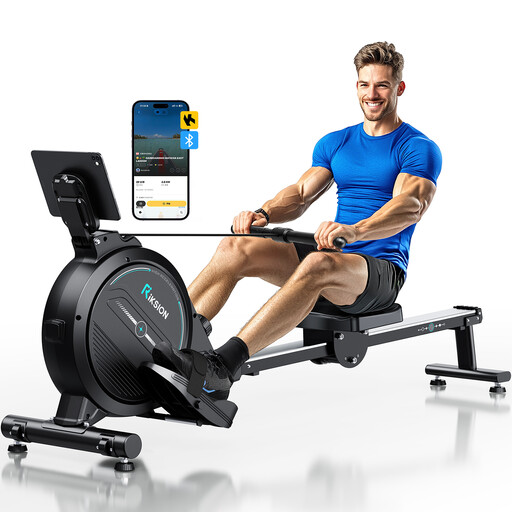
Why it suits this profile: A good choice for people who want to combine cardio and a full-body workout with adjustable resistance.
The specifications list 16 resistance levels and vertical storage. Measure the length of 152,3 cm in advance and check that there’s enough clear space around the machine.
Magnetic resistance, LCD display, transport wheels, vertical storage and a stated user weight capacity of up to 160 kg.

Why it suits this profile: Three pairs of weights and a rack provide a tidy set-up for light strength training in a flat or compact room.
The weights are clearly marked, and the included rack keeps loose equipment off the floor. Set the dumbbells down carefully after use.
Set with 1, 2 and 3 kg weights, neoprene coating, non-slip handles and an included plastic rack.
We’ve put together a complete, up-to-date list of products that meet these strict selection criteria and current European safety regulations.
Start with one training goal. For strength training at home, an adjustable bench and dumbbells are often enough. If you’d also like to work on your cardio, a rowing machine could be a useful addition, provided you have enough space.
Also check:
A simple set-up that you use regularly is often more practical than having lots of equipment that goes unused.
A light dumbbell set or an adjustable weight bench is an accessible place to start. Choose weights that let you perform each movement with control, then increase the resistance gradually. Read the safety instructions and start with a gentle warm-up.
It depends on the equipment. A dumbbell set takes up very little floor space. A weight bench needs room for the bench itself, as well as for your arms and legs as you exercise. A rowing machine takes up more length when in use, even if it can be stored vertically.
Its lifespan depends on the materials, how often it’s used, assembly and maintenance. Check bolts, fastenings and upholstery regularly. Don’t use equipment if any parts are loose, damaged or missing, and never exceed the stated load capacity.
