
Vandaag of morgen in huis

Kwaliteit gegarandeerd

Welkomstaanbiedingen ontgrendelen: GRATIS bezorging | Tot 80% korting | Gratis 30 dagen JoyPlus-proefperiode
Download de app
Buying home fitness equipment seems straightforward, until you have to choose between a fitness trampoline, a doorway pull-up bar, a power tower or a complete multi-functional fitness station. Many products promise versatility, but they won’t always suit your space, body weight or training goals.
Look out for these three common pitfalls:
With the right choices, you can put together a practical home gym for cardio, strength training and bodyweight exercises.
Always check the maximum user weight. For a fitness trampoline, this means the body weight of one user. With a pull-up bar or dip station, movement and gravity create extra forces during exercise.
A stated capacity of 120 kg or 200 kg is therefore a useful point of comparison, but it’s not an invitation to push the limit. Also consider how the equipment will be used:
Use equipment on a flat, stable surface and don’t exceed the stated limit.
For regular use, the materials matter more than a long list of features. A steel frame generally provides a sturdy base, but also check the finish, joints and adjustable parts. During assembly, make sure all the bolts are tight and inspect the equipment regularly.
The SPORTSOUL trampoline has a powder-coated steel frame. Its jumping mat is made from polypropylene (PP) and its spring system uses steel springs. The manufacturer lists EN ISO 20957-1, GB 17498.1-2008 and ASTM F2276-10(2015) in the product information. These are stated standards, but they don’t guarantee that every training goal or use case is covered.
Measure not just the floor space, but also the height and room you’ll need to move freely. For a doorway pull-up bar, check the width, thickness and construction of the door frame. A no-drill pull-up bar is only practical if it’s fitted correctly and according to the instructions.
A power tower needs extra space around it for pull-ups, dips and bench exercises. Check the following in advance:
Fitness equipment that gets in the way every day is less likely to be used regularly. Saving space isn’t just a marketing term, then: it’s a practical buying consideration.
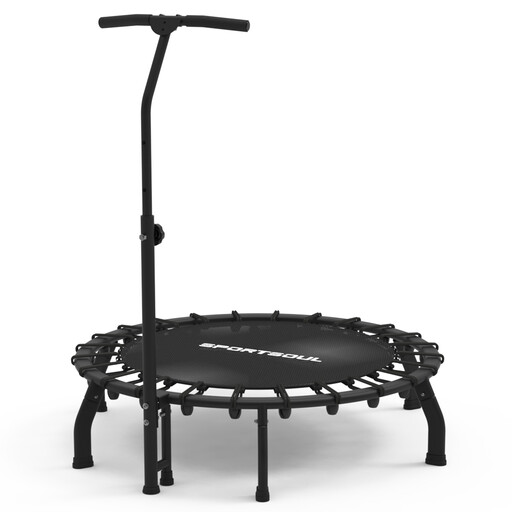
Why it suits this profile: This mini trampoline for home use is designed for cardio in a relatively compact set-up and comes with pre-assembled elastic components.
The stated maximum user weight of 120 kg makes it easier to compare with other products. The manufacturer also lists a pre-assembled jumping mat and elastic cords.
Steel frame, PP jumping mat, a diameter of 1068 mm and a net weight of 11,2 kg.

Why it suits this profile: This multi-functional set-up combines home strength training with pull-ups, dips and bench exercises.
The specifications list a steel frame, adjustable height and a stated weight capacity of 480 lb. Check the floor and all the connections during assembly.
Bench, pull-up bar with climbing grip and dip station in one piece of equipment; assembled dimensions are 41 x 30 x 99 inch.
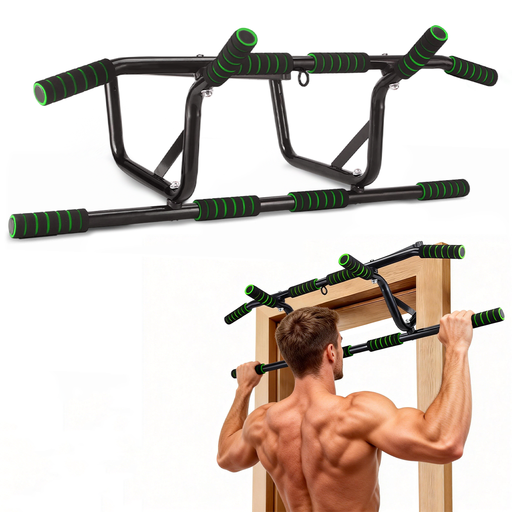
Why it suits this profile: A doorway pull-up bar suits users who want to do bodyweight training without fitting a permanent bar to the wall.
The product name states a capacity of 200 kg and a no-drill design. Before use, check that your door frame is suitable and fit the bar according to the instructions.
No-drill fitting, as stated in the product name, non-slip handles and included resistance bands for added variety.
For cardio and short bursts of activity, a fitness trampoline is practical, as long as you have enough clear space around it. If you mainly want to train your back, arms and shoulders, consider a no-drill pull-up bar or doorway pull-up bar. A power tower or dip station needs more space, but offers more options for strength training at home.
For fitness equipment with resistance bands, check the attachment points and inspect the bands for tears or wear before every workout. A multi-functional fitness station is usually best kept in a permanent spot rather than assembled and taken apart each time.
We’ve put together a complete, up-to-date list of products that meet these strict selection criteria and the applicable European safety regulations.
A mini trampoline for home use or a no-drill pull-up bar takes up relatively little permanent space. Measure the area available in advance and allow room to move freely. A power tower needs more floor space and may be harder to put away.
Lifespan depends on the materials, how often you train, assembly and maintenance. Check bolts, springs, bands, handles and upholstery regularly. Don’t use a trampoline if the mat, springs or frame are damaged.
Mechanical fitness equipment such as a trampoline, pull-up bar or dip station doesn’t use electricity. So it won’t consume power in the way a treadmill or exercise bike does. The main costs are the initial purchase, any accessories and replacing worn parts.
