
Vandaag of morgen in huis

Kwaliteit gegarandeerd

Welkomstaanbiedingen ontgrendelen: GRATIS bezorging | Tot 80% korting | Gratis 30 dagen JoyPlus-proefperiode
Download de app
Putting together a home gym seems simple, until a bench wobbles, a piece of equipment turns out to be too large or an adjustment mechanism becomes difficult to use after a few weeks. When choosing home fitness equipment, it’s not just the number of features that matters. Stability, dimensions, materials, weight capacity and safe use all determine whether a product suits your training space and fitness level.
Look out for these three common pitfalls:
Misinterpreting a high maximum weight capacity
The capacity may include both the user and the weights. Check whether it refers to a dynamic or static load, too. These figures are not directly comparable.
Mistaking lots of features for practical use
A weight bench with a leg extension, preacher curl pad and squat rack offers plenty of options, but also takes up more space and requires more assembly. For a small home, a simple, foldable training bench may be more practical.
Underestimating comfort and flooring
A slippery floor, insufficient space around an ab roller or a hard seat can all affect how you use your equipment. Rubber feet, a non-slip surface and enough room to move are not minor details.
For strength training at home, an adjustable weight bench should remain level and stable as you set down weights and change position. Check:
A weight bench with lots of adjustment positions won’t necessarily suit everyone. Check its overall dimensions and the height of the backrest in relation to your height.
Steel frames are common on training benches and racks. Check the product description: alloy steel, stainless steel, powder coating and rubber end caps each serve a different purpose. Synthetic leather upholstery is easy to wipe clean, but still needs regular care with a soft, damp cloth.
For ankle and wrist weights, seams, fastenings and filling are important things to check. Neoprene usually feels soft; with models that have removable pouches, you can gradually increase the resistance. Check for tears or loose seams before each use.
Measure more than just the space where the product will stand. Leave room to move your arms, legs and weights, too. A balance board needs a flat, stable surface. An ab roller needs enough clear space in front of the wheel, and flooring that won’t let the wheels slide unexpectedly.
Start core training with controlled movements. If you’re doing fitness exercises as part of physiotherapy or training after an injury, it’s sensible to seek guidance from a qualified professional. Product descriptions are no substitute for personalised exercise advice.

Why it suits this profile: A compact option for walking, light strength training and exercises where you want to adjust the resistance gradually.
Each weight has five removable pouches, each weighing 1 lb. So you don’t have to start with the full load straight away.
Neoprene outer, adjustable from 1 to 10 lb per pair and suitable for use around your ankles, wrists, arms and legs.
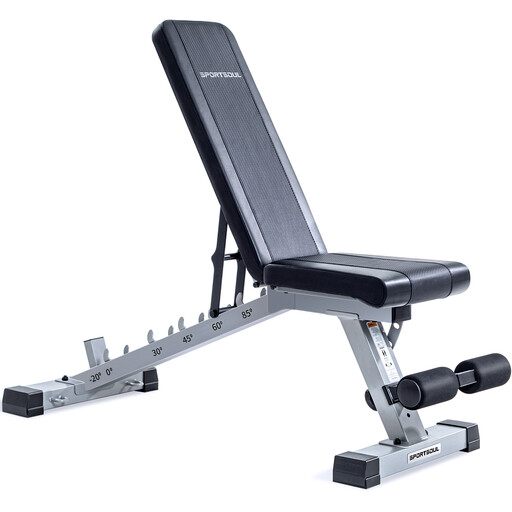
Why it suits this profile: Ideal if you want one adjustable bench for dumbbell presses, incline exercises and core training.
The product information lists multiple positions, rubber end caps and a stated weight capacity of 610 lb, including the user and weights.
Synthetic leather upholstery with a latex layer, built-in wheels and adjustable flat, incline and decline positions.

Why it suits this profile: For anyone wanting to add balance, coordination and core stability work to a compact home gym.
The non-slip surface and advice to use the board on a flat, stable surface make the requirements clear.
360-degree rotation, a 15-degree tilt angle, a carry handle and a stated maximum load of 300 lb.
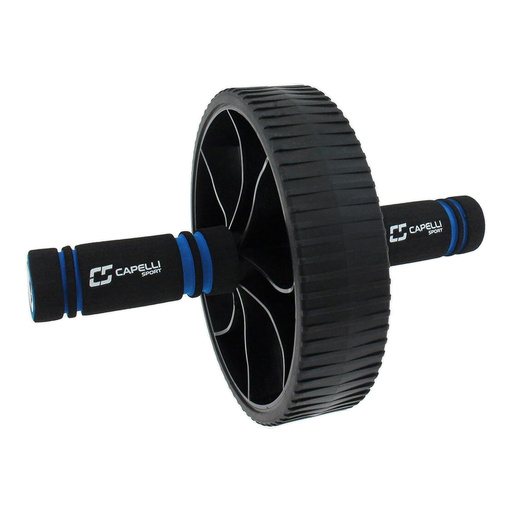
Why it suits this profile: A simple ab roller for anyone looking to work on their core with minimal equipment.
The wide wheel and TPR covering are clearly described. Always check that the handles are secure, and use it on a non-slip floor.
Steel inner axle, foam handles and a wheel with a diameter of 17 cm.
We’ve put together a complete, up-to-date list of products that meet these strict selection criteria and comply with the applicable European safety regulations.
Start with equipment that’s easy to check, such as adjustable ankle weights, a stable training bench or a balance board with a non-slip surface. Choose a weight that lets you perform each movement at a controlled pace. An ab roller requires more core control, so start with a limited range of motion.
Measure the equipment when it’s in use, not just when it’s folded or stored away. You’ll need extra space around a weight bench to position weights and move your arms freely. Keep the floor clear of furniture and obstacles around an ab roller. A foldable bench can be handy in a flat, but check its weight and how much storage space it needs, too.
Its lifespan depends on the load, assembly, maintenance and storage. Tighten bolts regularly, check adjustment mechanisms and safety hooks, and clean the upholstery with a soft cloth. Store steel equipment in a dry place, and don’t use any product if parts are loose, damaged or missing. This will help you choose an investment that suits how often you train and what you want to achieve.
