
Vandaag of morgen in huis

Kwaliteit gegarandeerd

Welkomstaanbiedingen ontgrendelen: GRATIS bezorging | Tot 80% korting | Gratis 30 dagen JoyPlus-proefperiode
Download de app
Working out at home sounds simple—until a piece of equipment takes up too much space, feels unstable or ends up barely being used. Anyone searching for home fitness equipment is also likely to encounter marketing claims about professional-grade quality, whisper-quiet motors and complete full-body workouts. The real question is not just what a product can do, but whether it suits your home, fitness level and regular routine.
A weight bench with multiple settings or a power tower with several exercise options may seem appealing. However, features are only useful if you use them regularly. Check the following:
Otherwise, a versatile product may simply mean more components and additional assembly time.
Product photos often make compact fitness equipment look smaller than it really is. Measure not only the area where the equipment will stand, but also the space needed to move safely around it. With a home treadmill, for example, you need enough room to step on and off safely. A pull-up bar or dip station also requires sufficient clearance above and around the frame.
Pay attention to the difference between maximum load and the user’s body weight. During strength training at home, the total load includes your body weight, any weights and additional resistance.
A stated decibel rating is only useful when you know the conditions under which it was measured. According to product specifications, a magnetic cross trainer may produce less noise than equipment with direct contact between moving parts. With a walking pad, the floor surface, walking speed and footfall also affect the overall noise level.
Using equipment on a hard floor can create more impact noise. A suitable fitness mat helps protect the floor and reduce vibration, but it will not make the equipment completely silent.
For a weight bench, power tower or dip station, the frame and base matter more than appearance. Check the materials, feet and locking mechanism. Steel or alloy steel is often used for load-bearing components, but the overall construction and connections also determine how stable the equipment feels.
Check the following before purchasing:
A high load limit does not replace proper assembly. Follow the instructions and do not exceed the stated limit.
An adjustable weight bench with flat, incline and, where applicable, decline positions supports more variety than a fixed bench. For beginners, a simpler design may be easier to use. Also review the adjustment angles and make sure the backrest locks securely into place.
For free-weight workouts, neoprene dumbbells are practical if grip and a fixed set of weights are important to you. Check the weight per dumbbell, handle dimensions and the shape of the ends. A hexagonal design can help prevent the dumbbells from rolling away when you set them down.
In an apartment or smaller home, space-saving fitness equipment is often the most practical choice. Check the dimensions both folded and unfolded. Also look for transport wheels, a foldable handle and the overall weight of the equipment.
Maintenance is still essential. Wipe away sweat and dust, inspect moving parts and tighten fasteners periodically. For a treadmill or walking pad, this also includes checking belt alignment, tension and lubrication according to the instructions.

Why it suits this profile: This set is ideal for anyone who wants to start strength training at home with a limited selection of equipment and combine it with cardio exercises using weights.
The fixed format means you do not pay for adjustment mechanisms you may never use. According to the product description, the hexagonal ends are less likely to roll away.
Set of 2 x 5 kg, cast-iron core, neoprene coating and 11.5 cm handles.
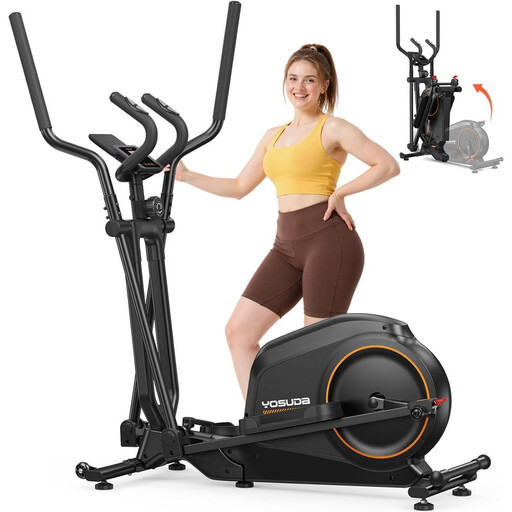
Why it suits this profile: Anyone who wants to do cardio regularly at home gets 16 resistance levels and a foldable design for storage between workouts.
The stated folded footprint is approximately 0.2 m², making it easier to determine in advance whether the equipment can be stored in a corner.
16 resistance levels, transport wheels, non-slip pedals and an LCD display showing multiple workout metrics. According to the product information, the noise level is below 20 dB.
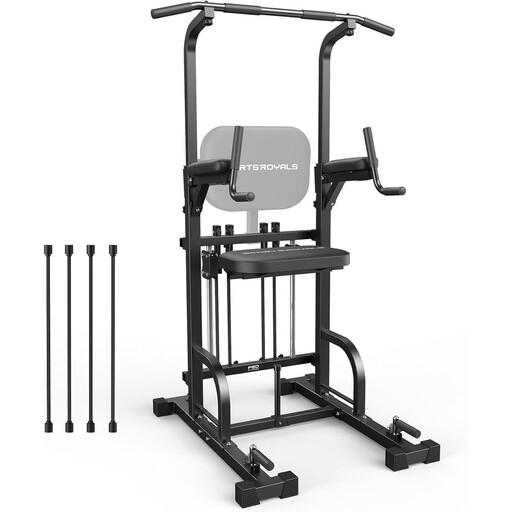
Why it suits this profile: This setup is ideal for users who want to combine several bodyweight exercises in one dedicated strength-training station.
According to the product description, the base has eight non-slip feet and an H-shaped design. Still, make sure the floor is level and tighten all connections securely.
Adjustable height from 164.56 to 221.5 cm, support for pull-ups, dips and leg raises, plus resistance bands from 10 to 40 kg.

Why it suits this profile: This home treadmill is designed for walking and light jogging, with a format that can be stored under a desk or bed.
The dimensions, transport wheels and foldable handle make the storage requirements clear in advance. Also check whether the available running area measures 35.4 x 15.7 inches.
Manual 10% incline, speeds from 0.6 to 3.8 mph, 12 programmes and a stated motor noise level of 45 dB according to the product information.
We have compiled a complete, up-to-date list of products that fully meet these strict selection criteria and applicable European safety regulations.
Choose equipment with transport wheels, a foldable frame or a compact footprint. A walking pad is designed for walking and can often be stored under a bed or desk. For strength training, neoprene dumbbells, resistance bands and a folding weight bench are generally easier to store than a large multi-station unit.
Service life depends on the materials, frequency of use, assembly and maintenance. Check bolts, cables, hinges and moving belts regularly. Use a treadmill within its stated speed and load limits, and follow the manufacturer’s maintenance instructions. Stop using the equipment if the frame develops a crack, a lock no longer closes properly or unusual noises occur.
Consumption varies according to motor power, resistance, workout duration and the electricity rate. Equipment with a higher stated power rating does not automatically use more electricity during every workout. Check the power consumption in watts and multiply it by the number of hours used. A cross trainer without a heavy drive motor may consume electricity differently from an electric treadmill.
