
Vandaag of morgen in huis

Kwaliteit gegarandeerd

Welkomstaanbiedingen ontgrendelen: GRATIS bezorging | Tot 80% korting | Gratis 30 dagen JoyPlus-proefperiode
Download de app
Working out at home sounds simple, until a piece of equipment takes up too much space, makes more noise than expected or is barely used after a few weeks. When looking for home fitness equipment, many people first focus on motor power, discounts and extra features. Yet it is the practical details that determine whether a piece of equipment suits your home and routine.
Three common pitfalls come up time and again:
For walking while working from home, a walking pad with a range of up to around 6 km/h may be sufficient. If you want to jog or run, look for a higher top speed and a longer running surface. A home treadmill with a speed range of 1 to 12 km/h is more versatile for different users, but it also requires more clear space around the machine.
Also pay attention to the difference between:
An incline treadmill can make your workout more challenging without requiring you to walk faster. According to the manufacturer’s product description, the YOSUDA treadmill has an automatic incline of up to 18%. When buying, check that the controls and incline range suit your training plan.
Do not just measure the space where the machine will stand during use. Also check:
A folding treadmill is convenient in a smaller home, but make sure you can move it safely and store it upright. Always use a flat, stable surface and do not exceed the stated weight capacity.
With a home rowing machine, the rail length is important. The YOSUDA rowing machine states that it is suitable for users between 1.55 and 2 metres tall and has a maximum user weight of 160 kg. Information like this is easier to verify than general claims such as “suitable for the whole family”.
For flats, home offices or family homes, quiet fitness equipment is often more practical. Check the stated noise level, but treat it as a product indication rather than a guarantee for every living environment. A rubber mat can help reduce vibrations, but check that the floor and surface are suitable for this.
With exercise bikes and rowing machines, the resistance system determines how you set up your workout:
A Bluetooth fitness machine can send workout data to an app. Check in advance which apps are supported, whether a subscription is required and which data is actually displayed. Bluetooth for music is different from Bluetooth for workout tracking.

Why it suits this profile: This model is designed for walking and light jogging in a home office or smaller home. The folding handle and transport wheels make storage easier.
The product information lists a 35.4 × 15.7 inch running surface, a 10% manual incline and a maximum load of 300 lb. Check these dimensions against your available space beforehand.
Stated speed of 0.6–3.8 mph, LED display, remote control, 12 programmes and a stated motor noise level of 45 dB.
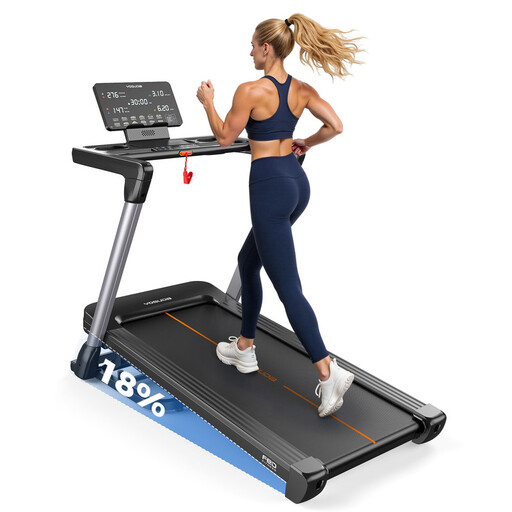
Why it suits this profile: Suitable for users who want to combine walking, jogging and more intensive training with app functionality and a higher weight capacity.
The specifications list a steel frame, a maximum load capacity of 172 kg, automatic incline of up to 18% and a four-part cushioning system. Compare these points with your training level and available space.
Stated 3.0 HP brushless motor, Bluetooth app connectivity, folding frame and LED display with workout data.
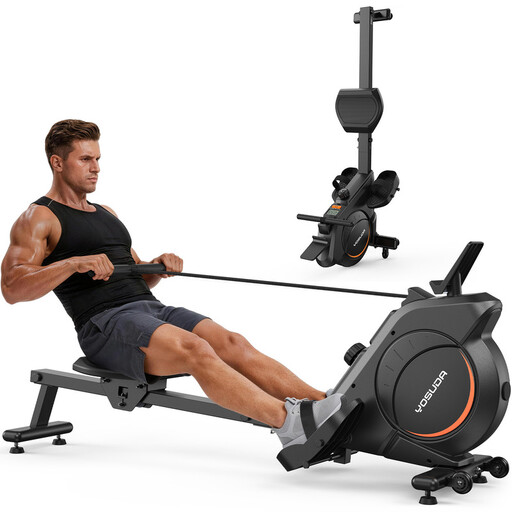
Why it suits this profile: A good choice for anyone looking for a rowing machine with multiple resistance levels, a long rail and a folding design for home use.
The stated rail is designed for users between 1.55 and 2 metres tall, while the maximum user weight is 160 kg. However, check the total length and storage space available in your home.
16 magnetic resistance levels, Bluetooth for the YOSUDA app, a 6.3 kg flywheel and a folding frame.
An exercise bike is generally practical for regular cardio training with a fixed seated position. The Lugia Velo lists a magnetic resistance system, 100 manual resistance levels, a 6 kg flywheel and a maximum user weight of 150 kg. According to the product information, the seat adjustment is suitable for users up to 210 cm tall.
A spin bike is better suited to users looking for a more active cycling position and manual resistance. The Advamsoler Indoor Spin Exercise Bike lists a belt drive, adjustable seat and handlebars, Bluetooth functionality and transport wheels. With models like these, always check that the frame dimensions and adjustment options suit your body.
We have compiled a complete, up-to-date list of products that fully meet these strict selection criteria and the applicable European safety regulations.
Take the dimensions of the machine when in use into account, not just its folded size. Leave enough room around it for movement and place the treadmill on a flat surface. Also measure the ceiling height if you use the treadmill on an incline.
Its lifespan depends on build quality, frequency of use, maintenance and load. Clean a treadmill regularly, check the belt alignment and tension, and lubricate it according to the manual. With exercise bikes and rowing machines, it is advisable to check the bolts, pedals, rails and moving parts periodically.
Power consumption depends on motor power, workout duration and intensity. A machine with a 3.0 HP motor does not automatically use maximum power continuously. Check the energy label or technical specifications, and unplug the machine when it will not be used for an extended period.
