
Vandaag of morgen in huis

Kwaliteit gegarandeerd

Welkomstaanbiedingen ontgrendelen: GRATIS bezorging | Tot 80% korting | Gratis 30 dagen JoyPlus-proefperiode
Download de app
A home gym sounds simple, until a piece of equipment sits unused in the corner for weeks. When buying home fitness equipment, three common pitfalls can lead to disappointment: an item turns out to be bigger than expected, its maximum weight capacity is misinterpreted, or a useful-sounding feature doesn’t suit the way you actually train.
Marketing terms such as ‘professional’, ‘quiet’ and ‘full-body’ don’t tell you much on their own. Always check the dimensions, adjustability, construction and maintenance requirements. That way, you can choose a home gym that suits both your available space and your training goals.
A treadmill or cross trainer may be compact to store, but it needs considerably more room when in use. Measure not just the floor space it takes up, but also the space needed to move around it. With a power tower or dip station, you’ll also need to consider ceiling height and leave enough headroom.
The maximum load usually includes your body weight plus any additional weights. Dynamic exercises such as dips or jumps put a different load on equipment than sitting still on a weight bench. Check whether the manufacturer distinguishes between static and dynamic loads, too. Never exceed the stated limit.
A piece of equipment with lots of settings or programmes may seem appealing, but extra features often take up more space and can make maintenance more complicated. Adjustable dumbbells may be enough for light strength training. If you regularly do pull-ups, dips and press-ups, a dip station or power tower may be a better choice.
Look at the materials used and how the frame is built. Steel is commonly used for weight benches, cross trainers and strength stations. Also check:
A high weight capacity is only useful if the equipment is stable and assembled correctly. Follow the instructions and use strength equipment on a firm, level surface.
For strength training at home, adjustability matters more than a long list of exercises. An adjustable weight bench should lock securely into the position you choose. With adjustable dumbbells, check that the weights are firmly secured before every rep. Make sure the weight increments suit your training level: lighter sets are practical for beginners and targeted exercises, while heavier sets give you more scope to increase the load progressively.
Noise and storage are often key considerations in a flat or home office. A magnetic resistance system may be quieter than direct-contact systems, according to the product description, but actual noise levels also depend on the floor and how well the equipment is maintained.
A walking pad or cross trainer uses electricity, so check its power requirements and where the nearest socket is. With mechanical weights and a weight bench, running costs are limited to maintenance and any accessories you might need. Also consider transport wheels, a foldable frame and how long it takes to put the equipment away after use.
The recommendations below are based on verifiable product specifications. Brand claims about comfort, noise levels or training results are not automatically independently verified. Use the stated values as a basis for comparison and check the latest product information before you buy.
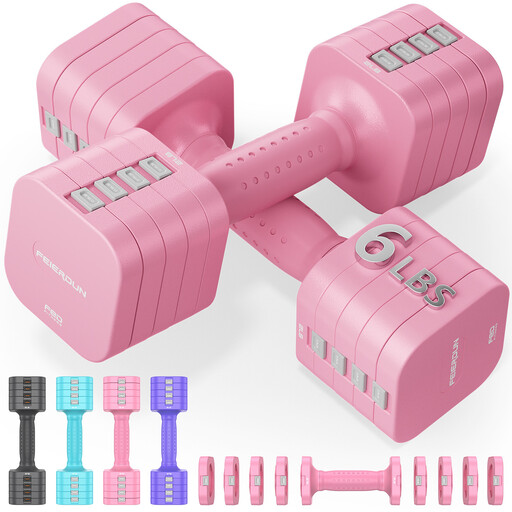
Why it suits this profile: This set is designed for light strength training, Pilates and home workouts. Its compact size means it needs very little storage space.
The set has no bulky frame, so it avoids the common problem of equipment taking up space when left unused. Check both locking mechanisms before use.
2 x 2.7 kg, double-locking mechanism, non-slip coating and an easy-to-store design.
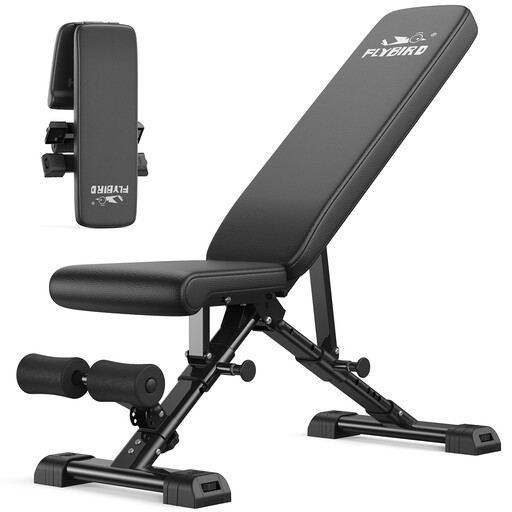
Why it suits this profile: This adjustable weight bench is a good fit for anyone looking for multiple positions and a high stated weight capacity for dumbbell workouts.
The bench folds away and, according to the product description, arrives 80% pre-assembled. Always check that it is locked securely before adding any weight.
Multiple positions, foldable frame and a stated maximum weight capacity of 363 kg.

Why it suits this profile: This strength station combines a weight bench, pull-up bar and dip station, making it a good choice for anyone who wants to do several bodyweight exercises in one place.
Its functions are clearly described and it isn’t limited to a single exercise. However, the frame needs a permanent spot and must be assembled. Use it only on a level surface.
Adjustable height, steel frame, integrated bench and a stated weight capacity of 480 lb, approximately 218 kg.
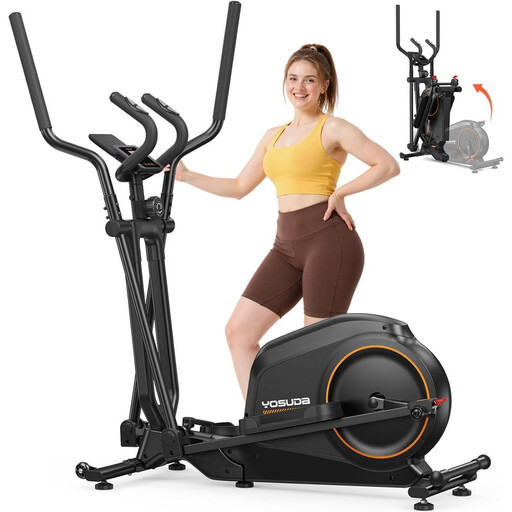
Why it suits this profile: This cross trainer is designed for home cardio workouts where being able to put the equipment away afterwards is important.
The specifications state a folded footprint of around 0.2 m² and include transport wheels. Measure the space needed when it’s in use; the stride length is 38 cm.
16 resistance levels, foldable design, LCD display and non-slip pedals.
We’ve put together a full, up-to-date list of products that meet these strict selection criteria and the applicable European safety regulations.
Adjustable dumbbells, a foldable weight bench, a walking pad or a foldable cross trainer take up relatively little storage space. Always measure the space needed when the equipment is in use, not just its folded dimensions. Also consider noise, floor protection and how you’ll move it to a cupboard or storage area.
Its lifespan depends on the materials, how often you use it, how it’s assembled and how well it’s maintained. Check bolts, hinges, locking mechanisms and cables regularly. For a walking pad, you should also check belt alignment and tension, and lubricate it as instructed in the manual. Stop exercising if you notice any damage or unusual noises.
As well as the purchase price, you may need to budget for electricity, floor protection, maintenance and additional weights. Strength equipment without electronics generally doesn’t use electricity. Cardio equipment does, so check the product specifications and think about how often you expect to use it. That way, you can compare not only the upfront price but also the practical costs over time.
