
Vandaag of morgen in huis

Kwaliteit gegarandeerd

Welkomstaanbiedingen ontgrendelen: GRATIS bezorging | Tot 80% korting | Gratis 30 dagen JoyPlus-proefperiode
Download de app
Starting a home gym sounds simple, until you have to choose between dumbbells, a weight bench, exercise bike, spinning bike, cross trainer, treadmill or power tower. Marketing copy often focuses on lots of features, high weight capacities and smart apps. However, the dimensions, adjustability and build quality are what really determine whether home fitness equipment remains comfortable to use.
The following pitfalls are common:
Do not start with the brand or appearance. Start with the exercises you want to do regularly.
Also consider how often you train. For a few short sessions each week, a simple set of dumbbells may be enough. If you train every day, you will benefit more from sturdy materials, clear adjustment options and components that are easy to maintain.
Do not just measure the space where you intend to store the equipment. Also check the clear space around it. With a treadmill, for example, you need room behind and alongside the machine. An exercise bike or spinning bike must stand securely, while a power tower needs sufficient ceiling height.
For a foldable cross trainer, it is useful to check the stated folded footprint. The YOSUDA cross trainer, for example, lists a folded footprint of approximately 0.2 m². However, check whether you can actually move the machine easily after every workout.
The maximum weight capacity is a product specification, not a guarantee that every use will feel comfortable. Look at the frame, footrests, rubber non-slip feet and the surface you train on. A weight bench must lock securely in every position. With dumbbells, the shape is important: hexagonal ends are less likely to roll away when you put them down.
Never use equipment above the stated limit. The Advamsoler spinning bike lists a weight capacity of 350 lb, while the YOSUDA indoor bike specifies a maximum load of 160 kg. Always check the product specification on the product page and take your body weight plus any additional load into account.
Adjustable dumbbells save space, but the locking mechanism must be properly secured before every exercise. With a weight bench, check the locking pins and hinges. With cardio equipment, pay attention to the resistance levels, saddle and handlebar adjustment, drive system and transport wheels.
Maintenance is usually straightforward: wipe the frame clean, check the bolts and place the equipment on a flat, stable surface. Also follow the manufacturer's safety warnings and assembly instructions.
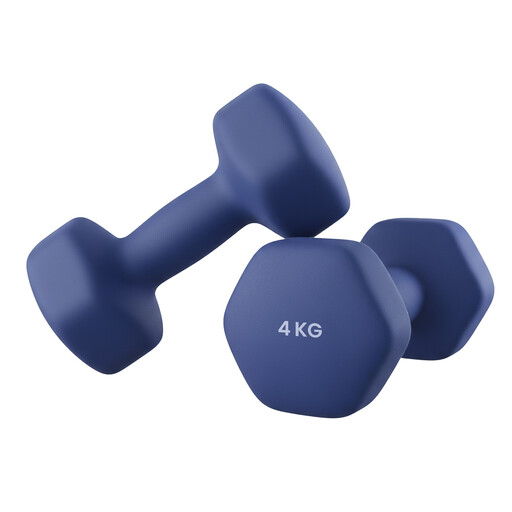
Why it suits this profile: This set of two 4 kg dumbbells is a straightforward choice for beginners starting strength training at home and takes up very little storage space.
According to the product description, the hexagonal shape prevents the weights from rolling away easily. The fixed weights also avoid a complicated adjustment mechanism.
Cast-iron construction, neoprene coating and a weight of 2 x 4 kg. The manufacturer states that the weight may vary by 3%.
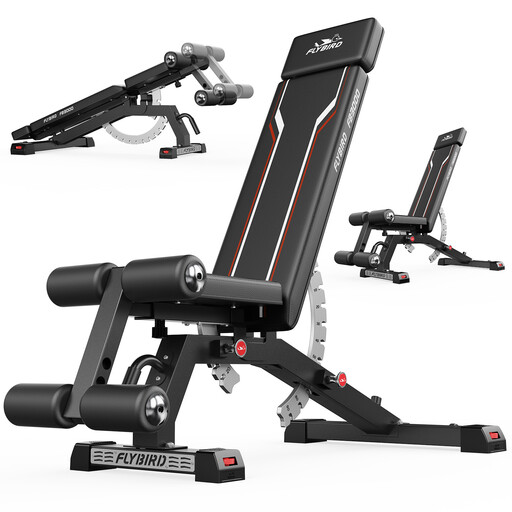
Why it suits this profile: This adjustable weight bench is designed for users who want to combine several strength-training exercises in one home gym.
The bench is foldable and has a quick adjustment mechanism. However, always check the locking mechanism and attachment points before use.
Multiple positions for flat, incline and decline exercises, a steel frame and delivery that is approximately 80% pre-assembled, according to the product information.
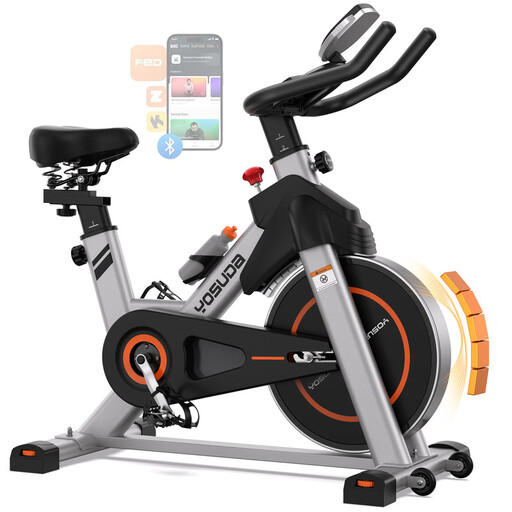
Why it suits this profile: This spinning bike is designed for regular cardio training, with an adjustable saddle and handlebars, magnetic resistance and a sturdy steel frame.
The product description states that the saddle has four-way adjustment and that the magnetic resistance system works without direct contact. Even so, adjust the bike carefully to suit your height.
An 8 kg flywheel, LCD display, Bluetooth app connectivity, transport wheels and a stated maximum load of 160 kg.
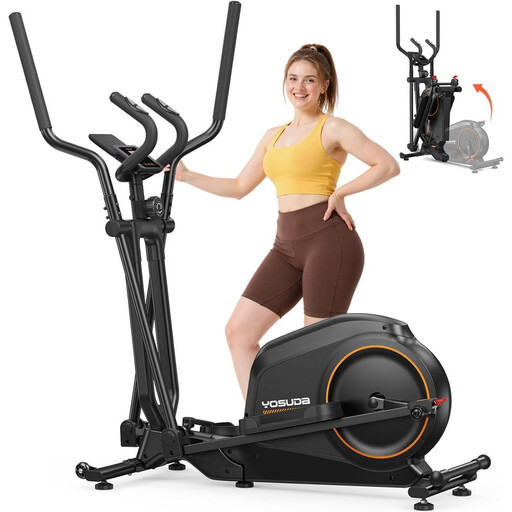
Why it suits this profile: This foldable cross trainer is a practical choice for anyone looking for cardio equipment that can be moved into a corner or another room after use.
The three-step folding design and transport wheels make storage easier. However, measure the available space beforehand to accommodate the full 38 cm stride length.
16 resistance levels, LCD display, non-slip pedals and a noise level below 20 decibels, as stated by the manufacturer.
We have put together a complete, up-to-date list of products that fully meet these strict selection criteria and the applicable European safety regulations.
Dumbbells, adjustable dumbbells and a foldable weight bench take up relatively little storage space. For cardio, a compact exercise bike or foldable cross trainer are practical options. Always measure the equipment when it is in use and check whether it has transport wheels.
Its lifespan depends on how often it is used, the load, maintenance and storage conditions. Regularly check the bolts, hinges, cables and locking mechanisms. Keep the equipment somewhere dry and on a level surface. For electric cardio equipment, follow the manufacturer's instructions.
As well as the purchase price, you should consider electricity consumption, maintenance and any app subscription fees. A spinning bike or exercise bike without a mandatory service will generally have lower ongoing costs than equipment that requires a paid training platform. Before buying, check which features work without a subscription.
