
Vandaag of morgen in huis

Kwaliteit gegarandeerd

Welkomstaanbiedingen ontgrendelen: GRATIS bezorging | Tot 80% korting | Gratis 30 dagen JoyPlus-proefperiode
Download de app
A home EV charging station can make everyday use of an electric car easier. Yet many drivers choose a wallbox based only on its maximum kilowatt rating or an attractive app. This can leave you with a charging station that isn’t suitable for your electrical installation, car or available space.
These points will help you compare a home EV charger, a Type 2 charging station or a mobile EV charger.
A 22 kW charging station can only actually deliver 22 kW if three conditions are met:
Many electric cars limit their own charging capacity to 7.4 or 11 kW. In that case, a more powerful wallbox won’t charge the car any faster, but it may result in higher installation costs.
Wi-Fi, Bluetooth and an app-enabled charging station are useful for starting, stopping and scheduling charging. However, this doesn’t automatically mean the station measures your home’s total electricity consumption.
With dynamic load balancing, the charging current is adjusted when, for example, an oven, heat pump or washing machine is drawing a lot of power. So check that this feature is explicitly listed in the product specifications, and whether additional monitoring equipment or installation is required.
European electric cars often have a Type 2 connection, but a wallbox may come with:
So check whether a cable is included, how long it is and whether it’s suitable for the current you need. A 5 or 7-metre cable gives you more flexibility, but also takes up more space.
For many households, an 11 kW charging station is a practical choice. It usually works with a three-phase connection and 16 amps per phase, provided your car supports 11 kW AC charging. A 7.4 kW model works on a single phase and may be suitable for homes without a suitable three-phase connection.
A 22 kW model places greater demands on your electrical installation. According to the product information for various Feyree models, it will usually require a dedicated 32A circuit with three phases. Ask a qualified installer to check in advance that your connection, residual-current protection and cable cross-section are suitable.
Look for features such as:
An IP65 or IP66 rating describes the enclosure’s level of protection according to the product information. The installation location, wiring and setup still matter. Don’t install a charging station somewhere exposed to direct jets of water or where the ground may become flooded.
A smart EV charger with Wi-Fi can let you monitor charging remotely and set a start time. This is useful if you mainly want to charge overnight or during cheaper periods. Whether it will actually save you money depends on your energy supplier, tariff and current rates.
Also check the app’s reliability, the connection types it supports and whether you can set the charging current. A display on the charging unit can be handy if you’d rather not open the app.
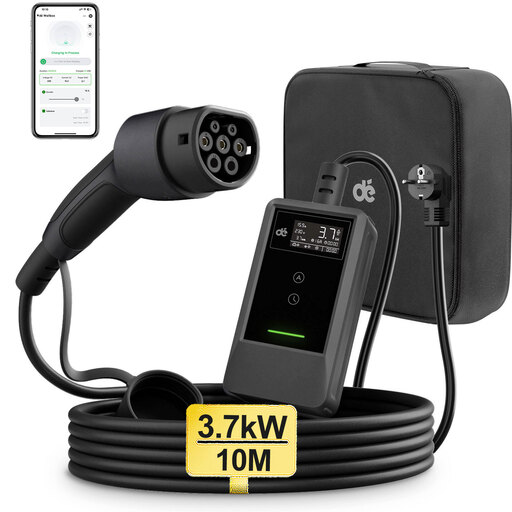
Why it suits this profile: A compact choice for anyone looking to start charging an electric car at home without needing 11 or 22 kW. The 10-metre cable gives you extra reach around your parking space.
Its 3.7 kW charging capacity makes it clear that this model is designed for slower, single-phase charging, not for an unsuitable 22 kW installation.
According to the product name: Wi-Fi, app control, Type 2 and a 10-metre cable.
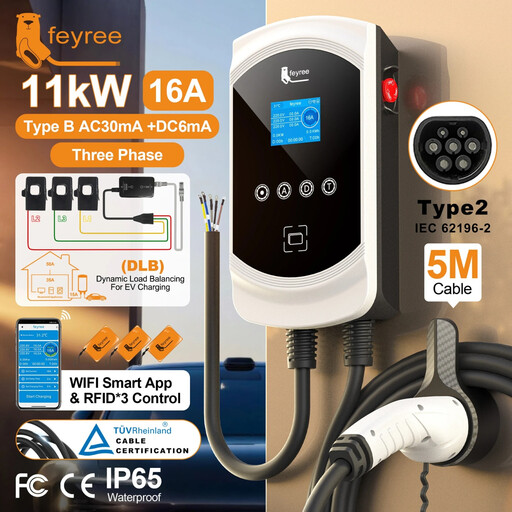
Why it suits this profile: Suitable for drivers with a three-phase connection who value charging capacity, app control and automatic distribution of available power.
The product description explicitly mentions dynamic load balancing. Check that the required monitoring module and installation are suitable for your home.
According to the product information: 11 kW, three phases, Wi-Fi/app, Type 2, adjustable current and an LCD screen.
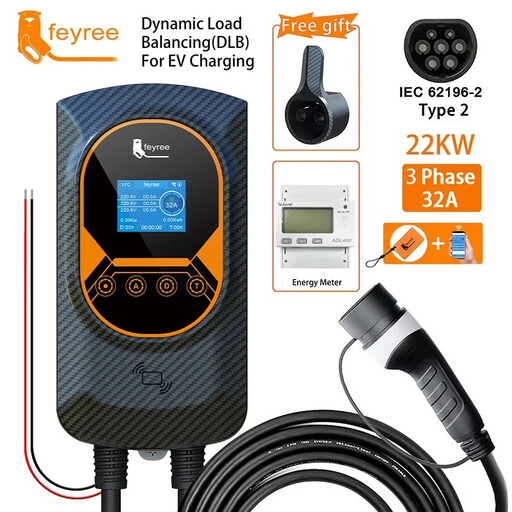
Why it suits this profile: Designed for frequent use, homes with several electrical appliances or multiple charging points where it’s important to distribute the available capacity.
The specifications mention load balancing, allowing the charging capacity to be adjusted in line with other household power use. An installer should assess the 22 kW connection in advance.
According to the product description: 22 kW, three phases, 5-metre Type 2 cable, IP66, app control and adjustable charging current.
We’ve put together a complete, up-to-date list of products that meet these strict selection criteria and the applicable European safety regulations.
Have a fixed wallbox connected by a qualified installer. A dedicated circuit, correct residual-current protection and suitable cables matter more than the charging capacity printed on the packaging. Don’t use an extension lead or an unsuitable adapter for a fixed charging solution.
After installation, check that:
For a plug-in hybrid, 3.7 or 7.4 kW is often enough, as its smaller battery usually can’t make use of the same charging speed as a fully electric car. Whether you drive a Tesla, Volkswagen, BMW, Mercedes-Benz, Audi, Renault, Hyundai, Kia or Volvo, the onboard AC charger in your specific model will determine the charging capacity.
The cost depends on the number of kilowatt-hours used, your energy tariff and any fixed charges on your contract. An app can schedule charging, but it doesn’t guarantee savings. Check off-peak rates yourself and look at your actual energy use in the app or on your energy meter.
Its lifespan depends on how often it’s used, how it’s installed, exposure to moisture, temperature and maintenance. A charging station with a suitable IP rating, sturdy cable and correct installation can be suitable for regular use. Replace a damaged cable or connector straight away, and stop using a faulty charger.
Not always. Cars with a Type 2 connection can often charge from the same AC wallbox, but the maximum capacity varies by vehicle. Also check whether the wallbox has a fixed charging cable or requires a separate charging cable for electric cars, which you’ll need to buy yourself.
