
Vandaag of morgen in huis

Kwaliteit gegarandeerd

Welkomstaanbiedingen ontgrendelen: GRATIS bezorging | Tot 80% korting | Gratis 30 dagen JoyPlus-proefperiode
Download de app
Charging an electric car at home is not only convenient, but it's also often more cost-effective than public charging. However, the search for the right home EV charger can feel like navigating a maze of technical jargon and marketing promises. As a result, many EV drivers make costly mistakes with their purchase.
As a Joybuy Product Recommendation Officer, I see the choices people make every day. To help you avoid a bad purchase, I've outlined the three most common pitfalls.
smart charger.wallbox is a popular choice, but not always the right one. For those who rent or want to use the charger at another location, a powerful portable car charger can be a more versatile and practical alternative.Before you choose a model, there are a few technical specifications that determine whether a charger is right for your situation. Understanding these will help you easily filter through the options.
The charging power, expressed in kilowatts (kW), determines how quickly your car charges. This depends on three factors: the charging station, your car's built-in on-board charger, and your electrical connection.
11kW charger (3x16A) or even a 22kW (3x32A) charger possible. This is ideal for all-electric cars with a large battery.Tip: Check your electrical panel or your energy provider's annual statement to see what type of connection you have. Installing a 3-phase charger on a single-phase connection is pointless.
A smart charger is more than just a gadget. It's a tool for saving money and protecting your electrical system.
charger with load balancing continuously measures the total electricity consumption in your home. Turning on the washing machine and the oven? The charger will temporarily reduce the power to your car to prevent overloading your main circuit breaker. This is a crucial feature for households with many electrical appliances.All modern electric cars in Europe use a Type 2 EV charger connection. The choice lies in how the cable is attached to the charging station.
wallbox with only a Type 2 socket. You use your own separate charging cable. This offers more flexibility (you can use a longer cable) and looks neater, but it does require an extra step.To get you started, we've matched a few chargers to common user profiles. These aren't "winners," but practical choices that fit specific needs and situations.
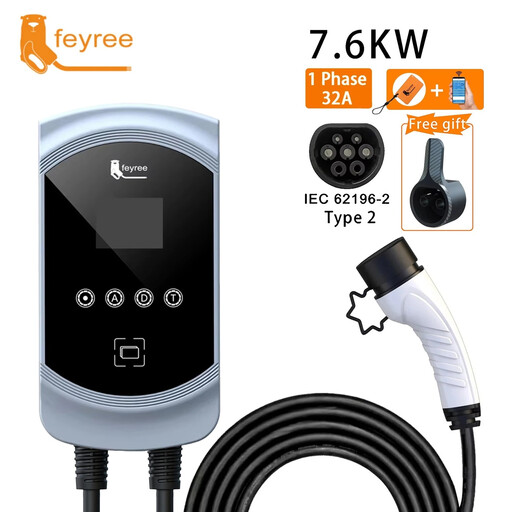
Why This Fits Their Persona: Ideal for owners of a plug-in hybrid or a first-time EV with a single-phase connection. It provides enough speed to fully charge the car overnight without needing a costly electrical panel upgrade.
You don't pay for 3-phase power you can't use. Thanks to its Wi-Fi connectivity and Tuya app support, you can schedule charging sessions to save on your energy bill.
Solid 7.4kW charging power on a single phase; adjustable current (8A-32A) and smart control via an app.
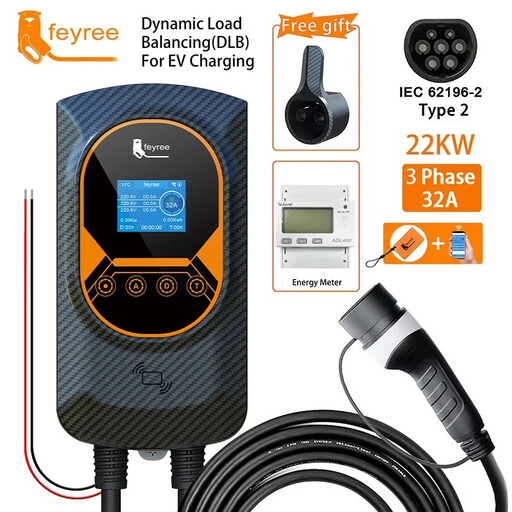
Why This Fits Their Persona: For the EV owner with a 3-phase connection who wants to maximise their charging capabilities, both now and in the future. The load balancing feature ensures safe and efficient charging, even when other large appliances are running.
This is the ultimate smart feature. Dynamic Load Balancing (DLB) prevents you from overloading the main circuit breaker, a common concern with high-power chargers. You can utilise the full power without any risk.
Dynamic load balancing for maximum charging speed without worry; powerful 22kW output for fast charging times.
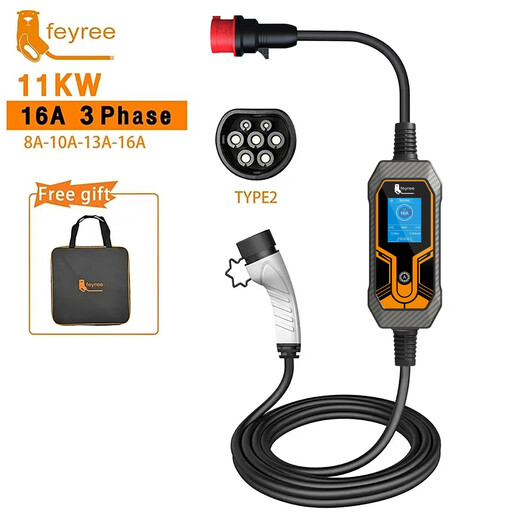
Why This Fits Their Persona: Perfect for those who rent, don't have a dedicated parking spot, or want to take their charger to a holiday home or to visit family. This `portable car charger` connects to a CEE high-power socket for surprisingly fast charging without a fixed installation.
You avoid the cost and permanence of a fixed `wallbox` installation. This model offers the freedom to charge wherever a high-power (CEE) socket is available.
Portable yet powerful with 11kW charging capacity on 3-phase. The LCD screen provides instant insight into the charging status.
We have compiled a complete, up-to-date list of products that meet these selection criteria and Dutch safety regulations.
This depends on your car and your electrical panel. First, check the specifications of your car's on-board charger (the maximum AC charging power). Then, check if you have a single-phase or 3-phase connection in your electrical panel. Choose a charger that matches the lower of these two values. An 11kW charger only makes sense if both your car and your home support a 3-phase connection.
Dynamic Load Balancing (DLB) is a feature that adjusts the car's charging power based on the total electricity consumption in your home. It's not strictly necessary if you're using a low charging power (e.g., 3.7kW) and have few other major power consumers. However, it is highly recommended for chargers of 11kW or more, or in households where appliances like a heat pump, induction hob, or tumble dryer are often running simultaneously. It prevents your main circuit breaker from tripping.
No. In many regions, including the Netherlands, it is a legal requirement to have an EV charger installed by a certified and qualified electrician. This is to ensure safety and compliance with local standards (like the NEN 1010 in the Netherlands). An incorrect installation can lead to fire hazards, damage to your car and electrical system, and issues with your insurance.
