
Vandaag of morgen in huis

Kwaliteit gegarandeerd

Welkomstaanbiedingen ontgrendelen: GRATIS bezorging | Tot 80% korting | Gratis 30 dagen JoyPlus-proefperiode
Download de app
A dedicated home EV charger is no longer a luxury, but a smart move for every electric car owner. The convenience of charging overnight and starting your day with a full battery is invaluable. However, the search for the right charger can feel like a maze of technical jargon, marketing promises, and unexpected costs. Many people fall into the same traps, causing them to overpay for a solution that doesn't fit their needs.
Before you make a decision, it's crucial to recognise three common missteps:
This guide will help you navigate these pitfalls and find a charging solution that fits your car, home, and budget.
You don't need to be an electrician to make the right choice. Focus on three core specifications that determine which charger is right for your situation.
This is the most important technical decision. It determines how fast you can charge and whether your electrical panel needs to be upgraded.
A smart charger is more than a gadget; it's a tool to save costs and protect your electrical system. The most important feature is Dynamic Load Balancing (DLB).
A charger with dynamic load balancing continuously measures how much power is being consumed in the house. Are you turning on the washing machine and the oven? The charger will automatically reduce the charging power to the car to prevent overloading your main circuit breaker. Is other consumption low (for example, at night)? Then the full available power goes to the car. This ensures safe and maximally efficient charging without you having to think about it.
All modern chargers in Europe use the standard Type 2 charger plug, so you usually don't have to worry about compatibility with your car.
Based on these criteria, we've matched several popular choices from the Feyree brand to different user profiles.
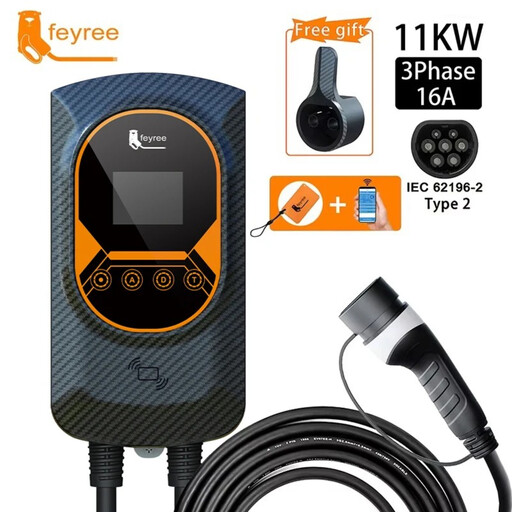
Why This Fits Their Persona: Ideal for the daily EV driver with a 3-phase connection. This wallbox offers a solid 11 kW charging power, which can fully charge most modern electric cars overnight. The app control makes it easy to schedule charging sessions during off-peak hours.
This is not a 'dumb' charger; its smart app features actively help you save on your energy bill. Furthermore, 11 kW is a perfect balance between speed and cost, without paying for superfluous 22 kW power.
11 kW charging power: A future-proof speed for most EVs. WiFi & App Control: Monitor and schedule charging sessions remotely via the Tuya app.
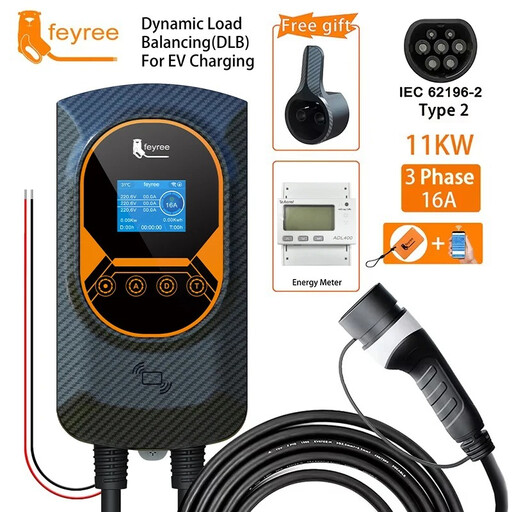
Why This Fits Their Persona: For households with high power consumption. This wallbox with Dynamic Load Balancing (DLB) ensures the car always charges as fast as possible without overloading the main circuit breaker. Safety and efficiency go hand in hand here.
This charger tackles a hidden problem: grid overload. The DLB function prevents unexpected power outages and ensures a stable charging experience, a crucial detail that is often overlooked.
Dynamic Load Balancing: Automatically adjusts charging power based on household electricity consumption. IP66 Certification: Suitable for indoor and outdoor installation, resistant to dust and rain.
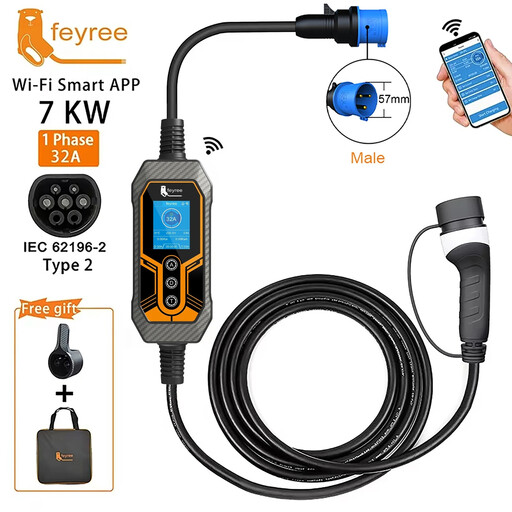
Why This Fits Their Persona: No hassle with installers or modifications to the electrical panel. You plug this portable charger directly into a CEE socket. Ideal for renters, people with varying parking spots, or if you want to take the charger with you on a trip. Despite its portability, it has smart app features.
This charger completely bypasses the 'one-size-fits-all' pitfall. It offers the flexibility that a fixed wallbox cannot provide, without compromising on smart features for scheduled charging. You don't invest in a permanent installation in a home you don't own.
Portability: No installation required, easy to take with you. Smart App Control: Set charging times to take advantage of off-peak rates, even with a portable charger.
We've compiled a complete, up-to-date list of products that fully meet these strict selection criteria and European safety standards.
The costs vary greatly. A portable EV charger has virtually no installation costs, as long as you have the correct socket. For a fixed wallbox, you should expect installation costs from a certified electrician. This can range from a few hundred to over a thousand dollars, especially if your electrical panel needs to be upgraded for a 3-phase charger.
Absolutely. A smart charger is ideal for this. Through its companion app, you can set the charger to primarily charge when your solar panels are generating power. This allows you to maximise the use of your own free electricity and significantly reduce charging costs.
A quality EV charger is designed for years of use. When purchasing, look for good weather resistance, indicated by an IP65 or IP66 rating. This means the housing is well-protected against dust and water. The technology is stable, and the Type 2 connection is the standard in Europe, so your investment will typically outlast the lifespan of a single car.
