
Vandaag of morgen in huis

Kwaliteit gegarandeerd

Welkomstaanbiedingen ontgrendelen: GRATIS bezorging | Tot 80% korting | Gratis 30 dagen JoyPlus-proefperiode
Download de app
Having your own EV charger at home is no longer a luxury; it's the key to affordable and convenient electric driving. Never again wait at a public charging station and always leave with a full battery. But when choosing a home charger, or EV charger, a few costly pitfalls lie in wait. Many buyers pay too much for features they don't need or face unexpected costs down the line.
As a Joybuy Product Recommendation Officer, I'm here to help you see through the marketing jargon. Let's look at the three most common mistakes and how you can avoid them.
You don't need to be an electrician to buy the right EV charger. Focus on these three practical specifications to find a model that perfectly matches your situation.
This is the most important technical choice. Your electrical panel determines what's possible.
Tip: Check your annual statement from your energy supplier or look at the electricity meter in your fuse box. If you see 230V listed, you likely have a single-phase connection. If it says 3x230/400V, you have a three-phase connection.
A smart EV charger pays for itself. The most important feature is the ability to schedule charging sessions via a charger with an app. This allows you to set your car to charge only at night during off-peak hours, which directly saves you money on your energy bill.
Another useful feature is Dynamic Load Balancing. This ensures the charger automatically reduces its power output when other large appliances in the house (like the washing machine or oven) are turned on. This prevents your main breaker from tripping.
All modern EV chargers in Europe use the Type 2 charging station connector, so you don't need to worry about compatibility.
Below are some popular choices, tailored to different user profiles.
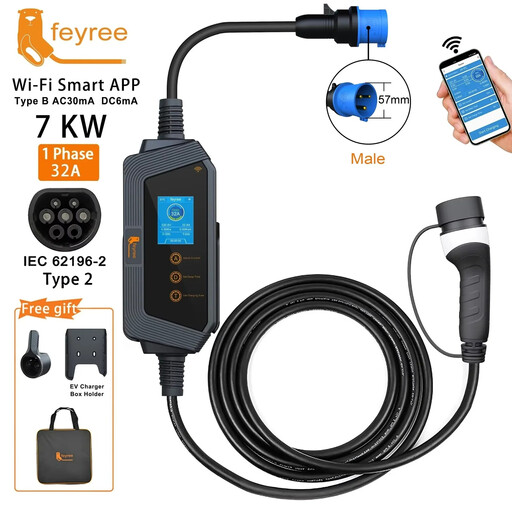
Why This Fits Their Persona: Perfect for households with a single-phase connection and a PHEV or an EV with a standard battery pack. It provides enough charging speed to fully charge the car overnight without needing an expensive upgrade to the electrical panel.
This charger sidesteps the "dumb charger" blunder. Thanks to its Wi-Fi connectivity and Tuya app, you can schedule charging sessions during off-peak hours, which directly saves you money.
Flexible installation (portable or fixed with a holder) and adjustable current (8A-32A) for maximum compatibility with your electrical system.
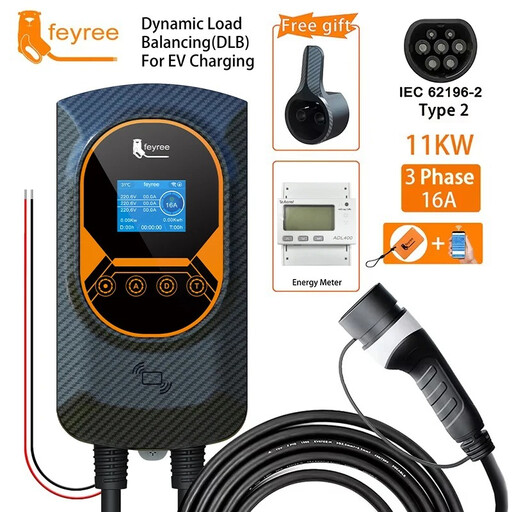
Why This Fits Their Persona: Ideal for owners of a fully electric car with a three-phase connection. The 11kW charging speed is the 'sweet spot' for fast and efficient home charging, while the smart features provide maximum control and safety.
This model tackles the "22kW trap" and hidden costs. It delivers the optimal 11kW power, and the Dynamic Load Balancing (DLB) feature prevents overload, often making an expensive supply upgrade unnecessary.
The built-in Dynamic Load Balancing is a premium feature that intelligently manages power delivery to the car, ensuring your household continues to run smoothly.
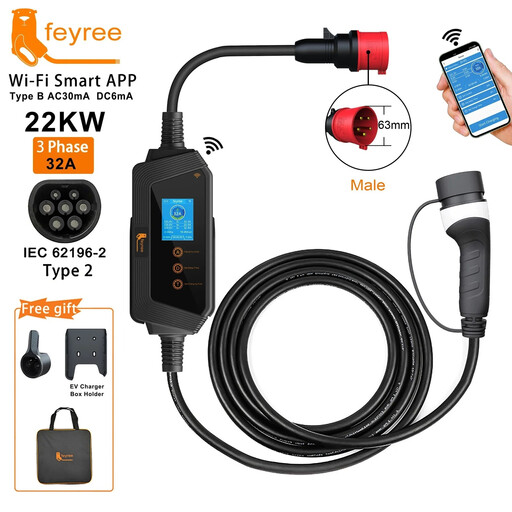
Why This Fits Their Persona: For those who want to combine the convenience of home charging with the freedom to charge anywhere. This powerful mobile charger can function as a wallbox at home with a holder, but also easily comes along on trips.
This model offers maximum flexibility. You're not just buying a charger for home, but also a mobile charger for on the go. This means you don't have to purchase two separate devices.
Supports both single-phase and three-phase charging up to 22kW (depending on the power source). The app control and adjustable power make it suitable for almost any situation.
We have compiled a complete, up-to-date list of products that meet these strict selection criteria and UK safety regulations.
This depends on two things: your electrical panel and your car. First, check your main electrical supply. Do you have single-phase? Then choose a single-phase charger (max. 7.4kW). Do you have three-phase? Then you can consider a 3-phase EV charger (11kW or 22kW). Next, check your car's maximum AC charging speed. A car that can only charge at 11kW will not benefit from a 22kW charger. An 11kW charger is the most efficient choice for most EVs with a three-phase connection.
Installation costs vary, but expect to pay between ?300 and ?2,000. The price depends on the complexity: the distance from the electrical panel to the charger, whether trenching is required, and if any modifications are needed in the panel (like an additional RCD or installing a new circuit for three-phase). Always request a quote from a certified installer.
No, it is strongly advised not to install an EV charger yourself unless you are a qualified electrician. Connecting a charger requires specialist knowledge of electrical installations and safety standards. Incorrect installation can lead to fire hazards, damage to your car, and voiding the warranty. Always hire a professional. Of course, you can use a mobile car charger that plugs into an existing (industrial) socket yourself.
