
Vandaag of morgen in huis

Kwaliteit gegarandeerd

Welkomstaanbiedingen ontgrendelen: GRATIS bezorging | Tot 80% korting | Gratis 30 dagen JoyPlus-proefperiode
Download de app
A dedicated home charging station is no longer a luxury, but a practical necessity for anyone who drives an electric vehicle. The convenience of starting your day with a full battery is priceless. Yet, the market for EV chargers is a maze of technical specifications, marketing promises, and hidden costs. Many buyers fall into the same traps, ending up with a charger that's too slow, trips the circuit breaker, or has features they've overpaid for.
As a Joybuy Product Recommendation Officer, I'm here to help you make the right choices. We'll look past the marketing and focus on the facts. These are the most common mistakes and how to avoid them.
Before you choose a model, it's crucial to know where things often go wrong. Many chargers look ideal on paper but turn out to be a bad purchase in practice.
The 'Phase' Mistake: A 1-Phase Charger for a 3-Phase Car (or Vice Versa) The biggest mistake is ignoring the connection in your electrical panel. A 3-phase EV charger can charge your car much faster, but only if your home and your car both support it. Installing a 1-phase charger on a 3-phase connection is a waste of potential. Conversely, a 3-phase charger on a 1-phase panel may not work at all or will charge extremely slowly. This results in unnecessarily high installation costs or daily frustration.
Paying for 'Smart' Features That Don't Work A smart EV charger with app control sounds great: charge during off-peak hours and check the status remotely. The reality can be different. Some apps are unstable, constantly lose connection, or are needlessly complex. The term 'load balancing' is also often misused. True dynamic load balancing is essential, but many cheaper systems only offer a fixed, lower charging mode.
Underestimating Hidden Installation Costs You can buy a wallbox online, but it won't install itself. The installation requires a certified electrician, a separate circuit in the electrical panel, and sometimes even an upgrade to your main connection. These costs can add up and are often forgotten at the time of purchase. A portable car charger can be an alternative, but it also requires a suitable and safe power socket.
To sidestep the pitfalls, you need to understand three technical aspects. These determine the performance, safety, and cost of your charging solution.
The charging capacity, expressed in kilowatts (kW), determines how quickly your battery fills up. This is directly linked to your electrical panel.
So, always check your electrical panel and your car's maximum charging capacity first. In Europe, the plug is almost always a Type 2 EV charger.
This is arguably the most important feature for a modern household. An EV charger with dynamic load balancing continuously measures the total electricity consumption in your home. Turning on the washing machine or oven? The charger automatically reduces the power to the car to prevent overloading your main connection. Is the laundry done? The charging speed increases again. This ensures you always charge at the maximum safe speed without having to think about it.
A smart EV charger connected to Wi-Fi offers practical benefits. Through an app on your phone, you can:
Choose a charger that uses a well-known and stable app, like the Tuya Smart app, to avoid connectivity issues.
Based on these criteria, we have selected a number of charging solutions that suit different user profiles.
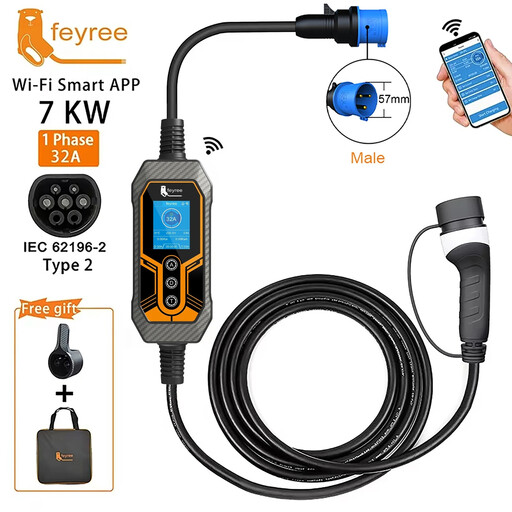
Why This Fits Their Persona: Ideal for those who rent, have a simple 1-phase electrical system, or want a charging solution without the immediate cost and hassle of a fixed installation. You can take it with you and use it at any location with a suitable CEE socket.
This portable car charger bypasses the pitfall of high installation costs (Pitfall 3). It's designed for 1-phase use, which prevents a mismatch with your electrical panel (Pitfall 1).
No fixed installation required. The Wi-Fi app allows you to schedule charging times and adjust the amperage, making it a surprisingly smart and flexible option.
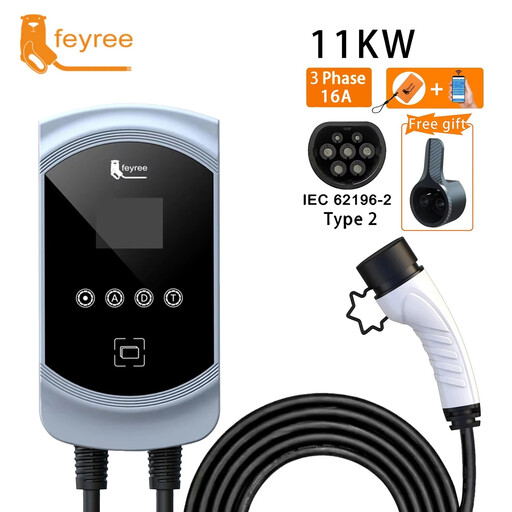
Why This Fits Their Persona: Perfect for homeowners with a 3-phase electrical system who want a fast, reliable, and permanent charging solution. This wallbox is the gold standard for efficiently charging modern electric cars.
This 11kW EV charger makes optimal use of a 3-phase connection, avoiding the pitfall of a slow charger (Pitfall 1). The Tuya app provides stable, smart features that actually work (Pitfall 2).
Provides fast and efficient 11 kW charging, significantly reducing charging time. Full remote control via the app for scheduling charging sessions and monitoring status.
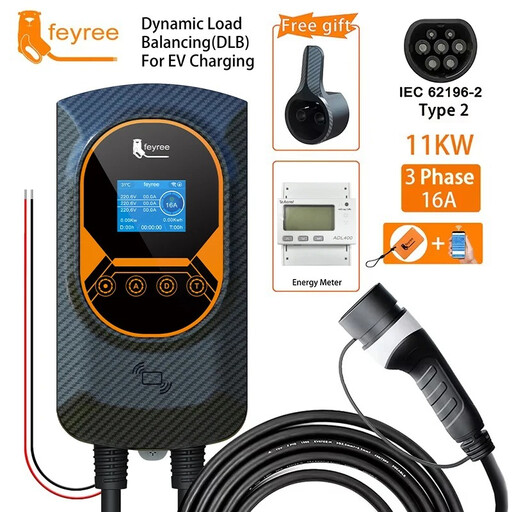
Why This Fits Their Persona: For the user with a busy household (think heat pump, induction hob) who wants to get the most out of their grid connection without the risk of overload. This Feyree EV charger is the smartest choice.
Tackles the core of Pitfall 2 by offering true dynamic load balancing. The system dynamically adjusts the charging speed based on the current energy consumption in the house, rather than simply limiting the current.
Maximum charging speed without the risk of a power outage. The system operates completely autonomously, so you don't have to make any adjustments yourself. Ideal for peace of mind when charging your electric car at home.
We have compiled a complete, up-to-date list of products that fully meet these strict selection criteria and comply with European safety standards.
Installation costs for a fixed wallbox vary, but expect to pay between €300 and €800. This depends on the necessary adjustments to your electrical panel and the distance from the panel to the charger. Always request a quote from a certified installer.
Almost all modern electric cars and charging stations in Europe use the standardised Type 2 EV charger (Mennekes) plug. So, compatibility is high. However, it's important that the charging capacity (kW) and the number of phases (1 or 3) of the charger match what your car can handle to ensure optimal charging speed.
Yes, provided that both your car and your electrical panel support a 3-phase connection. An 11kW EV charger (3-phase) charges about three times faster than a standard 3.7 kW (1-phase) charger. However, if your car can only handle 1-phase charging, a 3-phase charger will also only charge on a single phase, making the extra investment in the charger and installation not worthwhile. Always check your car's specifications.
