
Vandaag of morgen in huis

Kwaliteit gegarandeerd

Welkomstaanbiedingen ontgrendelen: GRATIS bezorging | Tot 80% korting | Gratis 30 dagen JoyPlus-proefperiode
Download de app
An electric car is a smart move, but its convenience lives and dies by a good home charging solution. However, the market for EV chargers is saturated with marketing jargon and features that not everyone needs. The wrong choice can lead to unnecessarily high costs, slow charging speeds, or even an overloaded electrical grid. As a Joybuy Product Recommendation Officer, I'll help you choose the right home EV charger without paying for extras you won't use.
Before you buy an EV charger, it's important to recognise the most common pitfalls:
smart EV charger with an app is useful, but only if the basic functions (charge scheduling and consumption monitoring) are stable and easy to use.1-phase or 3-phase connection.EV charger can be a risk. For a device that operates daily at high power and is exposed to the elements, a solid waterproof rating (IP rating) and built-in electrical protections are not a luxury, but a necessity.Don't get distracted by marketing jargon. Focus on these three technical points to find the right EV charger for your situation.
The speed at which your car charges is expressed in kilowatts (kW). This depends on three factors: the EV charger, the grid connection in your electrical panel, and your car's 'on-board charger'. The weakest link determines the final charging speed.
3-phase EV charger. An 11kW wallbox (3x16A) is a popular and future-proof choice supported by most modern EVs. A 22 kW charger (3x32A) requires a very heavy-duty and expensive grid connection that most households don't have or need.Tip: Check your car's specifications to see the maximum AC charging capacity it can handle (e.g., 1-phase 7.4 kW or 3-phase 11 kW). Also, check your electrical panel (or have an electrician do it) to see what type of connection you have.
A 'smart' EV charger is only truly smart if it saves you money or makes your life easier. Two features are genuinely valuable here:
An EV charger is often installed outdoors and must be able to withstand the climate.
Based on these criteria, we have selected a number of charging solutions that suit different user profiles.
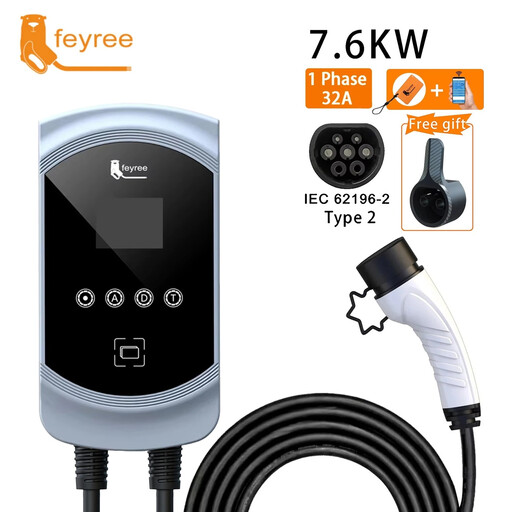
Why This Fits Their Persona: Ideal for those seeking a reliable and affordable 1-phase charging solution. The 7.4 kW capacity is more than sufficient for most PHEVs and many EVs for daily charging. The app control is a valuable addition in this price range.
This charger focuses on the core function: reliable charging. It avoids the pitfall of overpaying for complex features and provides the essential scheduling and monitoring tools you actually use via the Tuya app.
Excellent value for money. Offers app control for scheduling charges during off-peak hours and has an IP65 rating for safe outdoor installation.
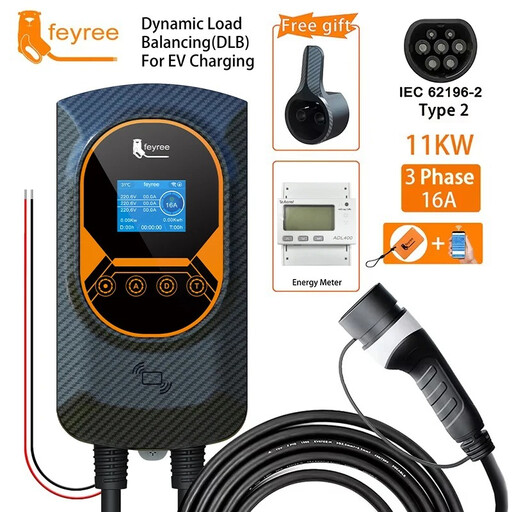
Why This Fits Their Persona: Perfect for homeowners with a 3-phase connection who want to maximise their charging speed without overloading the main fuse. The dynamic load balancing is the key feature here.
This charger solves the problem of a potentially overloaded electrical system. Instead of permanently setting a low charging power, it intelligently adapts, ensuring you always charge as fast as the household situation allows.
The Dynamic Load Balancing feature ensures worry-free and efficient charging. The IP66 rating and app control make it a complete and future-proof 11kW wallbox.
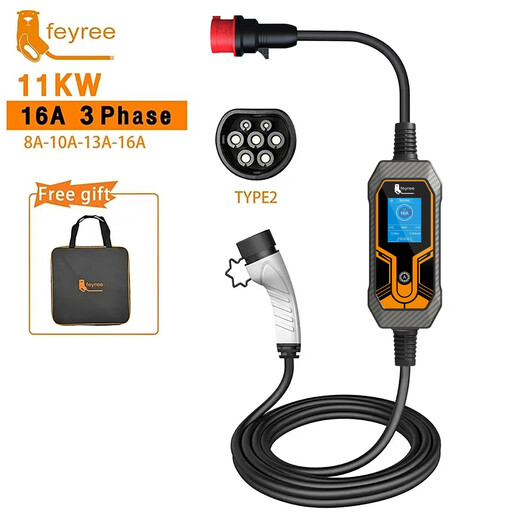
Why This Fits Their Persona: No fixed installation required. This portable car charger is perfect for those who rent, move frequently, or want to take a charger to a holiday home or family. It works directly with a red CEE three-phase power socket.
Bypasses the high installation costs and inflexibility of a fixed wallbox. You are not tied to one location and can charge wherever a suitable socket is available, without relying on expensive public charging stations.
Maximum flexibility and portability. Plug-and-play with a CEE socket, adjustable charging power, and a clear LCD screen for all charging data.
We have compiled a complete, up-to-date list of products that fully meet these strict selection criteria and safety regulations.
It is strongly advised not to install a fixed EV charger or wallbox yourself unless you are a qualified electrician. The installation requires modifications to the electrical panel and running a separate, correctly fused circuit. Mistakes can lead to fire hazards and damage to your car or home. Always hire a certified installer. Of course, you can plug in a portable car charger with a standard plug (Schuko or CEE) yourself.
Imagine you have a 3x25A main connection and an 11 kW (3x16A) 3-phase EV charger. When your car is charging at full power, it uses 16A per phase. If you now turn on an oven that draws 10A on the same phase, the total (26A) would exceed the 25A main fuse. Dynamic load balancing detects this. The DLB module signals the charger to reduce its power, for example, to 10A. The total consumption is then 20A, safely below the limit. As soon as the oven is turned off, the charging power to the car automatically increases again.
A charger with a tethered cable has the charging cable permanently attached to the wallbox. This is convenient: you park, grab the cable, and plug it in. The downside is that you are stuck with the length and type of plug (Type 2 is the standard in Europe). A charger with a socket has no fixed cable. You use your own separate charging cable. This is more flexible (you can use a longer cable, for example) and looks tidier when not charging. However, it does mean you have to get the cable out of your boot every time. The choice is mainly a matter of personal convenience.
