
Vandaag of morgen in huis

Kwaliteit gegarandeerd

Welkomstaanbiedingen ontgrendelen: GRATIS bezorging | Tot 80% korting | Gratis 30 dagen JoyPlus-proefperiode
Download de app
Charging your electric car at home is not only convenient, but it's also often more cost-effective than using a public charging station. You can say goodbye to queues and start every day with a full battery. But with so many options on the market, buying the right charging station can be a challenge. What power output do you need? And what are the benefits of a 'smart' charger?
As a Joybuy Product Recommendation Officer, I'm here to help you get started. In this article, we'll provide practical tips for choosing a home EV charger and highlight several popular choices based on their specifications.
Before you make a decision, there are a few key points to consider. This will help you find an EV charger that suits your car, your electrical panel, and your daily usage patterns.
The speed at which you can charge depends on the electrical connection in your home. Most houses have a single-phase connection as standard. For many plug-in hybrids and fully electric cars, this is sufficient for overnight charging.
Do you have a car with a large battery, or do you want to charge faster? Then a 3-phase charger is a better option. However, this requires your electrical panel to have a 3-phase connection (or be upgraded to one).
Not sure which connection you have? Check your electrical panel or consult a certified electrician for advice.
No matter how much power a charging station can deliver, the charging speed is ultimately determined by your car's built-in charger (the 'onboard charger').
11kw charger is often a good, future-proof choice for many modern electric cars.Therefore, always check your car's specifications before choosing a wallbox.
A smart charger offers more than just power. With a charger with an app, you can manage the charging process remotely. Features include:
These features provide extra convenience and can help reduce your charging costs.
Based on the criteria above, we have selected a few models that stand out for their specifications and features.
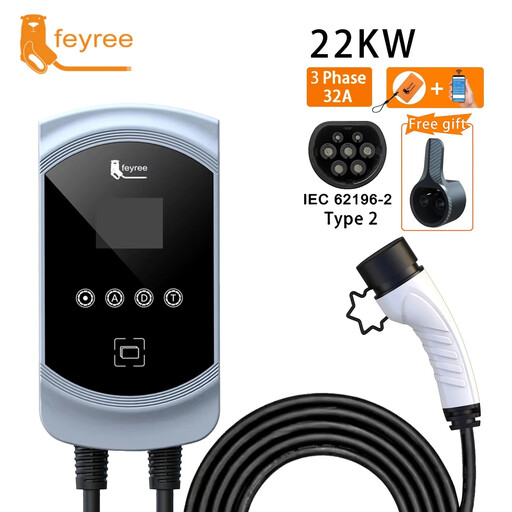
Why this model stands out This is a powerful 3 phase charging station that delivers a charging capacity of up to 22 kW. Its connectivity with the Tuya Smart app makes it a versatile choice for those who want full control and insight.
Advantages
Who is this for? For EV drivers with a 3-phase connection and a car that supports 22 kW AC charging. It's ideal if you want to minimise charging time and value smart features. Please note: installation by a certified electrician is required.

Why this model stands out This wallbox is a practical and straightforward solution for home charging on a standard single-phase connection. The focus is on reliability and ease of use.
Advantages
Who is this for? Perfect for owners of a plug-in hybrid or a fully electric car with a single-phase onboard charger. An excellent choice if you're looking for a reliable electric car charging point without the need for app control.
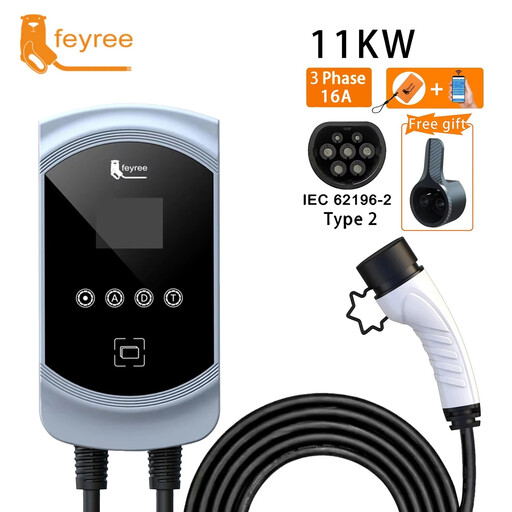
Why this model stands out This Feyree charger combines the benefits of 3-phase charging with smart functionality. It's a balanced choice that offers significantly faster charging times than a single-phase charger for most modern EVs.
Advantages
Who is this for? For EV drivers with a 3-phase connection at home and a car that supports 11 kW AC charging. This is a smart, future-proof investment that offers a great balance between charging speed and functionality.
Can't find exactly what you're looking for in this selection? Every situation is unique, and you may have different requirements. Browse our full range for more options.
Discover more car charger socket adapters
1. What is the difference between a single-phase and a 3-phase charger? A single-phase charger uses one power wire and delivers a power output of up to approximately 7.4 kW. A 3-phase charger uses three power wires and can deliver a higher output (usually 11 kW or 22 kW), resulting in faster charging. This requires a suitable 3-phase connection in your electrical panel and a car that supports it.
2. Do I need a professional installer for a home charger? Yes, for the installation of a fixed wallbox, hiring a certified electrician is a legal requirement in many regions. A professional ensures a safe connection to a dedicated circuit in your electrical panel, which is essential to prevent overloading and fire hazards.
3. Does a Type 2 charger work with every electric car? The Type 2 connector (also known as Mennekes) is the standard for AC charging in Europe. Virtually all modern electric and plug-in hybrid cars sold here are equipped with a Type 2 port. You can therefore assume that a Type 2 charger will be compatible. However, the actual charging speed will depend on your car's specifications.
