
Vandaag of morgen in huis

Kwaliteit gegarandeerd
Download de app
Categorieën

Choosing a home EV charger can seem like a daunting decision. The wrong choice can lead not only to unnecessary costs but also to daily inconveniences, such as slow charging or unsafe conditions. The core of this decision often comes down to two options: a fixed wallbox mounted on the wall or a flexible mobile car charger.
This article provides a practical overview of the criteria to consider and presents a selection of charging solutions. The focus is on factual specifications to help you make an informed choice for your specific situation.
Before you buy an EV charger, it's crucial to assess your personal situation and requirements. The following points are essential to consider.
The first and most important choice is between a fixed and a portable charger.
The charging capacity, expressed in kilowatts (kW), determines how quickly your car's battery will charge. This capacity depends on the current (Amperes, A) and the type of connection in your electrical panel.
In Europe, the Type 2 charging cable (also known as a Mennekes plug) is the standard for AC (alternating current) charging, which is the norm for home charging. Virtually all modern electric cars and charging stations use this connector. Pay attention to the cable length; 5 metres is common, but measure beforehand to ensure it is sufficient for your parking situation.
A smart charger offers additional functionalities via an internet connection (Wi-Fi or 4G). These include:
Below is a selection of charging solutions, based on their specifications and potential applications.
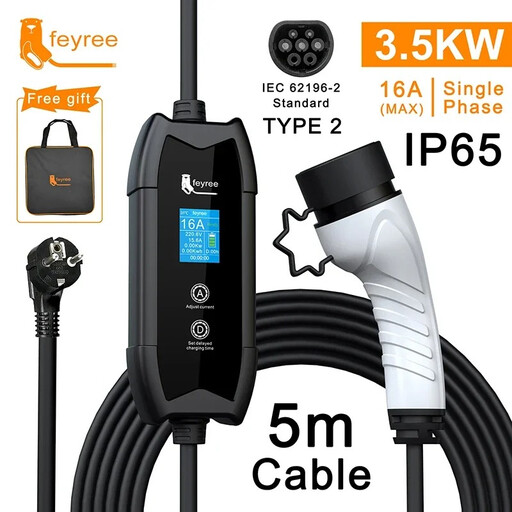
Why this product: This portable charger is a highly accessible solution. It operates from a standard wall socket and allows you to adjust the charging current. The LCD screen provides instant insight into the charging status.
Advantages:
Who is this for: Ideal for owners of a plug-in hybrid (PHEV) or an electric car with a smaller battery. It is also highly suitable as a secondary charger for travel, holidays, or for users who cannot or do not wish to install a fixed charging station.
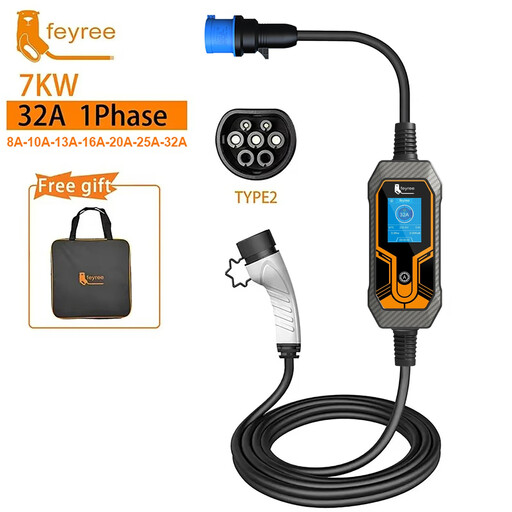
Why this product: This charger combines the flexibility of a mobile charger with the speed of a 7kW charging station. It uses a CEE plug (the blue "commando" or "campsite" type) for a stable and safe power supply up to 32A.
Advantages:
Who is this for: For EV owners who have a CEE socket at home or at other locations and want to charge faster without installing a fixed wallbox. This is a powerful and flexible solution for those who regularly drive long distances.
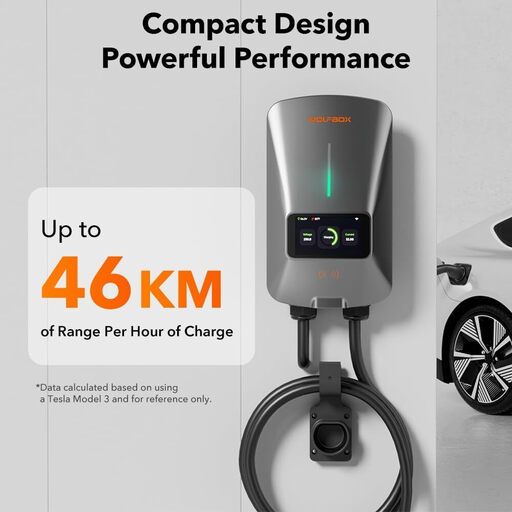
Why this product: This is a fully-featured smart wallbox for fixed installation. The WOLFBOX combines a 7kW charging capacity with modern control options like app management and RFID, making it a complete solution for homeowners.
Advantages:
Who is this for: The ideal choice for homeowners with a private driveway or garage who are looking for a permanent, secure, and smart charging solution. It offers convenience and control for daily use.
The selection above covers common scenarios, but every car and home is unique. You might be looking for a charger with a different cable length, a three-phase connection, or specific design features. Various other models are available that may better suit your specific requirements.
Explore our full range for more options in the Electric Charger category.
Yes, this is possible with a mobile charger that has a standard plug, such as the Feyree 16A charger. However, it is important to know that this is the slowest charging method. For regular and prolonged charging, a dedicated high-power socket (CEE) or a fixed wallbox is recommended for enhanced safety and speed.
The difference lies in the grid connection. A single-phase charger uses one power line and can deliver up to approximately 7.4kW (32A). This is the standard for most households. A three-phase charger uses three power lines and can therefore deliver a higher power output (typically 11kW or 22kW), resulting in a faster charging time. For this, both your electrical panel and your car must be compatible with three-phase charging.
For a fixed wallbox (like the WOLFBOX), installation by a certified electrician is legally required. They ensure a safe connection to a dedicated circuit in your electrical panel. For a portable charger, no installer is needed, provided you already have a suitable and correctly installed socket (Schuko or CEE).
Written by: Joybuy Product Recommendation Officer