
Vandaag of morgen in huis

Kwaliteit gegarandeerd

Welkomstaanbiedingen ontgrendelen: GRATIS bezorging | Tot 80% korting | Gratis 30 dagen JoyPlus-proefperiode
Download de app
As Product Recommendation Officer at Joybuy, Joy
Charging your electric car at home is no longer a luxury, but an essential part of the driving experience. No more queues at public charging stations, and you can start every morning with a full battery. However, the search for the right home EV charger can be overwhelming. What power capacity do you need? What is a 3-phase EV charger? And what exactly does dynamic load balancing mean?
This article is designed to help you. We cut through the technical details and marketing jargon to provide you with practical information. This will enable you to make an informed choice for an electric car charger that fits your situation, vehicle, and budget.
Before you buy an EV charger, it's wise to consider a few key specifications. These will determine how quickly, safely, and efficiently you can charge.
Your meter box is the heart of your home's electrical network. The type of connection it has determines which EV charger you can install.
Imagine this: you come home, plug in your car, and at the same time, the washing machine is running, the oven is on, and someone is cooking on an induction hob. Without proper precautions, this could overload your main fuse.
An EV charger with dynamic load balancing (DLB) prevents this. This feature continuously monitors the total power consumption in your home. Are other appliances drawing a lot of power? The charger will temporarily reduce the charging power to the car. Is there power to spare? The charging speed automatically increases. This ensures maximum efficiency and safe charging without you having to worry about overloads.
A smart EV charger often offers connectivity via Wi-Fi or Bluetooth and a companion app. This gives you control and insight. Features you can expect include:
Based on functionality, specifications, and user-friendliness, we have selected a few models that offer excellent solutions for various situations.
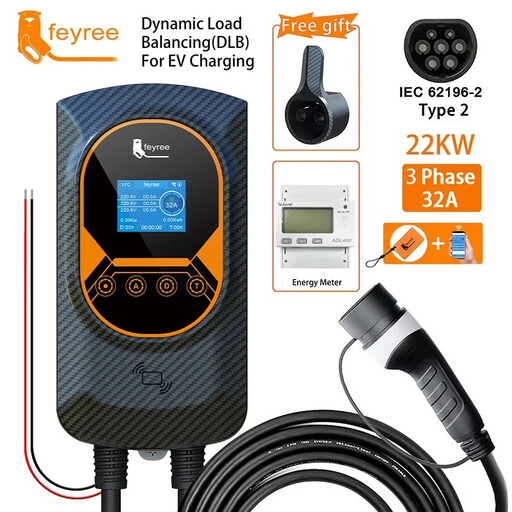
Why this model stands out: This wallbox is a powerful and intelligent solution. Its key feature is the built-in Dynamic Load Balancing (DLB). The system automatically balances power consumption between your car and the rest of your household, preventing overloads on your grid connection.
Advantages:
Who is this model for? For EV drivers with a 3-phase connection who are looking for a future-proof and smart charging solution. Ideal for households where multiple high-consumption appliances are often used simultaneously.

Why this model stands out: This model focuses on simplicity and reliability. It's a no-nonsense EV charger that does what it's supposed to do: charge your car safely and consistently. Operation is simple with a start button, and installation is straightforward.
Advantages:
Who is this model for? For users with a 1-phase connection who are looking for a robust, reliable, and easy-to-use charger without the need for app connectivity or other smart features.
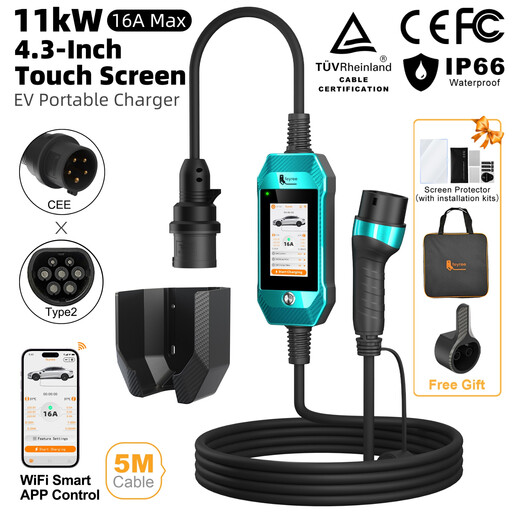
Why this model stands out: This portable car charger combines the power of an 11kW EV charger with the flexibility of a portable device. The bright 4.3-inch touchscreen and extensive app features give you detailed control and insight into your charging sessions.
Advantages:
Who is this model for? For the EV driver who wants flexibility and enjoys having full control and insight into their charging behaviour. Perfect for those who want to charge on a 3-phase connection at home and also take a powerful charger on the road.
The world of charging solutions is vast, and the three models above are just a sample of the possibilities. Every situation is unique. Are you looking for a different power capacity, a different type of plug, or specific features?
View our full range of Type 2 chargers
This depends on two things: your meter box and your car. First, check if you have a 1-phase or 3-phase connection. Then, look at the maximum charging capacity of your car. A car that can only charge on 1-phase will not charge any faster with a 3-phase charger. For most modern, all-electric cars, a 3-phase EV charger is recommended to reduce charging time.
A smart EV charger offers convenience and cost savings. You can schedule charging sessions during off-peak hours, which saves money on your energy bill. Features like Dynamic Load Balancing ensure safety by preventing overloads. Additionally, the app provides valuable insight into your consumption, helping you to optimise your charging habits.
Installing an EV charger is a job for a professional. It involves modifying your electrical installation, which must be done safely and in accordance with current standards. We strongly recommend hiring a certified and qualified electrician for the installation. This guarantees safe operation and ensures your insurance remains valid.
