
Vandaag of morgen in huis

Kwaliteit gegarandeerd

Welkomstaanbiedingen ontgrendelen: GRATIS bezorging | Tot 80% korting | Gratis 30 dagen JoyPlus-proefperiode
Download de app
By the Joybuy Product Recommendation Officer | July 15, 2026
Never wait at a public charging station or worry about an empty battery again. With your own home charger, you can step into a fully charged car every morning. However, making the switch to a personal charging point can feel like a big step, filled with technical terms and options. As a result, buying a charger can seem overwhelming.
This guide is designed to help you. We'll explain the most important choices in plain language and provide concrete product recommendations. This way, you can find a charging solution that fits your car, your home, and your budget.
Before you make a choice, there are a few key points to consider. These will determine how fast your car charges and how the charger fits into your daily life.
The charging capacity, expressed in kilowatts (kW), determines the charging speed. The choice depends on two things: the connection in your fuse box and what your car can handle.
Always check your car's specifications and have an electrician assess your fuse box before choosing a high-power charger.
A modern EV charger is often a smart charger. It offers features that save you money and increase convenience.
In Europe, the Type 2 electric car charger is the standard. Virtually every home charger and modern electric car is equipped with it. However, installing a wallbox is not a DIY job. It is legally required to be done by a certified installer to ensure safety and comply with insurance requirements.
Based on specifications and functionality, we have selected a number of chargers that meet different needs.
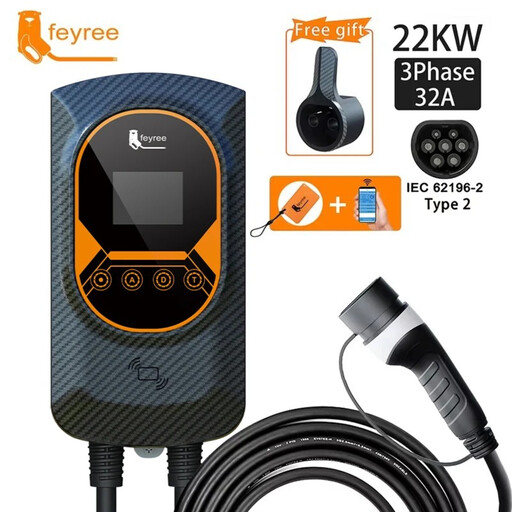
Why this model stands out This feyree wallbox offers a high charging capacity of up to 22kW, making it a future-proof choice. Control via the Tuya Smart app makes it easy to schedule charging sessions and monitor consumption. According to the manufacturer, the charger is equipped with comprehensive safety features, such as overvoltage and overheating protection.
Benefits
Who is this for? For EV drivers with a 3-phase connection who want to get the maximum charging speed out of their car and appreciate the flexibility of app control.
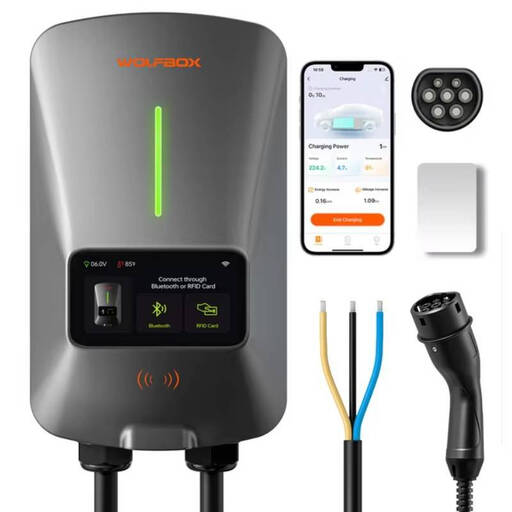
Why this model stands out The WOLFBOX is a practical single-phase charger with a 7kW capacity. Its bright LCD screen instantly displays the charging status. In addition to app control, this charger also offers authentication via RFID cards, which is useful if you want to prevent others from using the charger without permission.
Benefits
Who is this for? Ideal for owners of a plug-in hybrid or an all-electric car who charge overnight and have a single-phase connection. The RFID function is a plus for those who park in a shared driveway.

Why this model stands out This charger combines the power of an 11kW 3-phase charger with the flexibility of a portable model. You can mount it on the wall for daily use, but also take it with you for charging at locations with a CEE three-phase power socket. The smart features via the app, such as scheduling charging times, are also included.
Benefits
Who is this for? For EV drivers who want to charge quickly both at home and on the go (e.g., at a campsite or at a friend's house with a three-phase power socket) and are looking for a single solution.
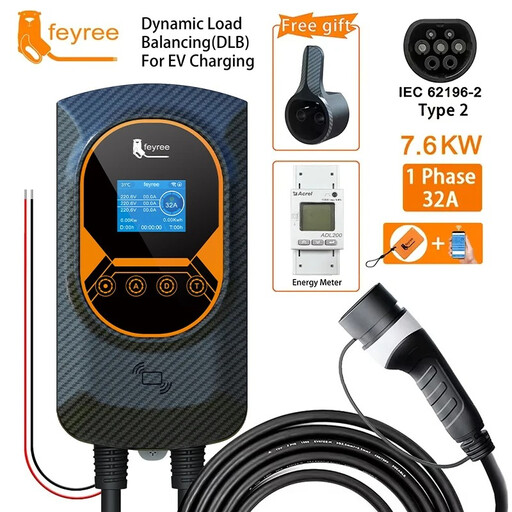
Why this model stands out The key feature of this wallbox is its Dynamic Load Balancing (DLB) function. This model comes with a sensor that is placed in the fuse box. The charger continuously adjusts the charging power based on the electricity consumption in the rest of the house. This prevents the main fuse from tripping, without you having to compromise on charging speed when power is available.
Benefits
Who is this for? An excellent choice for anyone concerned about the capacity of their electrical connection, especially in households where multiple large appliances are often running simultaneously.
Is one of these models not quite what you're looking for? No problem. There are more options available to suit different needs and budgets. A good charging solution is personal and depends entirely on your situation.
Check out our full range of electric vehicles for more charging solutions and accessories.
An 11kW charger adds about 55-60 km of range per hour. A 22kW charger can double this to approximately 110-120 km per hour. However, the actual speed depends on the maximum charging capacity of the car itself. Many electric cars are limited to 11kW for AC charging. Therefore, a 22kW charger is only faster if your car also supports it.
It is not strictly necessary, but it is highly recommended. Without load balancing, you run the risk of overloading your electrical grid if your car is charging while you are also cooking, doing laundry, or using other energy-intensive appliances. A charger with this feature provides peace of mind and ensures a safe and stable power distribution in your home.
No, in many regions it is legally required to have a home charger installed by a certified and qualified electrician. This is necessary for safety, proper operation, and the validity of your insurance. A professional will install a dedicated circuit in the fuse box and ensure a safe connection.
