
Vandaag of morgen in huis

Kwaliteit gegarandeerd

Welkomstaanbiedingen ontgrendelen: GRATIS bezorging | Tot 80% korting | Gratis 30 dagen JoyPlus-proefperiode
Download de app
A dedicated home EV charger is no longer a luxury, but a practical necessity for anyone driving an electric vehicle. The convenience of starting your day with a full battery and never waiting at a public charging station again is often well worth the investment. But the market for EV chargers is saturated with technical jargon and marketing promises. The wrong choice can lead to unnecessarily high costs, frustration, and even unsafe conditions.
Before you buy a wallbox, it's crucial to recognise three common pitfalls that cost many buyers money:
As a Joybuy Product Recommendation Officer, I'll help you cut through the noise. We'll focus on the specifications that truly matter, so you can choose a charging solution that fits your car, your home, and your budget.
You don't need to be an electrician to choose the right home EV charger. Focus on three crucial specifications that determine how fast, safely, and cost-effectively you charge.
The charging power, expressed in kilowatts (kW), determines the charging speed. This depends on two things: your home's grid connection and your car's 'on-board charger'.
11kw charger (3x16A) or even a 22kW (3x32A) charger possible. A 3 phase charger is significantly faster and a popular, future-proof choice for all-electric cars.Pro Tip: Check your electrical panel and your car's specifications. It makes no sense to buy an 11kW charger if your car can only handle 1-phase charging. The charger will automatically revert to a lower power output. All chargers in Europe use the standard Type 2 EV charger plug.
This is arguably the most critical feature for a home EV charger. A charger with dynamic load balancing (DLB) continuously measures the total power consumption in your home. Turn on the kettle or induction hob? The charger temporarily reduces the power output to the car to prevent overloading your grid connection. As soon as power becomes available again, the charging speed automatically increases.
Without DLB, you run the risk of tripping the main breaker, which is not only inconvenient but can also be harmful to your electrical system in the long run.
A smart charger is connected to the internet via Wi-Fi. Through an app on your smartphone, you can:
This functionality helps you actively save on your energy bill and gives you complete control over your charging habits.
Based on these criteria, we have selected a number of charging solutions that suit different user profiles.
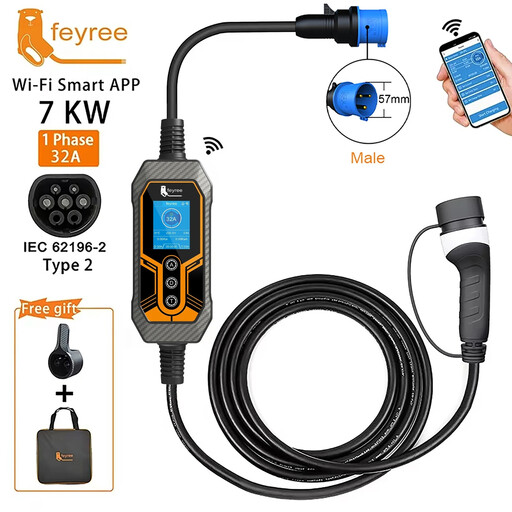
Why This Fits Their Persona: Ideal for those seeking a charging solution that doesn't require permanent installation. This portable car charger can be plugged in at home, but also taken to a holiday cottage or to visit family. Flexibility is key.
You don't pay for an expensive 3-phase installation. Thanks to the Wi-Fi app control, you avoid the 'dumb' charger pitfall and can smart-charge during off-peak hours.
Portable and ready to use immediately without an installer. The amperage is adjustable (8A-32A), and you can schedule charging times via the app.
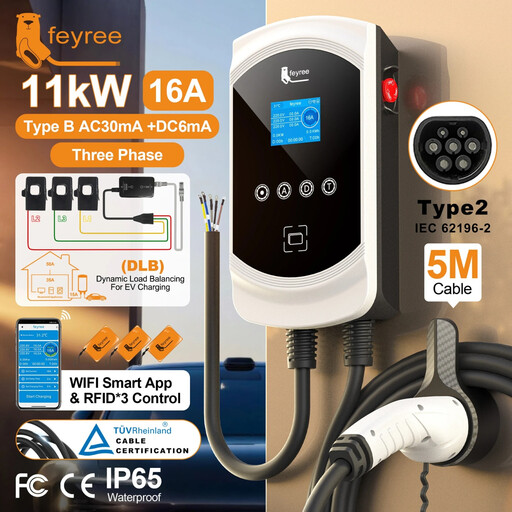
Why This Fits Their Persona: This is the perfect balance for the modern home with a 3-phase connection. This 11kW charger offers excellent charging speed for most EVs without overwhelming the electrical grid.
The built-in dynamic load balancing feature directly addresses the pitfall of power surges. It prevents overloads and ensures a safe, worry-free charging experience.
Combines future-proof 11kW power with the essential safety of DLB and smart app features for cost savings.
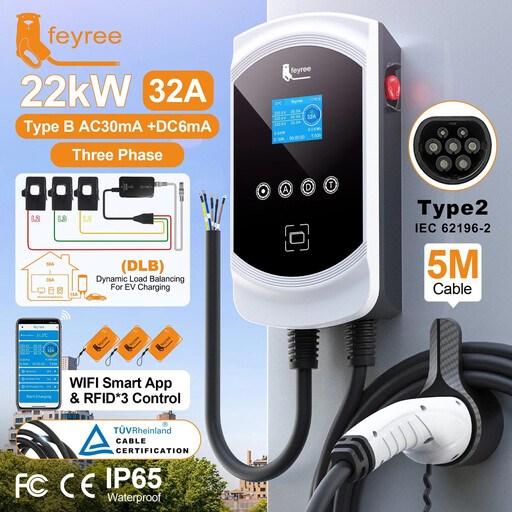
Why This Fits Their Persona: For those who want the maximum. If you have an upgraded 3-phase connection and a car that supports 22kW AC charging (like some Audi, Porsche, or Renault models), this wallbox delivers the fastest possible charging speed at home.
Although this is a very powerful charger, the integrated Dynamic Load Balancing prevents you from falling into the trap of overcapacity and overload. The power is managed intelligently.
Maximum charging power (22kW) for the fastest possible home charging sessions, combined with all the smart and safety features you need.
We have compiled a complete, up-to-date list of products that fully meet these strict selection criteria and safety standards.
This depends on two factors: the connection in your electrical panel and your car's maximum charging power.
11kw charger or 22kW charger only makes sense if both your home and your car support a 3-phase connection.Dynamic load balancing is a feature that adjusts the car's charging speed based on other electricity consumption in the house to prevent overload. It is not legally required in many regions, but it is strongly recommended by installers and grid operators. It ensures safety and prevents your main breaker from tripping. For the longevity of your electrical system and for your own convenience, it is an indispensable feature.
For a portable car charger that you plug into an existing (high-power) socket, no installer is needed. However, for the installation of a fixed wallbox, the answer is a clear no. This must always be done by a certified and qualified electrician. This is crucial for:
