
Vandaag of morgen in huis

Kwaliteit gegarandeerd

Welkomstaanbiedingen ontgrendelen: GRATIS bezorging | Tot 80% korting | Gratis 30 dagen JoyPlus-proefperiode
Download de app
A dedicated home charging station is no longer a luxury, but an essential upgrade for any electric vehicle owner. The convenience of starting your day with a full battery is priceless. Yet, the search for the right charger is often unnecessarily complex. The market is flooded with technical terms and marketing promises that confuse more than they clarify, leading many to make costly mistakes.
Before you buy a charging station, it's crucial to recognise the most common pitfalls. This will prevent you from paying for features you don't need or, worse, purchasing a charger that's unsuitable for your setup.
To avoid a purchasing mistake, focus on the specifications that truly matter for your situation. Don't get distracted by marketing jargon.
This is the most critical technical decision. The charging speed is determined by the weakest link in the chain: your car, the charging station, and your home's electrical connection.
A smart charger is only truly smart if it offers you convenience and cost savings. Look for the following features:
Based on these criteria, we have selected several charging solutions that suit different user profiles.
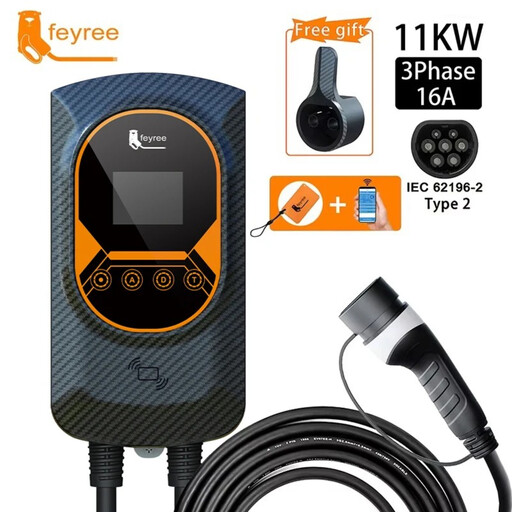
Why This Fits Their Persona: You commute daily and want a reliable, fast, no-fuss charging solution. This 11kW wallbox is the perfect match for most modern electric cars and a standard 3-phase home connection.
This charger's 11kW capacity offers an excellent balance between charging speed and cost, avoiding payment for 22kW of power that most cars and homes can't utilise.
According to the manufacturer, you can schedule charging sessions via the Tuya app to take advantage of off-peak rates. The current is adjustable (8A-32A) for added flexibility.
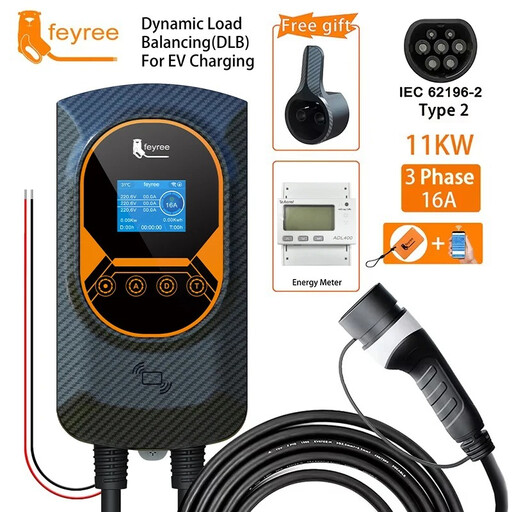
Why This Fits Their Persona: You have a busy household, perhaps with solar panels or a heat pump, and want to manage your energy consumption intelligently. Safety and efficiency are your top priorities.
This is a truly smart charger. Its Dynamic Load Balancing feature actively prevents your circuit breaker from tripping—a common issue with chargers lacking this technology.
The DLB module balances power consumption between your car and other appliances in the house. According to the manufacturer, the charger is app-controlled for complete management.
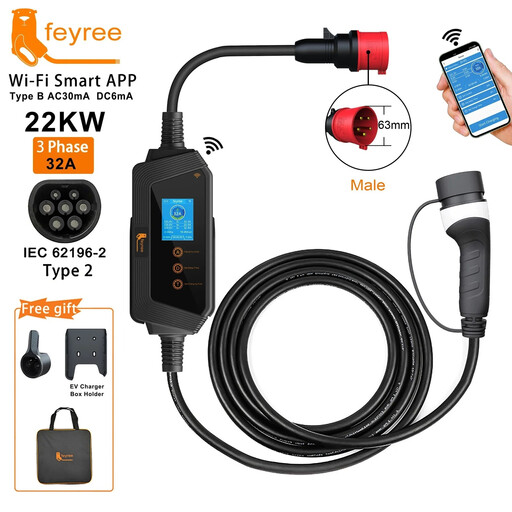
Why This Fits Their Persona: You don't want to be tied to a single charging spot. You like to take your charger with you to a holiday home, friends, or family. Flexibility is your highest priority, without compromising on charging speed.
This portable EV charger avoids the cost and hassle of a permanent installation. You aren't tied to one location and can charge wherever a suitable high-power socket is available.
Despite its portable design, this charger delivers up to 22kW of power (depending on the source). According to the manufacturer, it features Wi-Fi and app control for smart charging on the go.
We have compiled a complete, up-to-date list of products that meet these strict selection criteria and local safety regulations.
Not necessarily. It depends on your desired charging speed and your car's specifications. A 1-phase charger (which charges up to 7.4kW) can be sufficient for plug-in hybrids or electric cars with smaller batteries. For faster charging at 11kW or 22kW, a 3-phase connection to your electrical panel is required. Always consult a certified electrician to assess your situation.
Dynamic load balancing is a technology that automatically adjusts your car's charging speed based on the total electricity consumption in your home. This prevents the main circuit breaker from being overloaded when you use other high-consumption appliances simultaneously, such as a heat pump or an induction hob. It is a highly recommended feature for added safety and convenience, especially in modern, energy-intensive households.
No, for safety and regulatory compliance, it is mandatory in most regions that a fixed charging station (a wallbox) be installed by a certified electrician. A professional ensures a correct and safe connection to your electrical panel with the proper circuit protection. A portable charger that you plug into an existing and correctly installed high-power socket does not require separate installation.
