
Rental owners with little time between guests
You need your pillowcases dry before the next guests arrive. Compare the drying capacity and the time taken for a complete programme based on the load you actually need to process.


Choose a machine based on how many pillowcases need to be dry before the next guests arrive. Drying capacity and the time taken for a complete wash-and-dry cycle matter more than the maximum washing capacity alone. A washer-dryer takes up less space than two separate appliances and saves you from transferring your laundry between machines. If you have several loads to get through one after another, a separate washing machine and tumble dryer may be more practical, as you can wash and dry at the same time. Milieu Centraal also states that a washer-dryer uses more energy than washing and drying separately.
You need your pillowcases dry before the next guests arrive. Compare the drying capacity and the time taken for a complete programme based on the load you actually need to process.
You want to wash and dry electrically without making space for two machines. Measure the available space and check both the washing and drying capacities. The Consumentenbond lists having room for two separate appliances as a reason to consider a washer-dryer.
You do laundry often, so compare the energy use per suitable cycle and the way a single washer-dryer works against two separate appliances. Milieu Centraal states that a washer-dryer uses more energy than washing and drying separately.
A good fit if: you have room for one appliance and your planned load is within its drying capacity.
Bear in mind: washing and drying use the same drum, and drying capacity may be lower than washing capacity.
A good fit if: you have space and connections for two appliances, and need to process several loads one after another.
Bear in mind: you need room for two machines and have to transfer your laundry between them. Milieu Centraal states that this separate-appliance setup uses less energy than a washer-dryer.
| What to consider | What should you check? | Who is this important for? |
|---|---|---|
| Dry before the next guests arrive | Weigh a typical load and compare the drying capacity and full programme time for that load. | If the next guests are arriving soon, I want to know how many pillowcases will be dry in time. Around 36% of consumers prioritise having dry pillowcases on time. |
| Space and load capacity | Measure the installation space and doorway; compare the washing capacity separately with the drying capacity. | If there’s room for just one appliance, I want to know that it will fit and handle the planned load. Around 29% of consumers prioritise this combination of space and capacity. |
| Energy use for regular washing | Compare the label information for the relevant cycle and consider how often you’ll use it. Milieu Centraal states that a washer-dryer uses more energy than washing and drying separately. | If I do laundry regularly, I want to compare the energy use of the setup I’ll actually be using. Around 21% of consumers prioritise running costs. |
| Fabric care | Check the washing and drying instructions on the care label and make sure the machine has the right programmes. | If I want to care for my pillowcases according to their fabric labels, I need to know which programmes are suitable. Around 14% of consumers prioritise fabric care. |
The maximum drying load may be lower than the washing load. For example, Bosch lists a maximum of 8 kg for washing only and 5 kg for washing and drying on the WNA13400EU.
Before choosing a model, compare the number of pillowcases you typically wash with both capacities.
If a load can’t be dried in one go, you may need extra time and another drying cycle between guest changeovers.
A programme for small loads doesn’t automatically tell you how long a larger load will take. Bosch lists a 60-minute programme for small loads, but that doesn’t guarantee a full load of pillowcases will be ready in that time.
Check the manual for the permitted load and programme time for the wash-and-dry cycle you want to use.
A longer cycle could disrupt your schedule or mean you need to keep extra linen in reserve.
A washer-dryer saves space, but Milieu Centraal states that it uses more energy than washing and drying separately.
Compare the label information for the cycles you need, taking into account how often you expect to use them and how much space you have available.
The WNA13400EU is an option if you’re looking for one appliance, with a washing capacity of up to 8 kg and a combined wash-and-dry capacity of up to 5 kg. Bosch lists Auto Dry and a 60-minute programme for small loads.
Samsung lists a washing capacity of 9 kg and a drying capacity of 6 kg for the WD90HG6U94BEU3.
For the F4DR7596SYH, LG lists a washing capacity of 9 kg, a drying capacity of 6 kg, automatic dosing and dimensions of 600 × 850 × 565 mm.
For the 7000 ProSteam UniversalDose LWR7796UD6, AEG lists a washing capacity of 9 kg and a maximum of 6 kg for non-stop washing and drying.
Beko lists a washing capacity of 9 kg and a drying capacity of 6 kg for the BM5DFT4941B.
This product selection includes washer-dryers that wash and dry in one appliance, as well as compact models described as suitable for small loads of laundry.
 No image available
This washer-dryer is an option if you want to wash and dry in one appliance; its stated drying capacity is lower than its washing capacity.
9 kg washing and 5 kg drying; 1400 rpm; 16 washing programmes and 2 drying programmes; delay start up to 24 hours.
 No image available
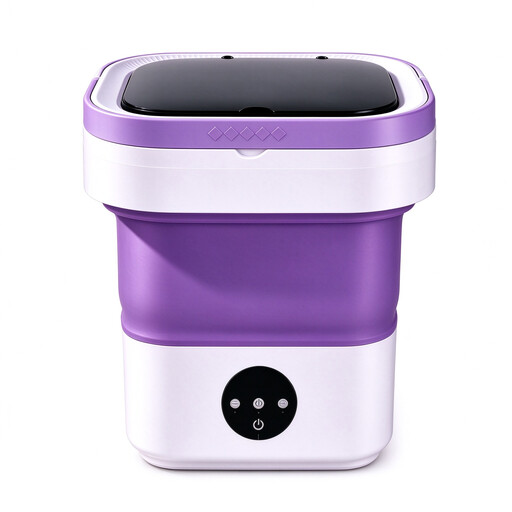
According to its description, this model is designed for small laundry loads. Check that its dimensions and capacity are suitable for your pillowcases.
Capacity: 12 litres; foldable design; described as suitable for small loads.
 No image available
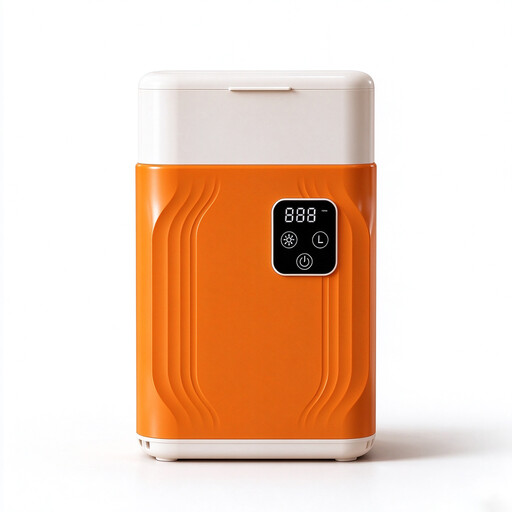
The description focuses on small items of laundry. Check that this model is suitable for the size and number of pillowcases you want to wash.
Foldable design; described as suitable for small loads and delicate fabrics.
 No image available
The washing and drying capacities give you a starting point for checking whether your planned pillowcase load will fit into one combined cycle.
8 kg washing and 6 kg drying; 1400 rpm; controlled via the MSmartHome app, according to the product description.
 No image available
This washer-dryer is worth comparing if you’re looking for one appliance; for a continuous wash-and-dry load, the stated drying capacity is 5 kg.
8 kg washing and 5 kg drying. Bosch lists Auto Dry and a 60-minute programme for small loads; check the manual for the permitted load and programme time.
Only if the load is within the drying capacity and meets the requirements of the programme you’ve selected. For example, Bosch lists a capacity of 8 kg for washing only and 5 kg for washing and drying on the WNA13400EU.
No, there is no general Dutch requirement to wash pillowcases in a holiday rental at 60 °C. Milieu Centraal recommends 60 °C in certain situations, such as when someone has an infectious illness or a dust mite allergy. Check the care label too.
Measure the installation space and check the water supply, drainage and model requirements. Follow the manual’s cleaning instructions; the Consumentenbond emphasises that using and maintaining the machine correctly is important for its lifespan.
According to the Dutch government, if you buy as a private consumer and something goes wrong, you should contact the seller first. If you buy in the name of a business or use the machine intensively in a rental property, check separately which sales and manufacturer’s warranty terms apply.