
Short stays and a small kitchen
You want to chill a few sealed containers of soup until the next day or the day after, and are mainly looking for an appliance that fits in a limited space.


If you’ll eat your soup within two days, a fridge without a freezer compartment is a sensible choice, provided your containers fit in the fridge. The Netherlands Nutrition Centre recommends keeping leftovers in the fridge for no more than two days and setting it to 4 °C. If you want to store soup for longer, a freezer compartment is an option, but it takes up space that would otherwise be available for chilled food. If the holiday cottage is sometimes left unheated, also check that the chosen model’s temperature range is suitable for where it will be placed.
You want to chill a few sealed containers of soup until the next day or the day after, and are mainly looking for an appliance that fits in a limited space.
You sometimes make more soup than you’ll eat during your stay, and are weighing up a freezer compartment against the fridge space it takes up.
You’re choosing a fridge for a cottage that isn’t always heated or in use. Its location, climate class and energy consumption all matter.
Choose this option if: you’ll eat the soup within two days and fridge space for containers matters more to you than freezing food.
Bear in mind: you can’t freeze soup in this appliance.
Choose this option if: you’d like to keep a portion for longer from time to time and only have space for a compact appliance.
Bear in mind: the freezer compartment takes up space that would otherwise be available for chilled food.
Choose this option if: you want to store groceries and several meals regularly, as well as soup.
Bear in mind: this type of appliance needs more space. Compare the annual energy consumption of models with a capacity that suits your needs.
The Netherlands Nutrition Centre recommends setting your fridge to 4 °C and putting leftover soup in a covered container in the fridge within two hours. So don’t rely on the layout and capacity of your fridge as a substitute for careful storage and checking the temperature.
| What to consider | What should you check? | Who is this important to? |
|---|---|---|
| Keeping soup chilled | Temperature setting and room for containers without overcrowding the shelves; check the actual temperature. | I want to keep leftover soup covered and chilled, rather than relying on the setting alone. Around 31% of consumers prioritise reliable cooling. |
| Space for containers | Measure the available space, door clearance and containers; compare external dimensions, fridge capacity and adjustable shelves. | In a small kitchen, I want to fit in sealed containers without them displacing other groceries. Around 25% of consumers prioritise a good fit and usable space. |
| Freezing soup | Compare the separate fridge and freezer capacities, and check that your portion-sized containers will fit in the freezer compartment. | If I won’t eat the soup within the recommended fridge storage time, I want to be able to freeze portions. Around 19% of consumers prioritise being able to freeze food. |
| Energy consumption | For a capacity that suits your needs, compare the energy label and stated consumption in kWh per year. | For a cottage that isn’t in constant use, I want to consider energy consumption alongside the fridge space I need. Around 13% of consumers prioritise energy consumption. |
| A cold location | Compare the temperature where the appliance will be placed with the climate class and instructions for the exact model. | If my cottage may be unheated, I want to know whether the location falls within the stated temperature range. Around 12% of consumers prioritise suitability for an unheated location. |
The permitted ambient temperature range varies from model to model. For example, ETNA lists climate class T for the KKV956WIT, with a range of 16–43 °C. Based on that specification, it isn’t an obvious choice for a location below 16 °C.
Before choosing, compare the temperature at the actual location with the climate class and instructions for the exact model.
The ETNA KVV956WIT with a freezer compartment has a stated fridge capacity of 107 litres; the KKV956WIT without a freezer compartment has 133 litres of fridge space. This difference applies to these two models, not to all fridges with and without a freezer compartment.
Work out how many containers you want to keep chilled and how many you might want to freeze. Compare the fridge and freezer capacities separately.
The setting alone doesn’t tell you what temperature the soup reaches in its particular spot in the fridge.
Set the fridge to 4 °C, check the temperature once it’s in place, and put cooled soup in a covered container in the fridge within two hours. This follows the storage advice from the Netherlands Nutrition Centre.
The Inventum KK550 is a table-top fridge without a freezer compartment, worth comparing if fridge space and adjustable shelves matter to you.
The KKV956WIT without a freezer compartment and the KVV956WIT with one have different layouts that you can compare side by side.
The Beko TSE1285N is a table-top fridge to compare if the available width is a consideration.
This selection focuses on compact fridges for keeping leftover soup chilled in a holiday cottage, with models both without and with a freezer compartment.
 Image unavailable
A model without a freezer compartment for anyone who only wants to keep leftover soup chilled.
The product name lists a capacity of 88 litres and energy class E.
 Image unavailable
A table-top fridge with a freezer compartment for anyone who wants to freeze portions as well as keep soup chilled.
The product name lists a total capacity of 109 litres and energy class C. Check the separate fridge and freezer capacities to make sure your containers will fit.
 Image unavailable
A compact fridge without a freezer compartment for anyone who wants to keep leftover soup chilled and doesn’t need freezer space.
The product name lists energy class E.
 Image unavailable
A table-top fridge for keeping food chilled when you want to store soup containers and other groceries in your holiday cottage.
The product name lists a width of 54 cm and energy class E.
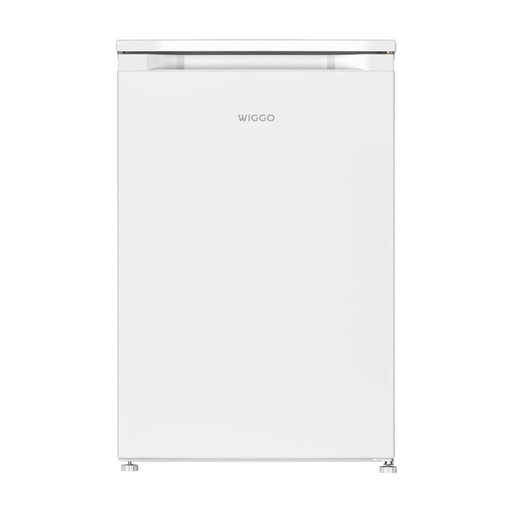 Image unavailable
A table-top fridge for chilled storage if you’re looking for a compact fridge without a freezer compartment.
The product name lists a width of 55 cm and energy class D.
The Netherlands Nutrition Centre recommends keeping leftover soup in the fridge for no more than two days. Cool it quickly, put it in a covered container in the fridge or freezer within two hours, and set the fridge to 4 °C.
Check whether the temperature where the fridge will be placed falls within the range specified by the manufacturer for that exact model. The Consumers’ Association warns that not all fridges work well at temperatures below 10 °C; suitability depends on the model and the actual ambient temperature.
The energy label shows the efficiency class and, for fridges, details including the stated consumption in kWh per year, fridge and freezer capacities, and noise level. To estimate the cost, multiply the consumption that matches your usage by your own electricity tariff. Annual consumption isn’t the same as consumption during holiday weeks alone.
According to the Dutch government, you can contact the seller if a product is faulty. The seller is responsible for providing a solution and must not simply refer you to the manufacturer.
When a private customer buys a new, similar appliance, the shop must take the old appliance away free of charge under the ‘old for new’ scheme, according to the Dutch government. This also applies to online purchases; agree with the seller on the practical arrangements for drop-off or collection.