
If you want to simmer chutney gently
You’ll want to be able to set the heat low and keep it under control. Compare information about the low setting and check that the pan base suits the cooking zone; don’t just look at the boost power.


First, choose a hob based on the size of your chutney pan, how many dishes you need to cook at once and the connection in your kitchen. Then look for information about simmering on a low setting. Induction requires a compatible pan, while a ceramic hob may be an option if you want to keep using your existing pans. A timer or high peak power alone doesn’t show how evenly a hob heats on a low setting.
You’ll want to be able to set the heat low and keep it under control. Compare information about the low setting and check that the pan base suits the cooking zone; don’t just look at the boost power.
You’ll need space for other pans as well as your chutney pan. Check the number of zones and how the hob distributes power when several are in use at the same time.
Your choice will partly depend on the existing connection, the available space and your pans. A freestanding hob and a built-in model can therefore be very different practical options.
The Dutch Consumers' Association assesses simmering separately from other cooking performance. So compare information about the low setting and heat distribution, and choose a hob that suits your pan, kitchen and the other dishes you’re preparing.
| What matters | What to check before buying | Who is this important for? |
|---|---|---|
| Gentle simmering | Look for an assessment of the low setting and heat distribution; compare the pan base with the cooking zone. | If you want to simmer chutney gently for a long time, you’ll need to be able to control the heat. Around 36% of consumers make simmering their top priority. |
| Room for more pans | Check the number and size of the zones, and whether power is shared when several are in use at once. | If you also cook other dishes on the hob, you’ll need both cooking space and usable power. Around 29% of consumers prioritise cooking several dishes at once. |
| Positioning and connection | Measure the available space or recess, and check the connection and plug requirements for the exact model. | If you want to keep your existing kitchen, you’ll want to know whether the hob will fit without unexpected alterations. For around 21% of consumers, the connection and positioning are the main considerations. |
| Pans and controls | Check that your pan is suitable for induction and fits the zone; also look at the controls and residual heat indicator. | If you want to keep using your existing pans, check that the pan base is suitable for the type of hob you choose. Around 14% of consumers prioritise keeping their pans and ease of everyday use. |
Heating up quickly and maintaining a steady, gentle heat are two different things. The Dutch Consumers' Association tests simmering separately.
Look for information about the lowest setting and heat distribution with a suitable pan. A timer keeps track of the time, but it doesn’t show whether the hob controls the heat consistently.
On models that share power between the zones in use, cooking on several zones at once may work differently from what the number of zones on the label suggests.
Check the stated connection and whether power is shared between zones. If you’re unsure about installation, ask someone to assess what your home can support.
Induction heats a suitable pan, while a ceramic hob heats the surface first. The required connection can also vary from model to model.
Check the heating type, pan base, available built-in space and connection requirements for the exact model.
The product ranges mentioned include a portable single-zone induction hob and a freestanding four-zone hob.
The models mentioned include a freestanding induction option and a built-in ceramic option; check positioning and installation requirements for each model.
The ceramic built-in hob PKF611BB2E mentioned has four cooking zones and Touch Select controls.
This selection includes built-in ceramic and induction hobs, with cooking zones for those who use several pans. Before buying, check in particular that the connection and built-in dimensions are suitable; the product information doesn’t include comparable simmering test results.
 No image available
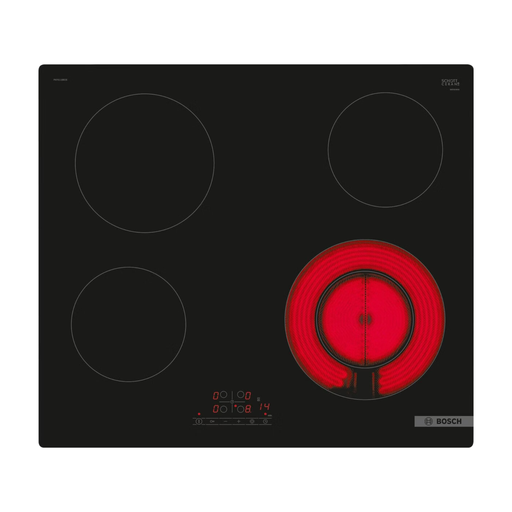
A ceramic built-in option to compare if you use several pans and your kitchen has the required connection.
60 cm; four cooking zones and 17 power settings. The description lists a timer with automatic switch-off for each zone and a recess measuring 56 × 49 cm. Requires a two-phase connection with a 5-pin Perilex plug; cable and plug are not included, and installation must be carried out by a qualified electrician.
 No image available
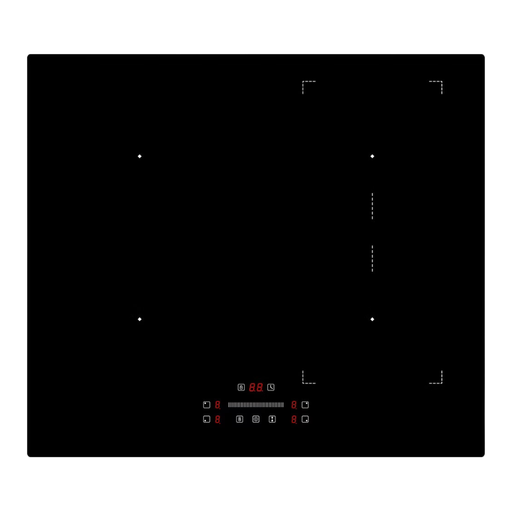
A built-in induction option if you want to use several pans and have pans that are suitable for induction.
Four cooking zones, nine settings and a bridge function. Supplied with a cable but no plug; the connection options listed are single-phase up to 3.7 kW or two-phase up to 7.6 kW.
 No image available
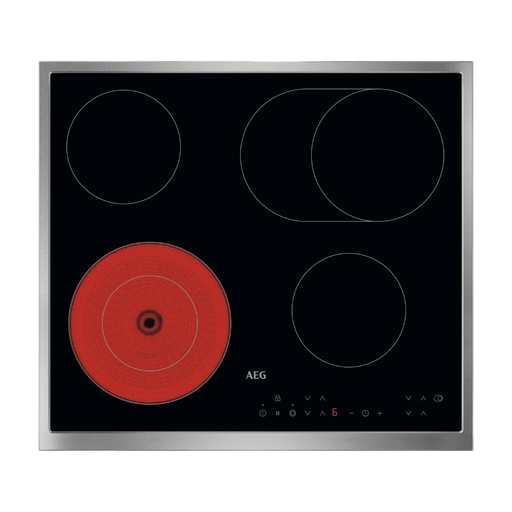
A ceramic built-in option to consider if you want to keep your existing kitchen and need several cooking zones.
60 cm with four cooking zones and an extendable zone. The description lists a recess measuring 56 × 49 cm and a 220–240 V / 400 V 2N connection; installation and connection must be carried out by an electrician.
 No image available
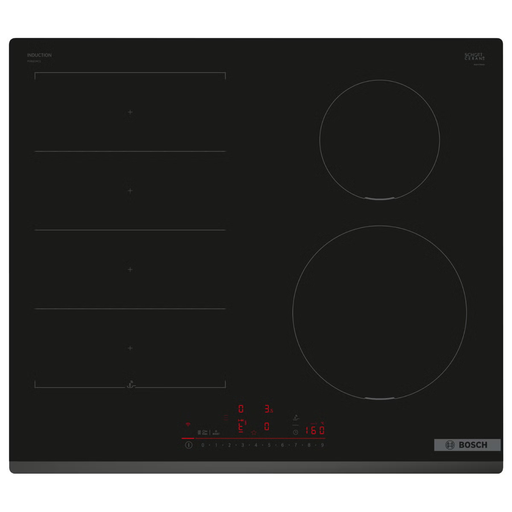
A built-in induction option for cooking a meal with several pans, provided your pans are suitable for induction.
Four cooking zones and FlexInduction, which the product description says is designed for larger pans. The stated product width is 59 cm.
 No image available
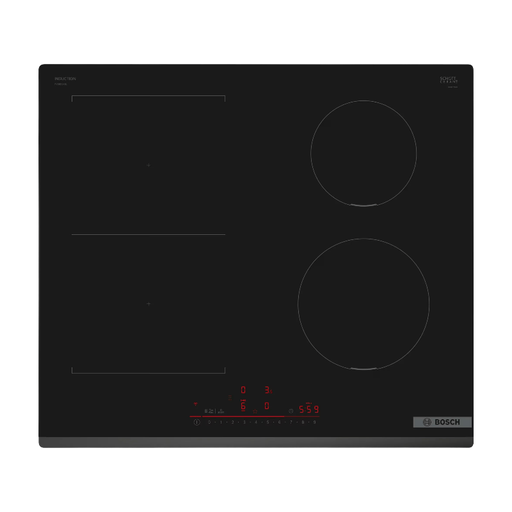
A built-in induction option if you use several pans, provided the connection is suitable and your pans are induction-compatible.
Four cooking zones. The product description lists TouchSlider controls, a single-phase connection and a connected load of 6900 W.
Look for information about the lowest setting and heat distribution with a suitable pan, rather than just the boost power or number of settings. The Dutch Consumers' Association measures simmering and heat distribution separately; those measurements don’t provide directly comparable results for the models on this page.
It depends on the exact model and your home’s electrical installation. Inventum and ETNA describe freestanding models with a standard plug and an earthed plug respectively, while the ceramic ETNA KC260ZT requires a two-phase connection and is supplied without a plug. Milieu Centraal recommends checking what your existing connection can support; if necessary, ask a qualified installer for advice.
No, not necessarily: check that the base of each pan is suitable for induction and fits the cooking zone. The Dutch Consumers' Association warns that an oversized pan on an induction hob may heat mainly in the centre. Also check the guidance for your pan and the hob you’ve chosen.
You can’t tell that from your choice of hob. The Voedingscentrum warns that Clostridium botulinum can be present in home-preserved vegetables. Follow reliable advice on preserving and storage; this doesn’t establish a safe storage period for a particular recipe.