For a family meal involving a large soup pan and side dishes, the choice between induction and ceramic largely depends on the pans you own, the space on the hob and the electrical connection in your kitchen. Induction responds more quickly; ceramic heats up more slowly and retains residual heat after cooking, as described by the Nutrition Centre. Check the connection requirements for each model and make sure your pans are suitable for induction.
Who is this buying guide for?
Families cooking several dishes at once
If you’re making a large pan of soup and preparing side dishes at the same time, you’ll need enough usable space and power. The Consumers’ Association explains that several zones on an induction hob with a standard plug cannot always all be used on the highest setting at once.
Cooks without a dedicated cooker circuit
If you don’t want to have a higher-capacity connection installed, it’s important to check the connection requirements and how power is distributed on the specific model. Inventum lists the VKI6010ZWA as having a single-phase connection.
Cooks weighing up induction and ceramic
If you want to keep using your existing pans, first check whether their bases are suitable for induction. Milieu Centraal recommends a magnetisable steel layer; the Nutrition Centre explains that ceramic hobs heat up and respond to adjustments more slowly.
What should you look for when choosing?
If you’re looking for an electric hob for a family meal with potato soup and possibly other pans, these points could help you decide.
| What to consider |
What to look for |
Who should pay particular attention? |
| Space and power |
Measure the base of your soup pan and compare it with the cooking zones. Also check the connected load and how power is distributed when cooking on several zones at once. |
If I’m making soup and side dishes at the same time, I want enough space for my pans and to know which settings I can use simultaneously. Around 33% of consumers say cooking several dishes at once is their main priority. |
| Electrical connection |
Compare the model’s plug type, number of phases and connected load with your circuit and socket. Have any necessary changes assessed by a qualified professional. |
If you want to keep your existing connection, check whether the hob can be connected to it and what limitations this may impose when cooking. Around 27% of consumers say keeping their existing connection is their main priority. |
| Pans and cooking style |
Check with a magnet whether the base of your soup pan is suitable for induction, as Milieu Centraal recommends. Bear in mind that, according to the Nutrition Centre, ceramic hobs heat up and respond to adjustments more slowly. |
If I want to use my current soup pan, I’ll first check whether it’s suitable for induction, then compare how the two types of hob cook. For around 20% of consumers, their pans and the choice between induction and ceramic come first. |
| Controls and residual heat |
Check whether each model has a residual-heat indicator or a control lock; features vary by appliance. Stay near the hob while cooking, as Brandweer Nederland recommends. |
If you want easy-to-use controls during a family meal and to be able to see whether a zone is still hot afterwards, check these features on each appliance. Around 20% of consumers say safe, easy everyday use is their main priority. |
Common pitfalls
-
Assuming four zones means four zones at full power
On a hob with a standard plug, the available power may be shared between the zones in use. The Consumers’ Association warns that this means several zones cannot always be used on the highest setting at the same time.
Check how the specific model distributes power, and think about how many pans you’ll want to use on a high setting at once.
-
Looking only at the hob
Connection requirements vary by model. Induction hobs also require pans with a suitable, magnetisable base.
Before choosing, check both the model’s connection details and whether your soup pan and other pans are suitable.
-
Assuming ceramic hobs are automatically easy to connect
A ceramic hob may also require a specific connection. According to ETNA, the ETNA KC160ZT has a two-phase connection, so ceramic doesn’t automatically mean a standard plug will be sufficient.
Check the connection details and residual-heat indicator for the specific model before making your choice.
Brands to consider
Inventum
The VKI6010ZWA is an example of a freestanding induction hob with a standard plug.
- Inventum lists four zones, nine settings per zone and automatic power distribution for this model.
- Power distribution doesn’t mean all zones can run at maximum power at the same time.
ETNA
The models mentioned offer both an induction and a ceramic option.
- For the induction KIV360WIT, ETNA lists four zones and a connected load of 7360 W; for the ceramic KC160ZT, it lists four zones, rotary controls and 6500 W.
- ETNA lists a two-phase connection for both models. Check that this is suitable for your kitchen.
Bosch
The PUE611BB5D is an example of a built-in induction hob with four zones and Touch Select controls.
- Bosch lists a switch-off timer and Child Lock for this model.
- Check separately that the dimensions and electrical connection are suitable for your kitchen.
Siemens
The ED751HSC1E is a 70 cm built-in induction hob with four zones and a combiZone for larger cookware.
- Siemens lists a connected load of 6900 W for this model.
- The manufacturer says a plug is not supplied as standard. Check the installation requirements for this model.
Hobs at Joybuy
This selection includes four-zone induction hobs and a ceramic hob for anyone who wants to cook soup alongside other dishes. Check the connection requirements for your chosen model. Electrical equipment covered by the Dutch Electrical Equipment Decree must carry CE marking within the applicable voltage range of 50–1000 V. The Netherlands Food and Consumer Product Safety Authority explains these rules.
 No image available
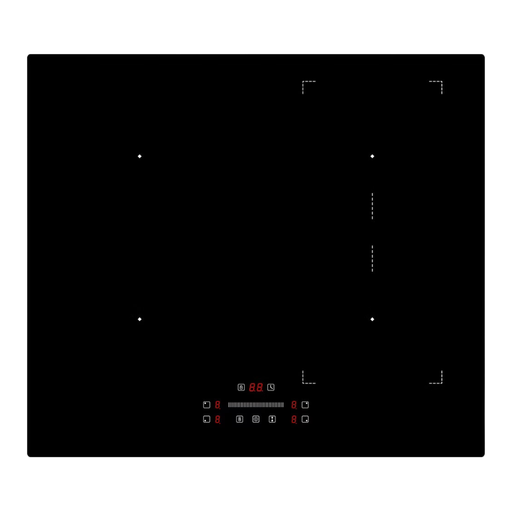
Exquisit EKI624-30, four-zone induction hob
The product description mentions a bridging function for larger pans; check whether the base of your soup pan is suitable.
The description lists touch controls, a booster, a timer and a child lock. It also mentions a one- or two-phase connection and a cable without a plug. Ask a qualified professional to check which connection your kitchen needs.
View at Joybuy
 No image available
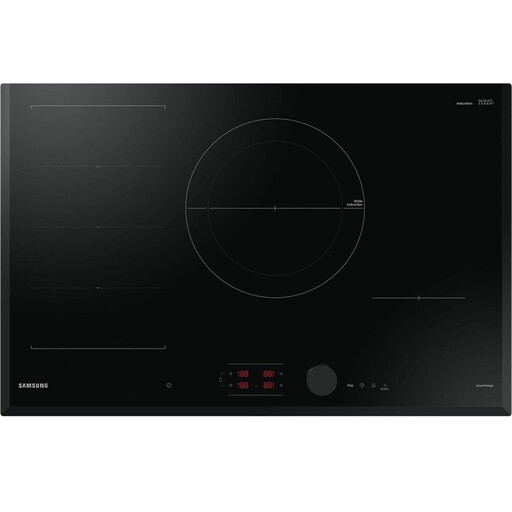
Samsung NZ84C6058KK, 80 cm induction hob
The product description lists four zones and Flex Zone Plus for wider or longer pans, which could be useful if you use a larger soup pan.
The description specifies a connected load of 7,4 kW and installation by a qualified electrician. Check that the connection is suitable for your kitchen.
View at Joybuy
 No image available
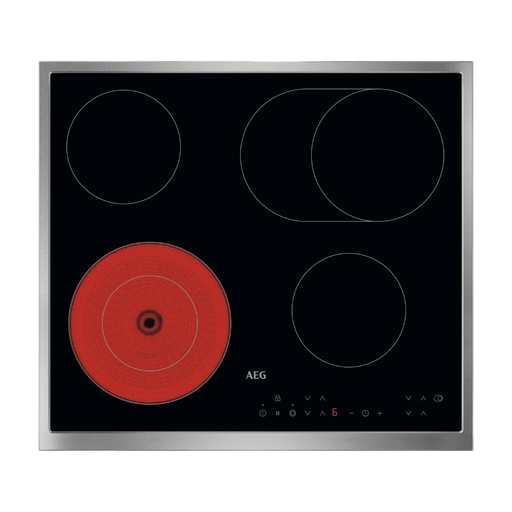
AEG TN64RA06XB, 60 cm built-in ceramic hob
The product description lists four zones and an expandable variozone for different pan sizes. According to the Nutrition Centre, ceramic hobs heat up more slowly than induction hobs.
The description specifies 7000 W and 220–240 V / 400 V 2N. Check the electrical connection and the space available for fitting this model.
View at Joybuy
 No image available
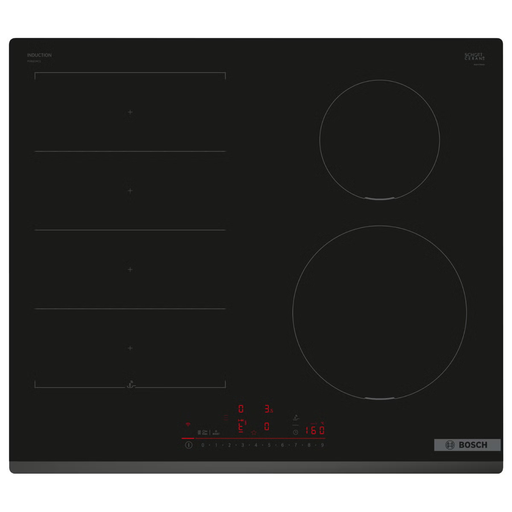
Bosch PIX631HC1E, 60 cm induction hob
The product description lists four zones and FlexInduction, a flexible cooking zone for larger pans.
The description specifies a connected load of 7,4 kW and load management. Check what type of connection is required to install it in your kitchen.
View at Joybuy
 No image available
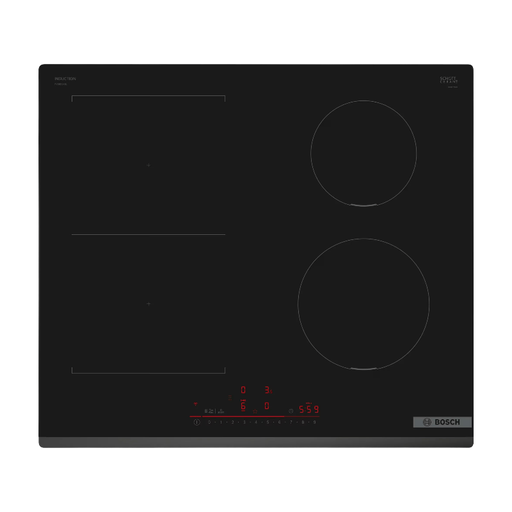
Bosch PVS631HB1E, 60 cm induction hob
The product description lists four induction zones and TouchSlider controls for adjusting the heat.
The description specifies 6900 W and a single-phase connection. Check that this is suitable for your kitchen’s electrical installation.
View at Joybuy
Frequently asked questions
Can I use my existing soup pan on an induction hob?
Only if the base of the pan is suitable for induction. Milieu Centraal recommends a magnetisable steel layer; you can check the base with a magnet. Also make sure the pan fits on the cooking zone you choose.
Can a four-zone hob always be plugged into a standard socket?
No. The number of zones doesn’t determine the type of connection a hob needs. Inventum lists a single-phase connection for the VKI6010ZWA, while ETNA specifies a Perilex plug and a two-phase connection for the KIV360WIT. Compare the details for the specific model with your electrical installation.
Who should put things right if my hob is faulty?
According to the Dutch government, the seller must provide a solution if a product is faulty. The Netherlands has no fixed statutory guarantee period; what you can reasonably expect from a product is also taken into account.
Which product regulation should I check for an electric hob?
Electrical equipment covered by the Dutch Electrical Equipment Decree must carry CE marking within the applicable voltage range. The Netherlands Food and Consumer Product Safety Authority specifies a nominal AC voltage of 50 to 1000 V. Check whether these rules apply to the specific appliance and that the required marking is present.


