
Cooking with an extra saucepan
Your existing cooking space is already in use and you mainly need one extra zone. Look for an adjustable low heat setting, a zone that suits your pan and a safe place to position the portable hob.


If you mainly make mushroom sauce alongside your existing cooking set-up, start by looking at a portable single-ring hob with a low heat setting and a cooking zone that suits your saucepan. If you also cook other dishes at the same time, compare the number of zones and the connection required by the exact model. Induction requires compatible pans; with ceramic and traditional electric hobs, you’ll need to consider residual heat and electricity use, among other things. Milieu Centraal compares the general annual electricity use of different cooking methods, but those figures don’t describe the energy used to make one pan of sauce.
Your existing cooking space is already in use and you mainly need one extra zone. Look for an adjustable low heat setting, a zone that suits your pan and a safe place to position the portable hob.
You want to prepare the sauce and other parts of your meal at the same time. Consider the number of usable zones and what your electrical connection can support simultaneously.
Your choice also depends on your socket, consumer unit, available space and pans. A portable hob and a built-in hob don’t necessarily have the same requirements.
A good fit if: you want to use one extra saucepan for your sauce and have a suitable earthed socket and an induction-compatible pan.
The trade-off: one zone leaves no room for other pans; a timer or keep-warm setting doesn’t prove that the sauce will simmer evenly.
A good fit if: you regularly cook sauce and other dishes at the same time, and the model suits your available space and electrical connection.
The trade-off: the power available across active zones also depends on the electrical connection; built-in installation or a higher-capacity connection may involve extra work.
A good fit if: you want several zones and can’t assume that your pans are induction-compatible.
The trade-off: Milieu Centraal reports higher general annual electricity use for ceramic cooking than for induction. This isn’t a measurement of one serving of mushroom sauce. You’ll also need to allow for residual heat.
A good fit if: you’re looking for an extra zone with a dial and are happy with a slower response when you turn down the heat.
The trade-off: a cast-iron zone can stay hot after it’s switched off. Milieu Centraal compares this technology with induction and ceramic cooking in general terms; that comparison doesn’t predict the electricity used for your meal.
| What to consider | What should you check? | Who should pay particular attention? |
|---|---|---|
| Keeping the sauce at a gentle simmer | Compare the low heat settings and, where available, an independent simmering test for the exact model. Also check that the pan base suits the zone. | If I want to simmer mushroom sauce gently, I need to know whether I can set the heat appropriately. Around 31% of consumers prioritise control at low heat. |
| Using several pans at once | Count the pans you’ll have on the hob at the same time, and check the usable zone sizes and power available when they’re all in use. | If I need to cook the sauce and other courses at the same time, I’m looking for enough suitable zones for my pans. Around 25% of consumers prioritise cooking several dishes at once. |
| Electrical connection and installation | Check the instructions for the exact model, the circuit and the socket; for a built-in hob, measure the cut-out too. Have any required changes assessed by a qualified professional. | If I’d rather avoid major changes to my existing kitchen, I want to know in advance what installation will involve. Around 25% of consumers prioritise the connection and installation. |
| Pans and running costs | Check whether your saucepan is suitable for induction and whether its base is the right size for the zone. Ask for a quote if the electrical connection needs to be changed. | If I want to keep using my current pans, I’ll first check that they’re compatible with the cooking method. Around 19% of consumers prioritise their existing pans and additional running costs. |
A timer controls the time, not how evenly a low setting regulates the sauce’s temperature. Consumentenbond assesses simmering separately.
Where available, compare an independent test of the exact model and check its low heat settings and the recommended pan size.
A built-in hob may need a different connection from a portable hob. Its dimensions also need to suit your kitchen.
Compare the connection diagram and installation dimensions for the exact model with your kitchen. Have any required changes assessed by a qualified professional.
Induction requires a suitable, magnetic pan base; the size of both the pan and the zone also matters.
Test the base with a magnet and compare the pan size with the manufacturer’s specifications.
A ceramic or cast-iron zone can stay hot after it’s switched off. Induction glass can also still be warm after cooking.
Let the surface cool down safely and follow the cleaning instructions for your hob’s material.
Inventum describes the KI120T as a portable single-ring induction hob for an extra pan.
Tristar describes the IK-6178 as a portable single-ring induction hob with adjustable power, temperature and timer.
The PUE611BB5D and PKF611BB2E represent different technologies: four-zone induction and four-zone ceramic.
Severin describes the KP 1091 as a portable traditional electric hob with a cast-iron cooking zone and dial control.
The selection includes multi-zone induction and ceramic built-in hobs, as well as a portable induction hob with two cooking zones for anyone who wants to use several pans at once.
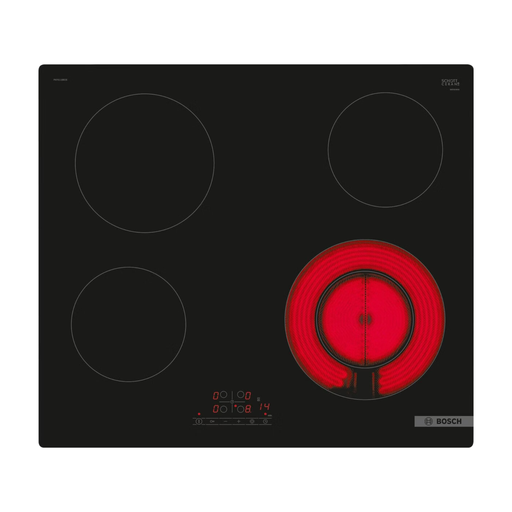 Image unavailable
The four cooking zones are designed for anyone who wants to use a saucepan and other pans at the same time.
The product description lists 17 power settings, QuickStop, a residual heat indicator and a timer for each zone. It states that a 2-phase, 5-pin Perilex connection is required; the cable and plug aren’t included. Check the cut-out and have the connection installed professionally.
 Image unavailable
The two zones give you room for more than one pan at a time on a portable induction hob.
The product title lists five temperature settings. Before buying, check that your pans are induction-compatible and find out what connection the model requires.
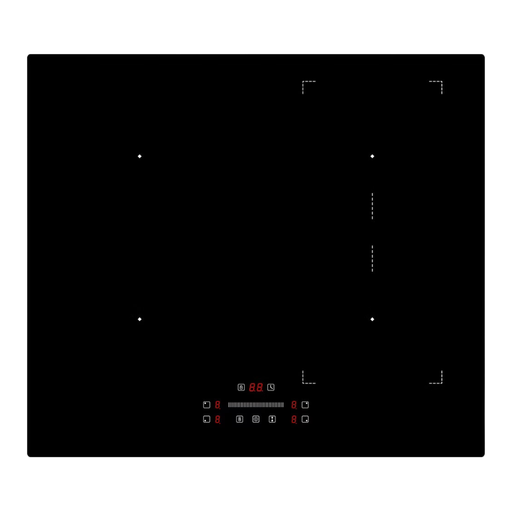 Image unavailable
The four cooking zones are designed for anyone who wants to prepare the sauce and other dishes at the same time.
The product description lists nine settings, a timer, pan detection and a safety lock. The cable is supplied without a plug; check your home’s electrical connection and have the connection installed professionally.
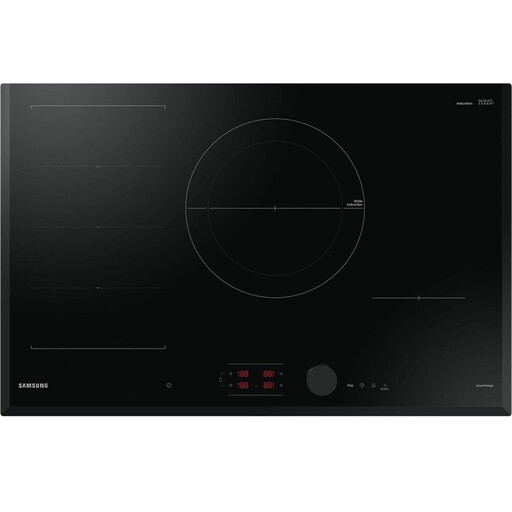 Image unavailable
The four cooking zones and flexible zone are useful if you want to use different pans at the same time.
The product description lists 15 power settings and a boost function. It specifies installation by a qualified electrician; also check your kitchen’s cut-out and electrical connection.
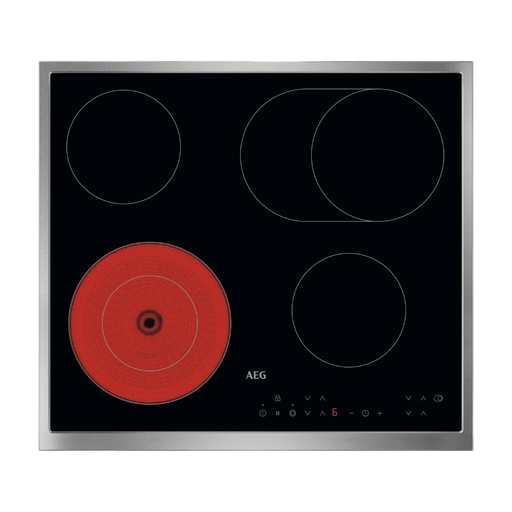 Image unavailable
The four electric cooking zones are designed for anyone who wants to use several pans at once.
The product description lists an extendable zone, a timer and a child lock. Before installation, check that the 56 × 49 cm cut-out and electrical connection suit your kitchen; the description specifies installation by an electrician.
Check whether the base is magnetic and compare its size with the cooking zone. A pan that isn’t detected by the induction zone isn’t a suitable match; also follow the specifications for your chosen model.
Not without checking the exact model and electrical connection. According to Consumentenbond, an induction hob above 3.65 kW requires a higher-capacity connection and a five-pin Perilex socket; if so, have the installation assessed by a qualified professional. Some portable hobs are designed for use with an earthed socket.
Once it’s safe to do so, wipe an induction glass hob with a non-scratch cloth and soapy water. For other materials, follow the appliance instructions. The glass may still be hot in places where the pan was sitting.
No. According to the Dutch government, the Netherlands doesn’t have a fixed statutory guarantee period. You’re entitled to a product that works as it should; if there’s a fault, the seller must provide a solution. A manufacturer’s guarantee is extra.
Not automatically. The Netherlands Enterprise Agency lists an ISDE grant of € 400 for an electric cooking appliance, subject to specific conditions. These include the property being connected to a heat network and having no gas meter, or having had it removed. Check all the conditions before relying on a grant.