
Cooking with a large pan of kale and potato mash
You’re making a family-sized portion in one large pan and want to know whether its base will fit on a cooking zone, while still leaving room for another dish.


For a large pan of kale and potato mash, start by measuring the flat base of the pan and checking it against the cooking zone. Then see whether there’s room for a second pan. A spacious induction hob can be a good fit if you have a suitable pan and the right electrical connection. A portable hob can provide an extra cooking spot, while ceramic or conventional electric cooking may be an alternative if your existing pans aren’t suitable for induction.
You’re making a family-sized portion in one large pan and want to know whether its base will fit on a cooking zone, while still leaving room for another dish.
Your existing cooking zones are all in use and you’re looking for a portable hob for something like milk or a side dish, without having to renovate your kitchen.
You want to cook electrically and first check whether your current pan bases are suitable for induction, or whether ceramic or conventional electric cooking would be a better fit.
First, measure the base of your largest pan and work out which other pans you’ll need at the same time. Then compare the hob with your pans, available worktop space and electrical connection.
| Consideration | What should you check? | Who should consider this? |
|---|---|---|
| Pan base and cooking zone | Measure the flat base and compare it with the zone. Also check whether the large pan leaves room for other pans. | If I’m cooking for a group, I want to know that my large pan will fit properly and that the other cooking zones will still be usable. Around 36% of consumers prioritise the size and position of their main pan. |
| Connection and installation | Compare the connection rating and installation instructions with the available circuit, socket and, for a built-in hob, the cut-out. If necessary, ask a professional to check which connection is suitable. | I want to know in advance whether the hob can be connected and installed in my kitchen, without choosing an unsuitable set-up. Around 29% of consumers prioritise their existing electrical connection. |
| Extra cooking spot | Work out which pans need to be on at the same time, then check the number and size of the zones, the connected load and the available worktop space. | If my existing hob is in use, I want to be able to prepare a side dish as well as the kale and potato mash. Around 21% of consumers are mainly looking for an extra cooking spot. |
| Existing pans | Test whether the pan base is magnetic and, for induction, compare its size with the cooking zone too. | I want to keep using my current pan, so I won’t choose a cooking technology until I’ve checked its base. Around 14% of consumers prioritise keeping their existing pans. |
With induction, the size of the base matters for its contact with the cooking zone; a wide rim doesn’t tell you how large the base is.
Measure the flat base and compare it with the zone on the exact model you’re considering. If the sizes aren’t compatible, you’ll need to reconsider your choice of pan or hob.
Connection requirements and power settings vary by model. ETNA states that the KI170ZT needs a two-phase connection to make full use of the zones’ power.
Check the connection rating, power settings, circuit and cut-out before buying. If necessary, ask an installer to assess your kitchen.
A built-in hob may require changes to the electrical connection or kitchen. Have any work assessed before you make your final choice.
An induction hob requires a suitable magnetic pan base. A ceramic hob heats the glass and retains residual heat after it’s switched off.
Test your pan for induction compatibility, then compare which cooking technology suits your pans and the way you cook.
With induction, you may need to replace a pan if its existing base isn’t suitable. With ceramic, you’ll need to allow for residual heat.
The fire service (Brandweer) advises plugging high-power appliances directly into a socket rather than using a cable reel or extension block.
Check the instruction manual, socket and combined electrical load. Don’t assume an extension block is a suitable way to add another cooking spot.
The KI170ZT is a built-in induction hob, while the KC160ZT is a ceramic model. Pan and connection requirements vary by technology and model.
The freestanding VKI3010ZWA is a two-zone induction hob that provides an extra cooking spot without requiring built-in installation.
According to Bosch Netherlands, the PVS731HB1E built-in induction hob has four zones and a CombiZone.
The DK 1014 is a portable conventional electric double hob for an additional cooking spot.
This selection includes built-in induction and ceramic hobs, as well as a portable induction hob with two zones. Compare the stated dimensions and connection requirements with your pan and kitchen.
 No image available
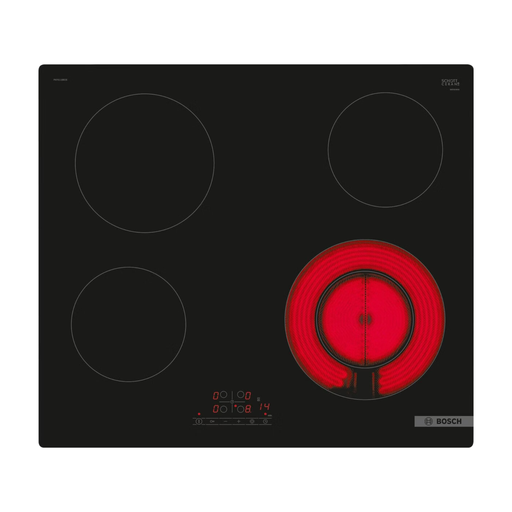
A ceramic built-in hob to consider if your existing pans aren’t suitable for induction.
Four cooking zones; one zone extends from 120 to 210 mm. The stated cut-out is 56 × 49 cm. According to the product description, a two-phase connection and a 5-pin Perilex connection are required; the cable and plug aren’t included.
 No image available
A portable option to consider if you need an extra cooking spot but aren’t looking for a built-in hob. Check that your pan bases are suitable for the zones.
The description lists zones measuring 7 and 6 inches, with stated power ratings of 1500 W and 1000 W. The zones can be controlled separately.
 No image available
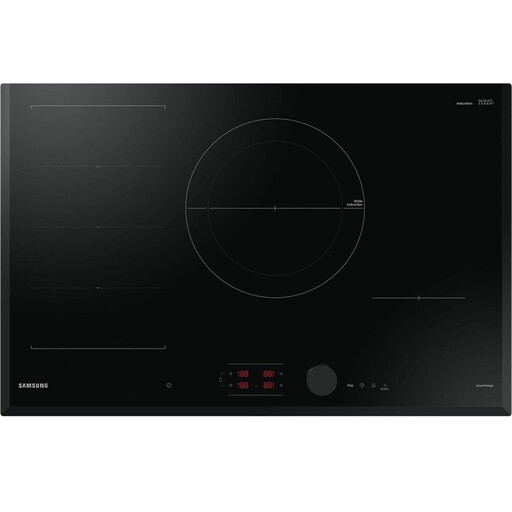
A built-in induction hob to consider if you want room for a large pan and other pans. Compare the Flex Zone Plus with the base of your pan.
Four zones; the Flex Zone Plus is listed as 210 × 380 mm. The total power is stated as 7,4 kW. The description recommends installation by a qualified electrician.
 No image available
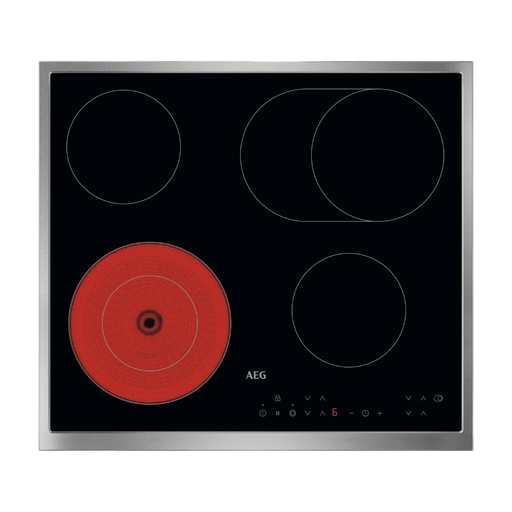
A ceramic built-in option to consider if you want to keep using your existing pans without switching to induction.
Four cooking zones; the description lists a flexible zone measuring 17 × 26,5 cm and one zone that extends to 21 cm. The cut-out is stated as 56 × 49 cm; the connection as 220–240 V / 400 V 2N. The description recommends professional installation.
 No image available
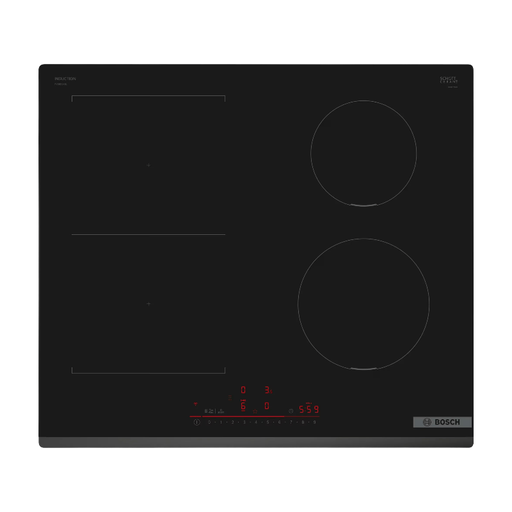
A built-in induction hob to consider if you need room for a pan of kale and potato mash and other pans. Check that the pan base is suitable for the cooking zone.
Four cooking zones. The product name lists TouchSlider controls and the ReStart function.
Measure the diameter of the flat pan base. The Consumers’ Association (Consumentenbond) recommends choosing an induction pan that’s roughly the same size as the cooking zone. Also check that there’s room for other pans.
No, connection requirements vary by model. Inventum describes the VKI3010ZWA as a freestanding hob for an earthed socket. ETNA says the KI170ZT can be set up for one or two phases, and that a two-phase connection is needed to make full use of the zones’ power. For a built-in hob, ask a professional to check that your kitchen’s connection and circuit are suitable.
The Netherlands Nutrition Centre (Voedingscentrum) describes a recipe where potatoes are boiled in a small amount of water, with the kale on top, for 20–25 minutes. The pan and cooking zone should be a good fit; follow your hob’s instructions for how to use it.
Applicable EU product safety requirements apply to electrical household appliances, and the required CE marking is relevant. The Netherlands Enterprise Agency and the European Commission set out the product rules. Check the product identity, marking and accompanying documentation for the model on offer.
According to ACM ConsuWijzer, the seller must offer an appropriate solution free of charge if the product breaks down during normal use sooner than you could reasonably expect. A manufacturer’s warranty doesn’t replace this legal right.