
Custard maker with limited worktop space
You want to use one pan and put the hob away afterwards. When measuring, allow for the pan and its handle, as well as enough room to position the appliance safely.


Start by choosing a stable single-hob appliance that fits your pan, including its handle, and lets you adjust the heat as you stir. Induction is suitable for pans with a magnetic base; if you want to keep using a different pan, compare cast-iron and ceramic hobs, and bear in mind that they retain heat after use. Koopmans describes making custard by stirring continuously as it heats. A hob’s specifications cannot tell you how custard will cook in your pan.
You want to use one pan and put the hob away afterwards. When measuring, allow for the pan and its handle, as well as enough room to position the appliance safely.
You want to keep stirring as the custard thickens and adjust the heat easily. The number of settings alone won’t tell you how the custard will turn out in your pan.
You want to keep using your current pan, so first check whether its base is suitable for induction and fits the cooking zone.
Start with your pan and the space available, then choose the cooking technology and controls that suit them.
A good fit if: your pan has a magnetic base and fits the cooking zone.
Bear in mind: not every existing pan works on induction; check the model’s controls too.
A good fit if: you want to use a pan that isn’t suitable for induction and its base fits the cooking zone.
Bear in mind: the cooking zone gets hot and needs room to cool down after use.
A good fit if: you want to use a non-magnetic pan and the appliance fits on your worktop.
Bear in mind: a ceramic surface doesn’t automatically mean the appliance uses induction; measure the available space carefully.
| Consideration | What to check when buying | Who should prioritise this? |
|---|---|---|
| Heat control as the custard thickens | Check how you can adjust the heat while stirring. Don’t treat a timer or power setting as proof of how the custard will turn out. | When making custard, I want to be able to adjust the heat as I stir; around 36% of consumers prioritise heat control. |
| Space and storage | Measure the worktop with the pan and handle in place, and follow the positioning instructions for the exact model. | On a cramped worktop, I want to leave room for the pan and put the appliance away after use; around 29% of consumers prioritise available space. |
| Whether your existing pan is suitable | For induction, you can check the base with a magnet and compare its diameter with the model specifications. | If I want to keep using my current pan, I first check whether it’s compatible with the hob; around 21% of consumers prioritise keeping their existing pan. |
| Safe positioning and connection | Read the positioning and connection instructions, and check the CE marking on the appliance being offered. The European Commission and the Government of the Netherlands explain the CE requirements for products covered by the relevant EU rules. | Before I start cooking, I want to know whether the location and connection meet the appliance instructions; around 14% of consumers prioritise safe positioning and connection. |
The stated wattage doesn’t tell you how custard will cook in your pan. Koopmans describes a method that involves stirring continuously as the custard heats.
Choose controls that let you adjust the heat while stirring, and follow the recipe.
The pan and its handle take up space too. The model’s positioning instructions may also specify clearance around the appliance.
Measure the space with the pan in place, and check the manual for the exact model you’re considering.
A hob can have a glass-ceramic surface without using induction. According to the manufacturer’s data sheet, the Rommelsbacher CT 1800/E uses a heating element.
Check the heating technology and the requirements for the pan base, not just the material of the visible surface.
The examples below cover the models mentioned and their features, not a brand’s full range.
The TILLREDA 805.901.55 is a portable, single-zone induction hob.
The KI120T is a single-zone induction hob with multiple settings and a timer.
The KP-6185 is a compact, single-hob cast-iron hotplate with a dial control.
The CT 1800/E is a portable ceramic hotplate with a heating element, not an induction hob.
According to Severin, the KP 1071 is a single-zone induction hob with pan detection.
These models are portable induction hobs for anyone looking for a separate cooking zone. Check that your pan is suitable and fits the model you choose; the listed settings and hob features don’t prove how custard will cook in your pan.
 No image available
For anyone looking for a separate induction cooking zone; check that the pan base is magnetic and that the pan size is suitable for this model.
 No image available
For anyone looking for a portable induction hob; according to the product information, aluminium and ceramic pans without a magnetic base aren’t suitable.
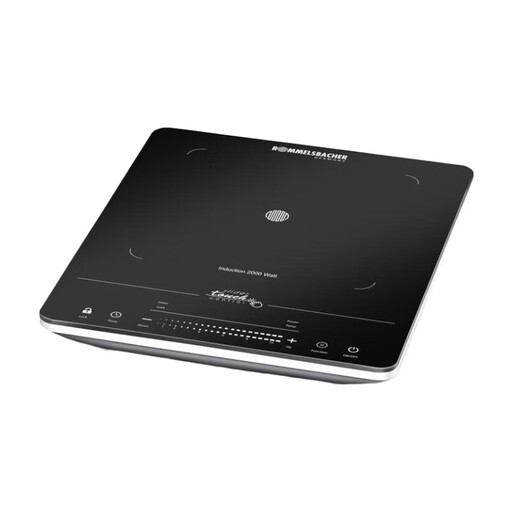 No image available
For anyone looking for a separate induction hob; use a compatible induction pan and check the suitable pan size for this model.
 No image available
For anyone looking for a separate cooking zone; the product information states that the pan must have a ferromagnetic base.
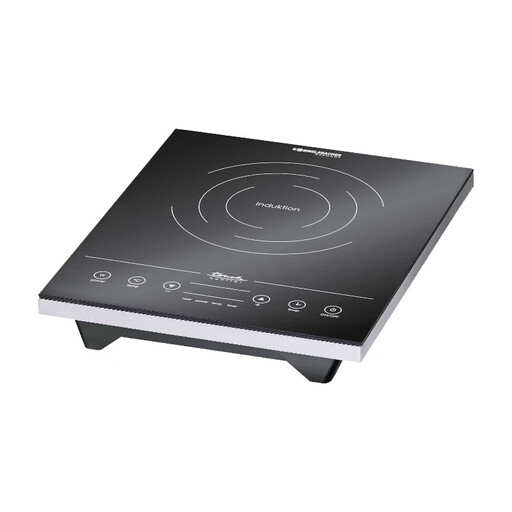 No image available
For anyone looking for a portable induction cooking zone; check that your pan is suitable and that its diameter matches the cooking zone.
No. Induction is an option if your pan has a magnetic base and fits the cooking zone. If your pan isn’t suitable for induction, you can also compare cast-iron or ceramic electric hobs. Keep stirring as the custard thickens, and adjust the heat according to the recipe.
That depends on the manual for the exact model. The Inventum KI120T manual specifies, among other things, a flat, heat-resistant surface and at least 10 cm of ventilation space at the sides and rear. Don’t assume the same clearance applies to other models.
The Netherlands Fire Service recommends plugging high-power appliances directly into a wall socket rather than an extension socket or cable reel. Also check your model’s connection instructions and which other appliances are on the same circuit.
No. Check the marking and product identity of the actual appliance being offered. The European Commission explains that the manufacturer is responsible for meeting the applicable CE requirements and marking the product to which they apply.