
The careful sauce-maker
You want to be able to turn the heat down quickly while stirring, so you’ll want to focus on how the hob works at its lowest setting. An Albert Heijn Allerhande recipe cooks the roux over a low heat.


For making cheese sauce in a small kitchen, a compact hob with an easy-to-adjust low setting is a practical choice. Gentle cooking calls for better heat control rather than a high peak power. Choose induction if your saucepan is compatible; if you want to keep using your existing pan, check whether a non-induction hob is a better fit. Also compare the dimensions, pan size and electrical connection instructions for the specific model.
You want to be able to turn the heat down quickly while stirring, so you’ll want to focus on how the hob works at its lowest setting. An Albert Heijn Allerhande recipe cooks the roux over a low heat.
You have room for one saucepan and want to put the hob away after use, so its overall dimensions and a safe place to cook are important.
Before choosing between induction and another type of electric hob, you want to know whether your current saucepan is compatible. Induction requires a flat, magnetic pan base, according to the Consumentenbond.
Suitable for: anyone with a compatible, flat-based saucepan who wants to put the hob away after use.
Keep in mind: the number of settings doesn’t prove that a model will keep cheese sauce at a steady temperature over a low heat. The Consumentenbond describes differences in simmering performance among the induction hobs it tested; those results don’t apply to the portable models below.
Suitable for: anyone who wants to keep using a saucepan that isn’t induction-compatible and prefers a cooking zone with a dial.
Keep in mind: Tristar lists a 15 cm cast-iron cooking zone for the KP-6185. Rommelsbacher says cast iron heats up more slowly than induction, so allow for residual heat and keep an eye on the sauce.
Suitable for: anyone who wants a smooth cooking surface and a hob that doesn’t use induction.
Keep in mind: this uses a different heating method from induction, even though both may have a glass-ceramic surface. A manufacturer’s comparison doesn’t tell you how a specific model will cook cheese sauce on its lowest setting.
Albert Heijn Allerhande cooks the roux for cheese sauce over a low heat. The Consumentenbond notes that not every induction hob it tested can maintain a low temperature for an extended period, so don’t judge this by the number of settings alone.
| What to consider | What should you check? | Who is this important for? |
|---|---|---|
| Gentle heat | Check how to use the low settings. A displayed temperature setting doesn’t measure the temperature inside your pan. | If I want to turn the heat down quickly while stirring, gentle, steady heat is my priority. Around 36% of consumers say gentle, controllable heat is their main concern when buying. |
| Worktop space | Measure the available space and compare the model’s overall dimensions and placement instructions. | If I only want to use one pan and put the hob away afterwards, size and safe positioning matter. Around 29% of consumers prioritise worktop space and storage. |
| Pan compatibility | Check that the base is flat and suitable for induction, and compare the pan size with the range specified by the manufacturer for that model. | If I want to keep using my existing saucepan, I’ll first check which cooking technology the hob uses. Around 21% of consumers say keeping their existing pans is their main concern when buying. |
| Connection and use | Read the stated power rating, plug type and manual; check that the chosen location and connection are suitable. | If I want to know where the hob can be connected safely, I’ll follow the instructions for the model. Around 14% of consumers prioritise the connection and safe use. |
The number of settings describes the controls, not how long a specific hob will maintain a low temperature in the pan. The Consumentenbond makes this distinction when discussing the induction hobs it tested; these aren’t test results for the portable models.
Don’t treat the number of settings as proof of sauce-making performance, and keep an eye on the sauce while it cooks.
An induction hob can have a glass-ceramic surface, but it still needs an induction-compatible pan. So the surface material alone doesn’t tell you which pans will work.
Check whether the model uses induction or another type of electric heating element, then make sure your pan is compatible.
Using a cable reel or extension lead with a high-power electrical appliance can cause heat to build up. The Dutch Fire Service recommends plugging these appliances directly into a socket wherever possible.
Check the power rating, plug and manual, and use a suitable connection.
ACM ConsuWijzer distinguishes between the statutory guarantee and any manufacturer’s guarantee. A stated manufacturer’s guarantee doesn’t automatically give you the full picture of your statutory rights.
Keep your proof of purchase and contact the retailer if a product develops a fault too soon.
IKEA describes the single-zone TILLREDA as a portable induction hob that you can put away after use.
The IK-6178 and KP-6185 offer different cooking technologies for a compact cooking space.
The CTA 1800/IN is a single-zone induction hob with a stated pan size range of 12–20 cm and adjustable power limitation.
The Touch 2000 is a portable single-zone induction hob with separately specified power and temperature settings.
The KP 1071 is a portable single-zone induction hob for which Severin lists, among other details, the overall dimensions.
These product picks focus on portable hobs for adding extra cooking space in a small kitchen. Check each model’s pan compatibility and controls.
 No image available
A portable induction hob for anyone looking for an extra cooking spot. Check that your saucepan falls within the stated pan size range.
The product name lists eight power settings, temperature control from 60–270 °C, a timer and compatible cookware measuring 12–26 cm.
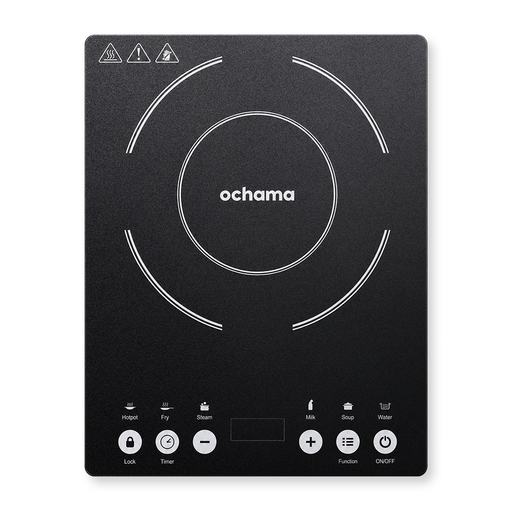 No image available
A portable induction hob for anyone looking for a single cooking zone. Only use a pan that’s suitable for induction.
The product name lists touch controls, ten power settings, six functions and a safety lock.
 No image available
A freestanding induction hob for anyone who needs an extra cooking zone. Check that your pan is suitable for the stated zone.
The product name lists one cooking zone of Ø 26 cm, ten power settings, a touchscreen and a timer.
 No image available
A portable induction hob for an extra cooking spot. Before use, check that your saucepan is suitable for induction.
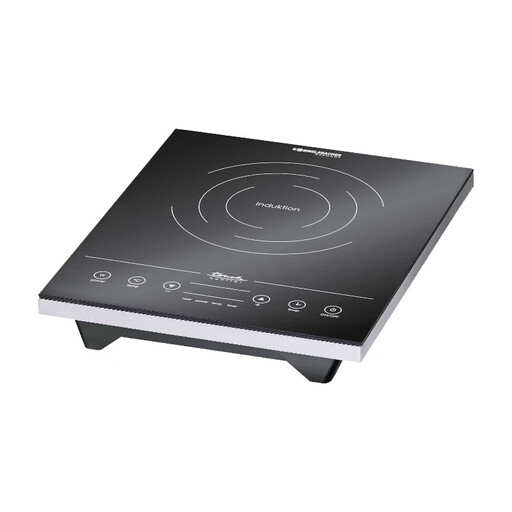 No image available
A hob for anyone looking for an extra cooking spot. Check the cooking technology and pan compatibility before using an existing saucepan.
Cook the sauce over a low heat and keep stirring. An Albert Heijn Allerhande recipe cooks the roux over a low heat; don’t assume the hob has an automatic sauce programme or will guarantee a particular temperature in the pan.
Yes, if the base is flat and induction-compatible, and the pan is within the size range for the model you’ve chosen. The Rommelsbacher CTA 1800/IN, for example, lists 12–20 cm; that range doesn’t automatically apply to other hobs.
Follow the manual for the exact model and check that the connection you’ve chosen is suitable. The Dutch Fire Service recommends plugging high-power electrical appliances directly into a socket wherever possible, rather than using a cable reel or extension lead.
Contact the retailer and have your proof of purchase to hand. According to ACM ConsuWijzer, statutory rights are separate from any manufacturer’s guarantee; a stated manufacturer’s guarantee period isn’t automatically a general statutory time limit.
Electrical equipment covered by the EU Low Voltage rules, including equipment with a rated AC voltage of 50–1.000 V, must meet conformity assessment and CE marking requirements before it is placed on the EU market. EUR-Lex describes these rules; a statement on a product page alone doesn’t prove that an individual item complies.