
Cook with a small saucepan
You usually make one pan of sauce and want a portable hob that you can put away afterwards. With induction, your pan needs a flat, magnetic base that fits the cooking zone, as explained by the Consumers’ Association.


First, match the hob to your saucepan and the available power supply. Induction requires a flat, magnetic pan base, while ceramic or traditional electric may be an alternative if your current pan is unsuitable. Then consider the controls, number of zones and space available to position the hob safely. For cheese sauce, gentle heating and stirring are key, and you may need to lift the pan off the heat.
You usually make one pan of sauce and want a portable hob that you can put away afterwards. With induction, your pan needs a flat, magnetic base that fits the cooking zone, as explained by the Consumers’ Association.
You share the kitchen with housemates’ appliances and want to check in advance that the hob and any appliances used at the same time are compatible with the available power supply. The Consumers’ Association and the Fire Service highlight the importance of the power supply and how high-power appliances are used.
You want to keep using your current pan, so you’re comparing ceramic or traditional electric heating with induction. Remember, too, that a cooking zone can stay hot after you turn it down.
For making cheese sauce in a shared kitchen, your choice mainly depends on the pan you already own, the electrical supply and the space you can make available.
Suitable if: you use one pan and its base is flat, magnetic and the right size for the cooking zone.
Bear in mind: an unsuitable pan won’t work. Also check how the controls perform on low settings and the model’s power requirements.
Suitable if: you don’t have a suitable induction pan and want a portable hob with an adjustable thermostat.
Bear in mind: the zone may continue to give off heat after you turn it down. If needed, lift the pan off the hob before adding the cheese.
Suitable if: you value a simple dial and being able to use a pan you already own.
Bear in mind: the ring may stay hot. An indicator light doesn’t necessarily show residual heat.
Suitable if: you often use a second pan at the same time as making the sauce and have enough worktop space.
Bear in mind: check the electrical specifications and which appliances will be used at the same time on the same circuit. Two zones aren’t essential for making cheese sauce on its own.
| What to consider | What should you check? | Who is this important for? |
|---|---|---|
| Gentle heating | Check how you can adjust the setting while cooking. A selected temperature doesn’t tell you the temperature of the sauce. | If I want to turn the heat down gently while stirring, I don’t want to rely on a displayed temperature as proof of the sauce’s temperature. Around 36% of consumers prioritise gentle heating. |
| Power supply and simultaneous use | Check the plug, power rating and manual for the exact model, as well as which appliances are used at the same time on the same circuit. The Fire Service recommends plugging high-power appliances directly into a suitable socket, rather than using an extension lead or cable reel. | If you share sockets and kitchen appliances, you’ll want to know whether the hob can be used at the same time as other appliances. Around 29% of consumers prioritise the power supply and simultaneous use. |
| Pan compatibility | For induction, check that the base is flat and magnetic and that it matches the pan size specified for the model. Otherwise, compare ceramic or traditional electric heating. | If I want to keep using my existing saucepan, I’ll first want to know whether it’s suitable for the heating method I choose. Around 21% of consumers prioritise keeping their current pan. |
| Worktop space and storage | Measure the space available for the hob, pan and cable, and check the model’s cleaning and storage instructions. | If you share a worktop, you’ll want to be able to reclaim the space after cooking without moving the hob unsafely. Around 14% of consumers prioritise tidying away and having clear worktop space. |
An induction hob only works with a suitable pan that has a flat, magnetic base. The base also needs to be the right size for the cooking zone.
Check your pan and compare its base size with the hob’s specifications. If it isn’t suitable, consider a ceramic or traditional electric hob instead.
Power requirements vary by model. Appliances used at the same time on the same circuit can affect how you use the hob in a shared kitchen.
Check the manual, power rating and available circuit. The Fire Service recommends plugging high-power appliances directly into a suitable socket, rather than using an extension lead or cable reel.
A temperature setting on the hob doesn’t prove that the sauce in the pan is at that temperature.
Heat gently and keep stirring. If needed, lift the pan off the heat before adding the cheese; Henri Willig’s recipe recommends this step.
The models mentioned offer a single-zone and a two-zone option, so you can decide whether you’ll use one saucepan or often cook with two pans at once.
The 303010 and 303020 models illustrate the difference between induction and ceramic when choosing a pan.
The KP-6191 is a traditional electric single-ring hob with a dial.
The single-zone TILLREDA induction hob is an option if you want to put your portable cooking surface away after use.
The KP 1032 is another compact single-zone induction hob to consider.
This Joybuy selection comprises freestanding induction hobs: single-zone models and one two-zone model. Before buying, check that your pan is suitable for induction and that the power supply is suitable for your shared kitchen.
 No image available
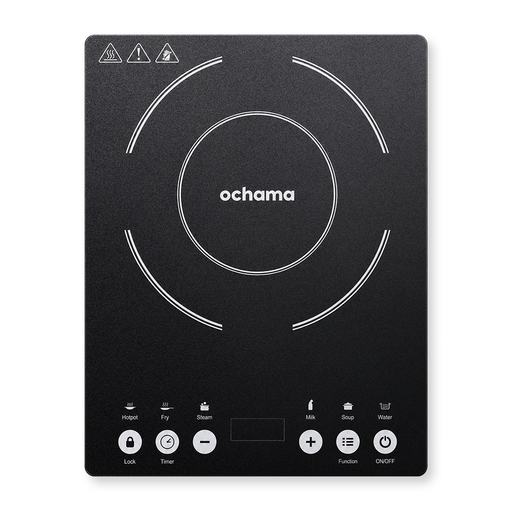
An option if you use one saucepan and want a portable induction hob; your pan must be suitable for induction.
The product name lists 8 power settings, a temperature setting of 60–270 °C, a timer of up to 3 hours and a compatible pan diameter of 12–26 cm. A selected temperature isn’t a measured sauce temperature.
 No image available
Suitable for one saucepan if you want to move or put away your cooking surface after use; use a pan that’s suitable for induction.
The product name lists 2000 W, 10 power settings, 6 functions and a safety lock.
 No image available
A single-zone hob for anyone who wants to adjust the setting while cooking; check that your pan is suitable for induction.
The product name lists 2000 W, an XL cooking zone of Ø 26 cm, 10 power settings and a timer. The stated zone size makes pan size an important point to check.
 No image available
A single-zone induction hob for anyone who uses one pan at a time; your saucepan must be suitable for induction.
The product name identifies this model as a single-zone induction hob. Check the pan base and the model-specific instructions for use.
 No image available
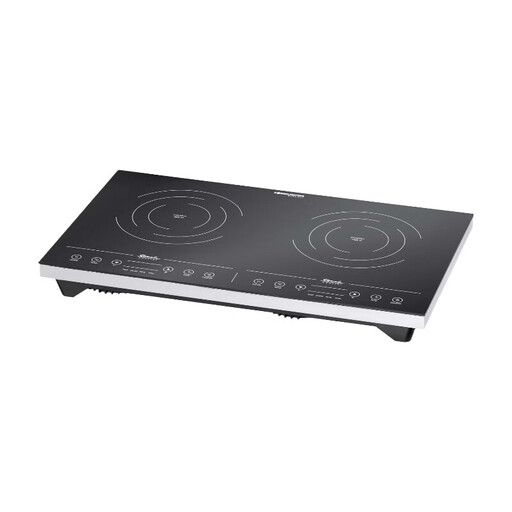
Suitable if you often use a second pan at the same time as making cheese sauce; consider the available worktop space and power supply.
The product name lists a two-zone induction hob. Use pans suitable for induction and check the model-specific power supply information.
Not if your current pan already has a flat, magnetic base that fits the cooking zone. Check for the induction symbol and the pan sizes specified for the model; the Consumers’ Association also recommends checking the base size.
No, that isn’t necessarily true of every model. Check the plug and manual for the exact hob, and take into account other appliances being used at the same time on the same circuit.
Heat it gently, keep stirring and don’t let the sauce boil when you add the cheese. Henri Willig’s recipe says to take the pan off the heat before adding the grated cheese; no hob can do that for you.
Treat homemade cheese sauce like any cooked leftovers: according to the Netherlands Nutrition Centre, let it cool within two hours, store it covered in the fridge and eat it within two days.
No, a setting on the hob doesn’t prove that the sauce in the pan reaches or stays at that temperature. Adjust the heat gently, stir, and if needed, lift the pan off the heat before adding the cheese.