
Vandaag of morgen in huis

Kwaliteit gegarandeerd

Welkomstaanbiedingen ontgrendelen: GRATIS bezorging | Tot 80% korting | Gratis 30 dagen JoyPlus-proefperiode
Download de app
A new hob may seem simple to choose at first glance. However, many consumers buy a model that is not suitable for their kitchen, cooking style or electrical connection. A low price may be appealing, for example, but it says little about the number of cooking zones, the required cut-out dimensions or how the appliance needs to be connected.
Pay particular attention to these three common pitfalls:
The cooking technology has a major influence on ease of use.
An induction hob heats suitable magnetic pans. So, check whether your pans have a magnetic base. A magnet test can provide an initial indication, but always follow the manufacturer’s information.
Induction models generally respond quickly to power adjustments and often include features such as automatic pan detection, a timer and a child lock. The hob itself may still be warm after use because of the hot pan. Always check the residual-heat indicator before cleaning.
A ceramic hob uses electric heating elements beneath a glass-ceramic surface. You do not need special magnetic pans. The surface remains hot for some time after switching off, making a residual-heat indicator important.
A ceramic hob with touch controls has a smooth surface and is relatively easy to wipe clean. Baked-on residue can be more difficult to remove if you leave it too long. Do not use scouring pads or sharp objects that could damage the surface.
An electric hob with solid metal plates is a practical solution for students, temporary accommodation or as an additional cooking surface. A freestanding hob can be stored away after use and usually has rotary controls instead of touch controls.
A compact model with two cooking zones takes up less worktop space than a 4-zone hob. A single electric hotplate may be sufficient for one pan. Bear in mind, however, that the housing and cooking zones become hot during use.
For a built-in hob, measure not only the external dimensions but also the cut-out dimensions. A model approximately 60 cm wide may, for example, require a cut-out measuring 56 × 49 cm. A compact 2-zone hob may require a cut-out of around 26 × 49 cm.
Also check the ventilation space beneath the worktop. A hob must not automatically be installed above an oven, drawer or another heat source. Follow the installation instructions for the specific model.
The total power rating is usually expressed in watts. A Ciarra 2-zone model, for example, has a specified power rating of 3,000 watts, while some 4-zone models reach around 7,000 watts. The Wiggo WH EF614G states 7,200 watts and a 220–240 volt connection.
A supplied plug does not automatically mean that every connection is suitable for simultaneous use at full power. For a fixed connection or a power rating exceeding the capacity of your consumer unit, a qualified electrician must assess the installation.
A hob with a timer can switch a zone off after the set time. A hob with a child lock prevents the control panel from being activated accidentally, but it does not stop children from reaching a hot surface.
Practical features to compare include:
Check that every listed feature actually belongs to the model you have chosen. Brand descriptions may present performance or ease of use in a particularly positive way. In this article, the features mentioned are based on the product specifications provided; no function is presented as a guaranteed result.
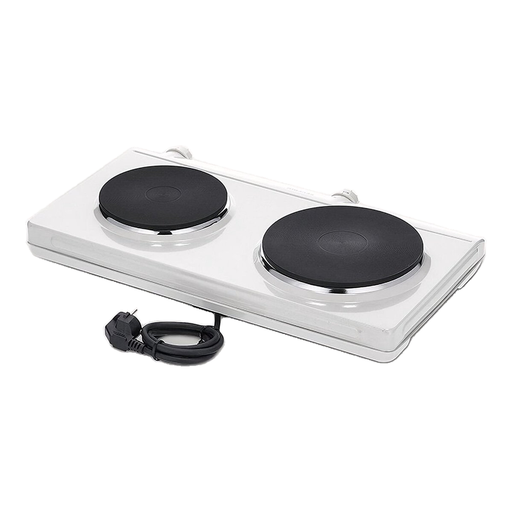
Why it suits this profile: This freestanding electric hob has two cooking zones, separate rotary controls and a compact design for a student room, office or small kitchen.
There is no need to cut a worktop opening or buy special induction pans. The specified connection value is 2,500 watts; however, check that the socket is suitable.
Two independently adjustable zones and solid plates that, according to the product information, are easy to wipe clean.

Why it suits this profile: Suitable for families and home cooks who want to combine four zones, flexible cooking space and digital controls in a built-in installation.
The specifications list four induction zones, automatic pan detection, a flexible zone, a timer and a child lock. Check the cut-out and connection dimensions in advance.
4 zones, 7,400 watts, touch controls and SmartThings connectivity according to the product data.
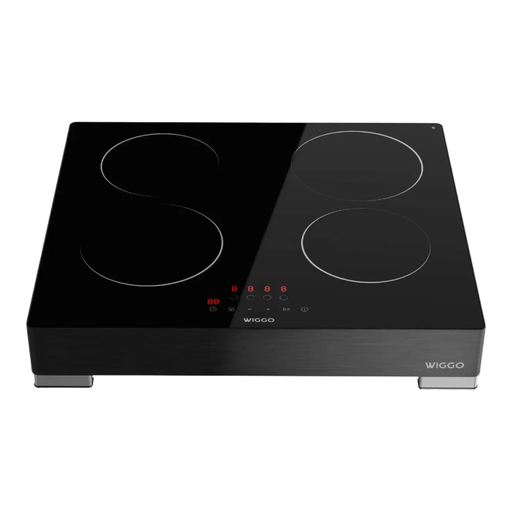
Why it suits this profile: A freestanding 4-zone induction hob for households that use several pans at the same time and do not want to install a built-in model.
The model comes with an EU plug and, according to the specifications, is suitable for a single-phase connection. Have the suitability of your electrical installation checked.
Four zones, nine power levels plus boost, a timer for each zone and a child lock according to the product description.
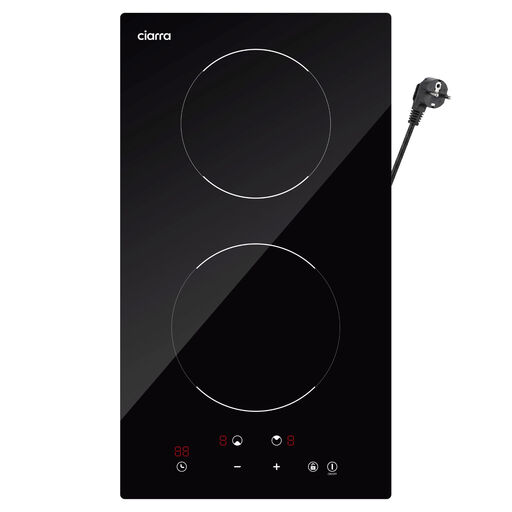
Why it suits this profile: This 2-zone induction hob is designed for a compact cut-out measuring 270 × 490 mm and provides space for two pans.
The cut-out dimensions, total power rating of 3,000 watts and requirement for magnetic pans are specified. This allows you to check the installation and cookware in advance.
9 power levels, a timer of up to 99 minutes, a residual-heat indicator and automatic pan detection according to the product information.
We have put together a complete, up-to-date list of products that fully meet these strict selection criteria and the applicable European safety regulations.
A 2-zone hob is usually practical when you have limited worktop space or generally cook with one or two pans. A freestanding model can be stored away, while a compact built-in hob provides a permanent solution. Always check the available cut-out and ventilation space.
The lifespan depends on use, maintenance, installation and the type of appliance. A glass surface can be damaged by hard impacts, abrasive products or moving rough-based pans across it. Only clean the hob once the residual-heat indicator allows you to do so, and follow the manufacturer’s care instructions.
Consumption depends on the selected power level, cooking time and number of active zones. Do not look only at the maximum wattage; consider your everyday use as well. A model with four zones may require more connection power than a 2-zone hob, even if you rarely use all the zones at the same time.
