
One-pan soup maker
You mainly want a low, controllable heat setting for a compatible soup pan, and don’t need a second cooking zone.


Start by checking the base diameter of your soup pan and deciding whether you want to use another pan at the same time. A portable induction hob may be suitable if your pan has a magnetic base and the electrical connection is right; an electric hob can be an alternative for the pans you already own. A built-in hob gives you more cooking space, but requires a suitable cut-out and connection.
You mainly want a low, controllable heat setting for a compatible soup pan, and don’t need a second cooking zone.
You want to leave the soup simmering while another pan or side dish cooks. In that case, the number of zones and the power available when using them at the same time both matter.
You want to know whether your soup pan works on induction and whether the hob is compatible with the connection available in your kitchen.
Start with simmering, cooking with multiple pans, the electrical connection and the pans you already own. Maximum power alone won’t tell you whether a hob is right for your meal.
Choose this if: you mainly make soup, your pan base is magnetic and it’s the right size for the cooking zone.
Consider: there’s no second zone for a side dish. Check the lowest heat setting and timer on the exact model.
Choose this if: you want to prepare soup and another dish at the same time, and both pans are induction-compatible.
Consider: the zones may have different maximum power ratings; for the Princess 303011, the manufacturer lists maximums of 1800 W and 1300 W.
Choose this if: your existing pan isn’t magnetic and you’re looking for a hob with more than one zone.
Consider: cast-iron zones retain residual heat and can be harder to clean than induction hobs.
Choose this if: you’re replacing an existing hob and often use several pans at once.
Consider: measure the cut-out and check the electrical connection. The total connected load limits how much you can use at the same time.
| What to consider | What should you check? | Who is this important for? |
|---|---|---|
| Gentle simmering | Check the low heat settings and timer; any simmering test should be carried out on the exact model. | If your soup needs to cook on a low heat for a long time, you’ll want to be able to control the temperature. Around 33% of consumers choosing a hob for this meal prioritise gentle simmering. |
| Room for more pans | Measure the pan base and compare it with the zone; work out which pans need to fit at the same time. | If you want to prepare soup and a side dish at the same time, a second zone matters. Around 27% of consumers prioritise space for multiple pans at once. |
| Electrical connection and installation | Check the plug, connected load and circuit; if you’re choosing a built-in hob, measure the cut-out too. | If the hob needs to work with your kitchen’s electrical setup, you’ll want to know in advance whether the connection and installation are suitable. Around 20% of consumers make this their main priority. |
| Pans and purchase costs | Test the pan base with a magnet and measure its diameter before choosing a hob. | If you want to keep using your existing pans, the pan base and zone dimensions both matter. Around 20% of consumers prioritise keeping their pans and avoiding unnecessary purchase costs. |
Maximum power doesn’t tell you how low the hob can heat or how steady that setting is. The Consumentenbond describes a test that measures oil temperature over 30 minutes; this isn’t a simmering test using brown bean soup.
Check the low heat settings separately and, if available, look for a test of the exact model.
Induction requires a magnetic layer in the pan base, and a hob may specify a limited range of base diameters.
Hold a magnet against the base and measure its diameter. Milieu Centraal says a magnetic steel layer is required for induction; Inventum specifies a pan base size of 15–20 cm for the KI120T.
The number of zones alone doesn’t tell you how much power is available when several pans are cooking at the same time. The Consumentenbond highlights the limitations of using multiple zones simultaneously on hobs with a lower total connected load.
Compare the total connected load with the way you cook and check the electrical connection requirements for the exact model.
The KI120T is a single-zone portable induction hob; the KP602B is an electric hob with two cast-iron zones.
The freestanding 303011 induction hob has two zones, making it an option if you want to cook soup alongside another dish.
The KIS159ZT is a four-zone built-in induction hob supplied with a plug for an earthed socket.
The PIE63KBB5E is a 60 cm built-in option with four induction zones.
These products include portable two-zone induction hobs and four-zone built-in induction hobs. Which type is right for you depends partly on how many pans you use at once and the electrical connection in your kitchen.
 No image available
A two-zone option for cooking soup alongside another pan.
The product name lists five temperature settings and says it can be used for low-heat simmering.
Induction requires a magnetic pan base.
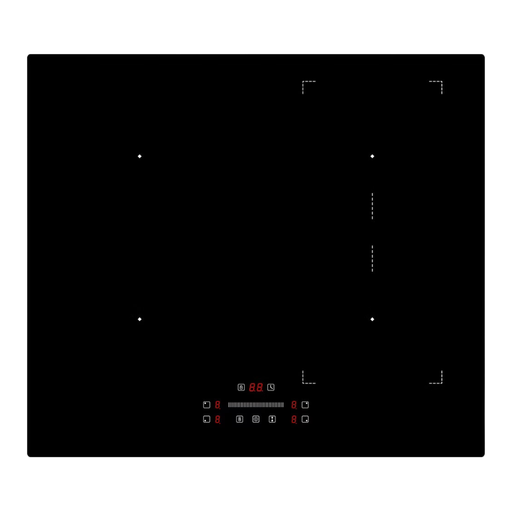 No image available
A built-in model with four zones for meals that need several pans at once.
The product name lists four cooking zones and touch controls.
The product information says the cord is supplied without a plug; check that the connection is right for your kitchen before buying.
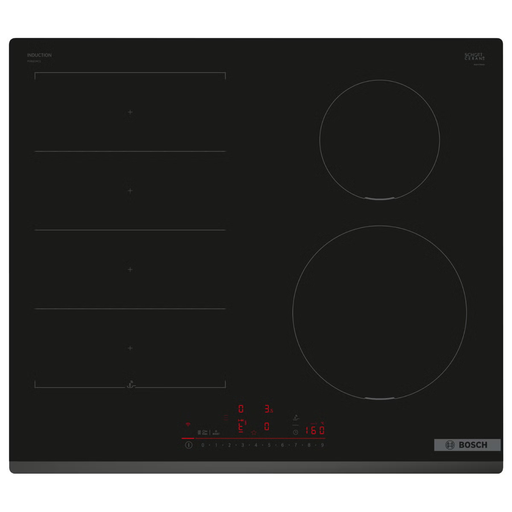 No image available
A built-in hob with four zones for combining soup with other dishes.
The product name lists a width of 60 cm and DirectSelect controls.
Check the specified cut-out dimensions before choosing a built-in model.
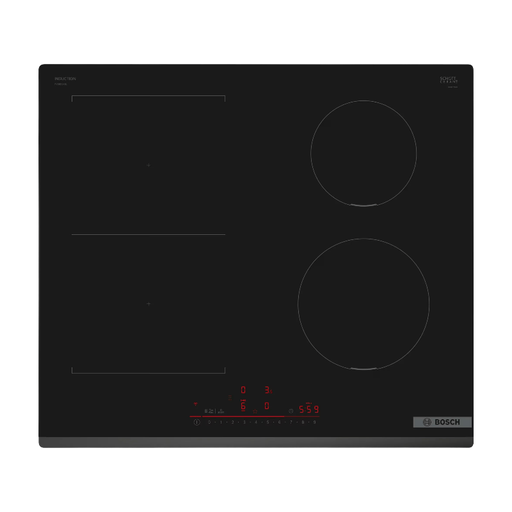 No image available
A built-in model with four zones for using several pans at once.
The product name lists a width of 60 cm and TouchSlider controls.
The product information lists a connected load of 6900 W; check that your kitchen’s electrical connection is suitable.
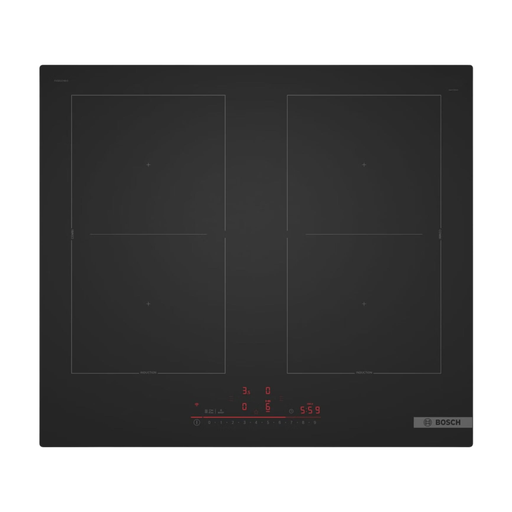 No image available
A built-in hob with four zones for preparing soup and side dishes at the same time.
The product name lists a width of 60 cm and a FlexInduction zone.
The product information lists a connected load of 7,4 kW; check the electrical connection and installation dimensions in advance.
Hold a magnet against the pan base: according to Milieu Centraal, it needs to have a magnetic layer. Also check the permitted base diameter for the exact model; Inventum lists a size of 15–20 cm for the KI120T.
Check the lowest heat settings and look for a simmering test of the exact model; maximum power alone won’t tell you. The Consumentenbond test described measures oil temperature over 30 minutes, so it doesn’t show how well the hob simmers brown bean soup.
If both pans need to be on the hob at the same time, you’ll need enough suitable cooking space. Compare the zone and pan base sizes, and check the total connected load when using multiple zones; the number of zones alone doesn’t tell you how much power they can deliver together.
It depends on the exact model and the connection in your kitchen. ETNA says that one of its induction hobs with a standard plug can be connected to a socket without an installer, but recommends using a qualified installer for a Perilex connection. Follow the instructions for the hob you choose.
Mains-powered hobs within the scope of the European Low Voltage Directive must meet safety requirements and CE marking rules to be placed on the market in the Netherlands. These rules don’t prove that an individual product on sale complies; check the product information if necessary.
Yes. According to ACM ConsuWijzer, your legal guarantee applies alongside any manufacturer’s or seller’s guarantee. If a product breaks sooner than you could reasonably expect during normal use, the seller is responsible for providing an appropriate solution at no extra cost. There isn’t one fixed statutory guarantee period for every hob.