Start with a layout that makes it easy to enter names, dates, punctuation and navigation keys accurately. A full-size keyboard keeps the numeric keypad close at hand, while more compact or differently shaped models may free up desk space or offer a different hand position. Check what suits your desk and workflow. A keyboard does not create a back-up, so make sure you have a recent copy of your index files separately.
Who is this guide for?
People entering names and dates
You’re turning advertisements into searchable records and want to check figures, historical spellings and punctuation without accidentally entering the wrong characters. OCR can struggle to distinguish letters in older texts, so compare the text you enter with the scan. The KB explains this limitation of OCR.
Indexers with long typing sessions
You switch between scans, corrections and data fields, and want to arrange your keyboard, mouse and breaks to suit your workspace. A different keyboard shape does not guarantee a particular physical benefit. Arboportaal explains the repetitive movements and static strain associated with screen work.
Indexers who archive files locally
You work with index files saved locally and want a reliable set-up for entering data. Arrange for back-ups to be made and stored separately from your keyboard; Veilig Internetten describes a back-up as a copy of your files.
What should you look for when choosing?
First, check which characters and navigation keys your indexing software needs. Then compare number entry, mouse space, connectivity and hand position.
| What to consider |
What should you check? |
Who is this important for? |
| Accurate input |
Compare the physical layout with your computer’s input settings. Test punctuation, dates and navigation keys in your indexing software. |
When entering names and historical spellings, I want to check that the right characters appear. Around 36% of consumers prioritise accurate entry of text, dates and characters. |
| Hand position |
Consider the keyboard’s width, its distance from the mouse and the space available for scans. Decide whether a fixed, wave-shaped or split design suits your workspace. |
During long sessions, I want to position my keyboard and mouse so I can move comfortably between the scan and the input fields. Around 29% of consumers give hand position their greatest consideration when indexing. |
| Connectivity and back-ups |
Check that the connection is compatible with your computer and whether you need a wireless receiver. Set up back-ups of your files separately. |
I want to enter and store my files locally without relying on the keyboard for back-ups. Around 21% of consumers prioritise a stable local workflow. |
| Keyboard shortcuts |
Test the commands available in your indexing software and check that any configuration software works with your operating system. |
If I make the same corrections often, I want to know whether keyboard shortcuts work in my software. Around 14% of consumers give repeatable keyboard shortcuts their highest priority. |
Common buying mistakes
-
Thinking a keyboard will prevent data loss
A connection or keyboard shortcut does not, by itself, make a copy of your index files.
Consider input features and back-ups separately, and check regularly that your saved copy is up to date.
You may also need a separate storage device to keep an additional copy.
-
Assuming all QWERTY layouts are interchangeable
The characters you enter also depend on the keyboard layout selected on your computer.
Before entering lots of records, test a line in your own software using the names, dates and punctuation you need.
-
Choosing a compact model without trying the number keys
An integrated numeric keypad accessed using NumLock works differently from a permanently visible number pad.
Create a test record using your usual dates and codes, then compare how much mouse space you need.
If you end up needing a separate number pad, you may have to buy one as an extra.
-
Taking ergonomic claims as a guarantee against discomfort
A split or wave-shaped design will not automatically make a set-up comfortable for you. Breaks and the arrangement of your workspace matter too.
Assess the design at your own desk, and don’t take a manufacturer’s claims as a personal health outcome.
Brands to consider
Logitech
The K120 is an example of a full-size, wired keyboard with a number pad. Wave Keys is a wireless model with a fixed wave-shaped design and a palm rest.
- Logitech says you can connect the K120 via USB without installing anything. For Wave Keys, Logitech lists Bluetooth, an included Logi Bolt receiver and customisable shortcuts.
- The ergonomic benefits Logitech claims for Wave Keys are not guaranteed for every user.
BakkerElkhuizen
The wired UltraBoard 950 V2 is a compact alternative with an integrated numeric keypad.
- BakkerElkhuizen lists USB-C, a USB-A adapter and access to the numeric keypad via NumLock.
- The numeric keypad is operated differently from a separate number pad. Claims about improved posture are made by the manufacturer.
CHERRY
The KC 6000 SLIM is a full-size, low-profile keyboard with a scissor mechanism, designed for a permanent workstation.
- For this model, CHERRY lists a full-size layout, USB-A and Windows as the operating system.
- Check the regional layout of the version you choose; CHERRY lists separate variants, including JK-1600EU-2.
R-Go Tools
The Split Break (v.2) is an example of a keyboard with two halves that can be positioned separately.
- The manual describes wired and wireless versions, as well as a break indicator.
- Check which version and connection you’re choosing. The design described is not independent evidence that it reduces discomfort.
Keyboards at Joybuy
These keyboards are suited to data entry using a numeric keypad, for example when processing dates and codes. A keyboard is no substitute for keeping a separate back-up of your index files.
 No image available
Wired QWERTY keyboard with number pad
A full-size layout with a number pad is well suited to entering dates and codes.
Wired; QWERTY layout; plug and play, according to the product name.
View at Joybuy
 No image available
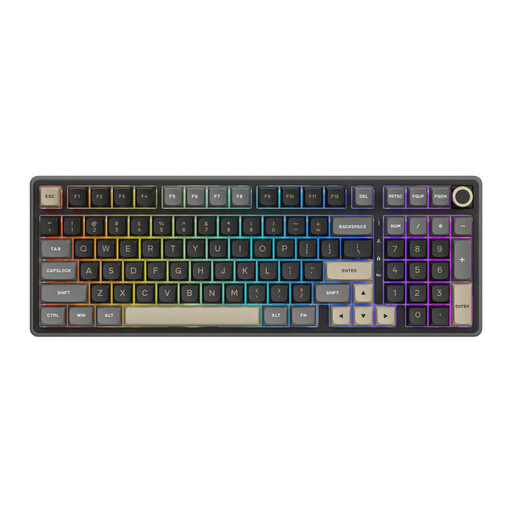
RK Royal Kludge R98 Pro wired mechanical keyboard
The listed number pad is useful if you regularly enter figures and dates.
Wired mechanical keyboard with number pad.
View at Joybuy
 No image available
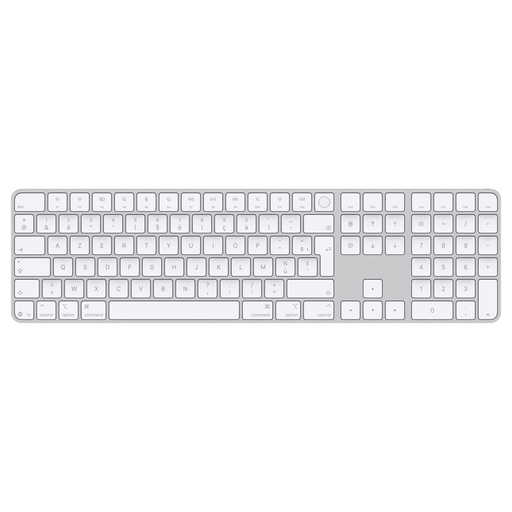
Apple Magic Keyboard with Touch ID and numeric keypad
The numeric keypad can be useful when entering figures and dates.
The product name lists Touch ID and a numeric keypad.
View at Joybuy
 No image available
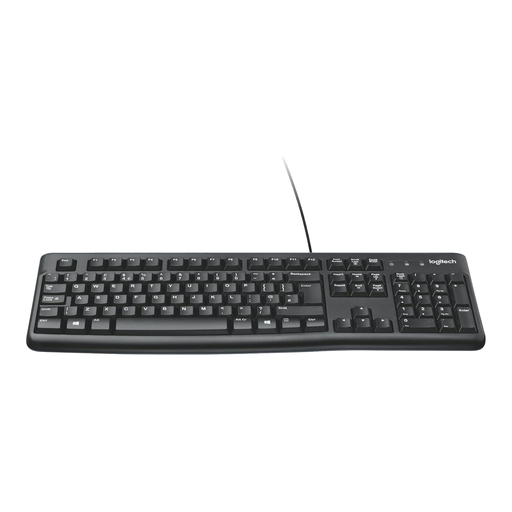
Logitech K120 wired keyboard
The full-size layout with number pad is suitable for entering figures and dates.
Wired via USB; the product information lists QWERTY US International.
View at Joybuy
 No image available
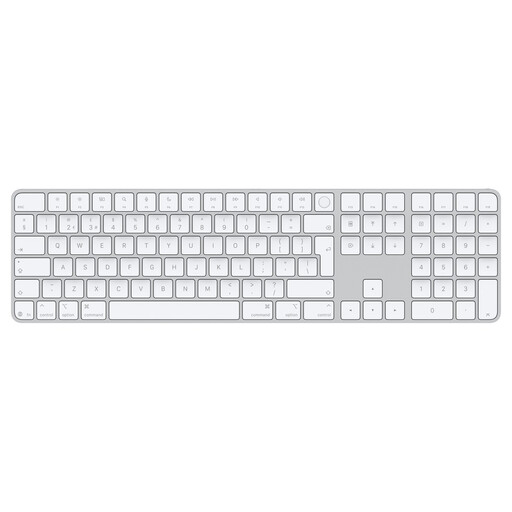
Apple Magic Keyboard with Touch ID and numeric keypad, Dutch layout
The listed Dutch layout may be useful if you’re looking for Dutch key labels for entering and correcting text.
The product name lists compatibility with Mac models featuring Apple Silicon and white keys.
View at Joybuy
Frequently asked questions
Does a keyboard automatically create a local back-up of your index?
No. A back-up is a separate copy of files that you can store on your device or, for example, on an external storage device. Check that the copy is up to date.
Why does a different punctuation mark appear when I retype something?
The keyboard layout selected in your operating system may not match the physical layout. Check the selected setting and test the punctuation you need in your data-entry software before processing records.
Should an employee use a separate keyboard when working on a laptop for long periods?
According to Arboportaal, for employees who work at a screen for more than two hours a day, the screen and keyboard must not be attached to each other. In that situation, it must be possible to use a separate screen or keyboard with a laptop. This requirement applies to employees’ workstations and is not a requirement for every individual buyer.
What warranty and cancellation period apply to an online purchase in the Netherlands?
The Dutch government states that the statutory guarantee depends on what you can reasonably expect from a product; there is no fixed statutory guarantee period. For online purchases from a business, a 14-day cancellation period applies in many cases, with some exceptions. The cancellation period is separate from your rights if a product is faulty or does not meet the agreed terms.
Can I store scans of historical advertisements locally and publish them later?
Check the rights status and terms for each source item before storing or publishing it. Under Delpher’s terms of use, copyright-protected material may be downloaded or printed for private use, such as study; this does not automatically grant permission for further distribution or republication. A local back-up does not give you the right to publish. If your index contains personal data, the GDPR may also apply.


