
Vandaag of morgen in huis

Kwaliteit gegarandeerd

Welkomstaanbiedingen ontgrendelen: GRATIS bezorging | Tot 80% korting | Gratis 30 dagen JoyPlus-proefperiode
Download de app
Upgrading your standard halogen bulbs to HIR2 LED headlights seems like a simple job. The promises are clear: better visibility, a modern look, and a longer lifespan. Yet for many car owners, the search ends in frustration. Dashboard error messages, blinding glare, or bulbs that give out after just a few months.
As a Joybuy Product Recommendation Officer, I see where things go wrong every day. Before you invest in a new set of LED car bulbs, it's crucial to recognise three common pitfalls that can cost you time and money.
To avoid a bad purchase, you need to look beyond the marketing claims. Pay attention to the following specifications to find a set that is a genuine improvement for your car.
Modern cars use a Controller Area Network (CAN bus) to monitor all electronic components, including the headlights. Halogen bulbs consume more power than LEDs. When you install Canbus LED headlights, the on-board computer can interpret the lower power consumption as a burnt-out bulb and trigger an error message.
LED chips produce heat. If that heat isn't effectively dissipated, the light output decreases and the lifespan is shortened. There are two main types of cooling:
The choice depends on the available space in your headlight housing and your preference for simplicity versus maximum power.
The ideal LED headlight produces bright car lights without disturbing others. This is achieved through a design that perfectly mimics the filament of a halogen bulb.
Based on these criteria, we have highlighted a few popular choices that suit different types of users.

Why it's a match: This user wants a quick and hassle-free upgrade. Replacing car headlights should be simple, without modifications to the housing or extra cables.
The fanless design eliminates worries about a failing fan. Its compact 1:1 size ensures a true plug-and-play installation, minimizing the risk of an incorrect beam pattern from a poor fit.
The silent operation and lack of moving parts make this a reliable choice for those seeking simplicity and durability.

Why it's a match: For those who spend a lot of time on the road, especially at night, maximum light output and reliability are essential. This driver seeks the highest performance for optimal visibility and safety.
The high light output is supported by a powerful cooling system. According to the manufacturer, a 16,000 RPM turbo fan and copper heat pipes ensure effective heat dissipation, safeguarding its lifespan under high-performance conditions.
The combination of high power (120W) and an advanced cooling system provides an intense and consistent beam of light for demanding conditions.
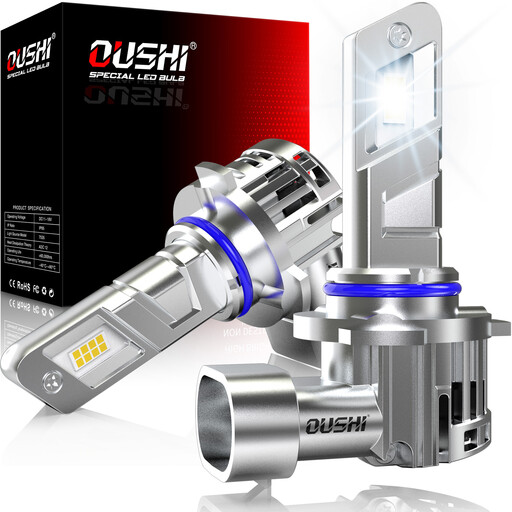
Why it's a match: This user's biggest concern is compatibility. Dashboard error messages or radio interference are absolute no-gos. The solution must integrate seamlessly with the car's sensitive electronics.
These bulbs tackle the Canbus trap head-on. According to the manufacturer OUSHI, they feature a "latest generation CANBUS system" specifically designed for better compatibility with European vehicles and complex on-board computers.
The focus on an advanced Canbus system reduces the risk of electronic conflicts, ensuring a worry-free upgrade experience.
We've compiled a complete, up-to-date list of products that meet these strict selection criteria.
For road use, car bulbs in many regions must have specific certifications (like an E-mark in Europe). Many aftermarket LED kits do not (yet) have this and are officially intended for track or off-road use only. However, during safety inspections, the primary focus is on the beam pattern. A 9012 LED bulb with a good 1:1 design that correctly mimics the halogen beam pattern and causes no glare has a better chance of passing. Always check local regulations and the product's specifications.
Most modern Canbus LED headlights have a built-in solution. A good rule of thumb is to install the bulbs first without an external decoder. If you don't get any dashboard errors and the lights work correctly, then nothing extra is needed. Only if problems occur is an external decoder worth considering.
There is no functional difference. HIR2 and 9012 are different names for the exact same type of bulb fitting. If your car uses HIR2 bulbs, you can install a set of 9012 LED bulbs without any issues, and vice versa.
