
Vandaag of morgen in huis

Kwaliteit gegarandeerd

Welkomstaanbiedingen ontgrendelen: GRATIS bezorging | Tot 80% korting | Gratis 30 dagen JoyPlus-proefperiode
Download de app
Buying a child’s first bike may seem straightforward, but small differences in wheel size, brakes and frame design can affect how comfortably they learn to ride. Hiland children’s bikes with stabilisers are available in 12, 14 and 16-inch sizes, in colours including pink and purple. The right choice depends not just on age, but above all on your child’s height, coordination and how they’ll use the bike.
Age ranges are useful as a guide, but children don’t all grow at the same rate. According to the product information, a 12-inch children’s bike may suit children aged around 2 to 4 who are 80 to 105 cm tall. A 14-inch bike is aimed at children aged around 3 to 6 and measuring 90 to 125 cm. The 16-inch version is intended for children aged around 4 to 7 and measuring 105 to 135 cm.
So, measure your child’s height and check that the saddle can be lowered enough. They should be able to get on easily and stay in control when the bike is stationary.
A bigger size may seem like better value, but a frame that’s too large can make learning to ride harder. Your child needs to be able to steer, brake and come to a stop in time. For beginners, a well-fitting children’s bike is usually more practical than a model they won’t grow into for several months.
Product titles sometimes mention several accessories, but the exact parts included can vary by wheel size. The Hiland Starry range lists a basket and tools, as well as stabilisers for the 12 and 14-inch models. The 16-inch version is listed with a kickstand instead of stabilisers. So, check the specifications for your chosen version before buying.
The age ranges given are no substitute for checking the fit. Set the saddle low enough and make sure your child can hold the bike steady on their own.
According to the product information, the Hiland Starry models have a front V-brake and a rear coaster brake. The V-brake is operated using a lever on the handlebars. With a coaster brake, your child brakes by pedalling backwards.
It’s important for an adult to explain both braking methods calmly to young children. Before every ride, check that the brakes respond properly and that the brake lever isn’t too stiff. A bike with two braking systems also needs regular maintenance.
The models have a single speed and tyres around 1,95 inches wide. This keeps the controls simple and provides a wide base on flat surfaces. A fully enclosed chain guard helps keep clothing and fingers away from the chain. Handlebar protectors and a low step-through frame are practical features too.
The frames are made from Hi-ten steel. This is a common frame material, but it doesn’t necessarily mean every bike will feel lightweight. The stated weight ranges from around 9 kg for the 12-inch model to 11,5 kg for the 16-inch model. Compare the weight with your child’s body weight and strength.
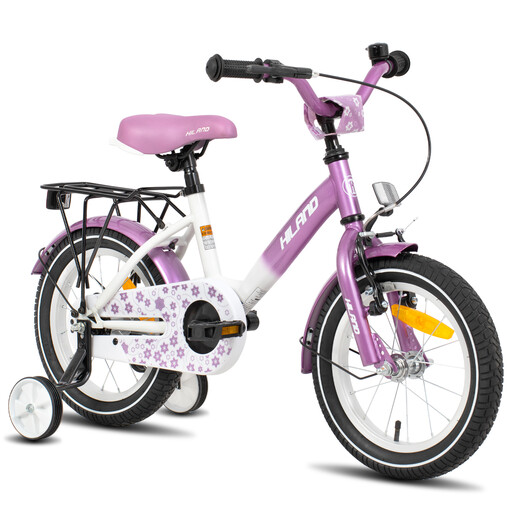
Why it suits this type of rider: This size is intended for young children having their first experience on a bike, who may benefit from the extra support of stabilisers.
The 12-inch size means a young beginner won’t have to start out on a bike that’s too big. The product information lists stabilisers and a low step-through frame.
Around 9 kg, single speed, basket and two braking systems: a front V-brake and a rear coaster brake.
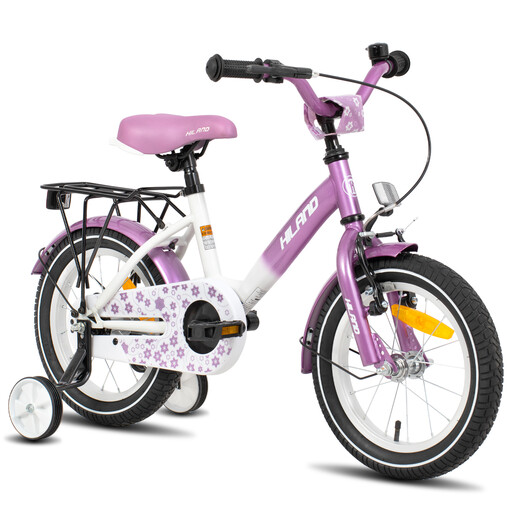
Why it suits this type of rider: A middle size for children who are bigger than the average 12-inch rider but can still benefit from stabilisers.
The stated height range of 90–125 cm helps you compare bikes by fit, rather than age alone. According to the product specifications, stabilisers are included.
14-inch tyres, low step-through frame, chain guard, basket and a front brake with a rear coaster brake.
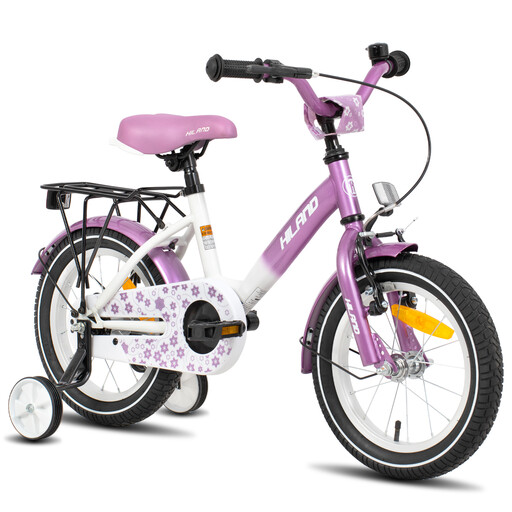
Why it suits this type of rider: This larger version suits children around 105–135 cm tall who go on longer rides and may be ready to move on to riding without stabilisers.
The specifications make clear that this size is larger and heavier, at around 11,5 kg. This lets you assess in advance whether your child can handle the bike comfortably.
16-inch tyres, adjustable saddle, single speed, basket and kickstand according to the product information.
We’ve put together a complete, up-to-date list of products that meet these strict selection criteria and the applicable European safety regulations.
According to the product information, the Hiland Starry models arrive about 90% assembled. The remaining assembly usually takes around 20 minutes using the tools provided. After assembly, check:
Clean the frame with a damp cloth and regularly check the tyres, brakes, pedals and fittings. These models are listed as having a two-year warranty against manufacturing defects under normal use; a 14-day trial period is also mentioned. Check the current terms on the product page.
Start by looking at a 12-inch children’s bike and check that your child’s height falls within the stated range of around 80–105 cm. Stabilisers can provide extra stability during their first lessons.
It can be practical because braking with the pedals is easy to explain. Also teach your child to use the V-brake on the handlebars. Practise both methods somewhere quiet and flat, and always supervise them.
How long it lasts depends on your child’s growth, how the bike is used and maintained, and how it’s stored. An adjustable saddle can help the bike fit for longer, but it won’t replace a larger wheel size once your child has outgrown it. Regularly check the tyres, brake pads, chain and fittings for wear.
