
Vandaag of morgen in huis

Kwaliteit gegarandeerd

Welkomstaanbiedingen ontgrendelen: GRATIS bezorging | Tot 80% korting | Gratis 30 dagen JoyPlus-proefperiode
Download de app
Highlighters are useful for summaries, diaries, textbooks and office work. However, it’s easy to buy a set that disappoints in practice. The colour may be too bright for thin paper, the tip may become misshapen after a short time, or you may end up with several pens in almost identical shades.
This buying guide compares highlighters based on the features that matter in everyday use. That way, you can find highlighters suited to the way you like to mark text, whether you’re a school pupil, student, home worker, planner or bullet journal enthusiast.
A highlighter set of 6, 8 or 18 may seem appealing, but more colours aren’t automatically more useful. Check whether the set really contains different shades and whether you need neon or pastel colours. Clear contrasts are practical for colour-coding study notes. Pastel highlighters can create a calmer look in planners and on creative pages.
A broad tip is suitable for highlighting entire lines of text, but it’s less convenient for small notes. A fine tip works well for underlining, but requires more movement across larger blocks of text. A chisel tip highlighter with two writing widths is therefore a practical middle ground.
Water-based ink is common in text highlighters. However, the final result also depends on the paper. On thin paper, the ink may show through or make text less readable. If possible, test a new colour in an inconspicuous area first, especially in books, planners or important documents.
A cap that doesn’t close properly will also shorten the product’s lifespan. A click mechanism or sturdy cap can be useful if you often carry your highlighters with you.
Look at the combination of a narrow and broad line. Product information may specify, for example:
For textbooks and summaries, 2 to 5 mm is often sufficient. For planners, hand lettering and compact notes, a narrower line can provide greater control.
Neon highlighters stand out strongly and are useful when you want to find important passages quickly. Yellow, pink, orange and green are often used for colour-coding.
Pastel highlighters create a softer result. They work well with diaries, bullet journals and documents where you want to highlight text without making the page look too busy. Do check that the difference between the colours is clear enough on your paper.
Water-based highlighters use water-based ink. According to STABILO’s product descriptions, the models mentioned feature water-based ink. This doesn’t automatically indicate how each colour will perform on every type of paper; paper thickness and drying time remain important.
A slim model with a clip fits more easily into a pencil case or bag. For use at a desk, a larger desk set may be easier to keep organised. According to STABILO’s product information, various BOSS ORIGINAL and swing cool models can remain uncapped for up to four hours without drying out. This is a brand claim from the product description, not a guarantee for every use case. It’s still best to replace the cap after use.
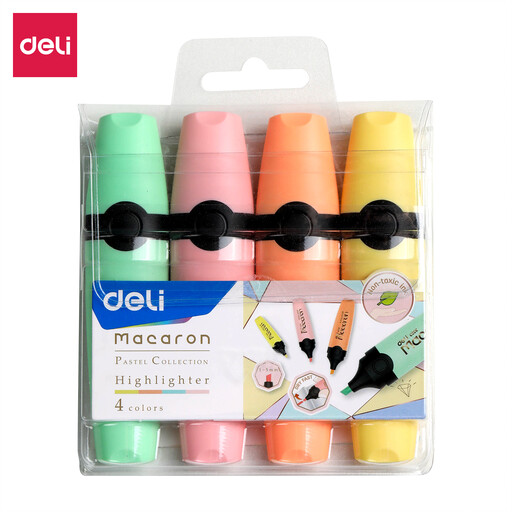
Why it suits this profile: A compact set of four pastel colours is ideal if you want to try out different shades without immediately choosing a large set.
The chisel tip is designed for different line widths, so you won’t immediately need separate underlining pens.
Four pastel colours and an angled tip for both highlighting and underlining.
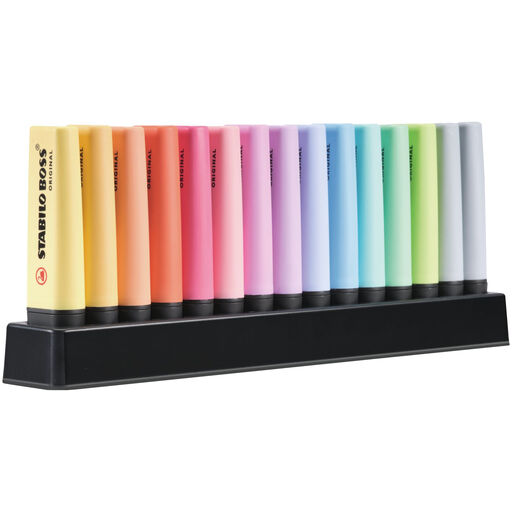
Why it suits this profile: This desk set is aimed at users who want plenty of colours for studying, office work, hand lettering or detailed planning.
The set contains fourteen pastel colours, so you’re less likely to need several separate sets with overlapping shades.
Water-based ink, a chisel tip with 2 and 5 mm widths, and a desk set with a wide choice of colours.
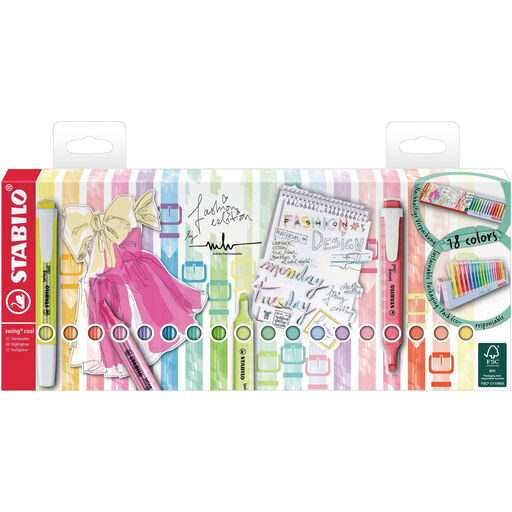
Why it suits this profile: The slim model with a clip is practical for students, office workers and home workers who often carry their highlighters with them.
The combination of pastel and standard colours means you won’t need to carry a separate colour set for every type of document.
18 colours, a clip, water-based ink and two writing widths of 1 and 4 mm.
We’ve put together a complete, up-to-date list of products that fully meet these strict selection criteria and the applicable European safety regulations.
A set of 8 is often a practical balance between colour choice and keeping things organised. A set of 18 highlighters is better suited to extensive colour-coding or shared use within a family or office. Don’t just look at the price per item; consider which colours you’ll actually use as well.
Start by testing on a spare piece of the same paper. Thin pages and low-gsm paper allow ink to show through more easily. Don’t move the pen too slowly or go over the same line several times. Water-based highlighters can behave differently depending on the colour and type of paper.
Their lifespan depends on how often they’re used, the type of paper and how they’re stored. Close the cap firmly after use and keep the pens away from direct sunlight and extreme temperatures. Once the tip dries out, becomes misshapen or writes unevenly, replacing the highlighter is usually the most practical option.
They can be, but check the readability first. Pastel shades offer less contrast than neon colours. Neon highlighters may be clearer for important definitions or exam material, while pastel colours are often more pleasant for calm-looking summaries and planning.
