
Breakfast eaters keeping an eye on fibre
To find out how much fibre your muesli provides, compare the nutrition information per 100 g, then consider how much you actually serve yourself. This lets you compare packs on a like-for-like basis.


When comparing muesli for your weekend breakfast, start with fibre per 100 g, then check the sugars, ingredients and allergens. A plain variety is a good choice if you’re looking for a less sweet base; fruit and crunchy nut mixes offer different flavours and textures, but their nutritional values are worth comparing separately. If you need gluten-free muesli, check the other allergens listed for that exact variety too.
To find out how much fibre your muesli provides, compare the nutrition information per 100 g, then consider how much you actually serve yourself. This lets you compare packs on a like-for-like basis.
Sugar levels can vary considerably, even among high-fibre varieties. Jumbo lists 7.8 g of sugars per 100 g for Muesli Naturel and 19.4 g per 100 g for Muesli Fruit. This comparison can help if you’re choosing between plain and fruit muesli.
If you have a relevant allergy or need to follow a gluten-free diet, the information on the pack you choose matters. Gluten-free doesn’t mean allergen-free: Albert Heijn lists soya and oats among the ingredients in AH Glutenvrij Muesli, and says it may contain nuts.
Start with what matters most for your breakfast. Then compare the nutrition information and ingredients for the exact variety you’re planning to buy.
| What to consider | What to check when buying | Who is it most relevant to? |
|---|---|---|
| Fibre | Compare fibre per 100 g and consider the portion you actually eat. | If fibre is my main reason for choosing muesli, I want to compare packs using the same quantity. For around 36% of consumers, fibre content comes first. |
| Sugars and ingredients | Check sugars per 100 g and read the ingredients list for fruit and crunchy varieties. | I don’t want to rule out fruit or a crunchy texture, but I’m mainly looking for a less sweet base. This is the deciding factor for around 29% of consumers. |
| Allergens and gluten-free | Check the ingredients, allergens and any statements about possible traces on the pack you choose. | If I need to avoid an allergen or eat gluten-free, my chosen variety must meet that requirement. For around 21% of consumers, this is the first thing they look for. |
| Flavour and texture | For fruit and nut varieties, compare fibre, sugars, fat and energy per 100 g too. | For my weekend breakfast, I’m mainly looking for fruit, nuts or something crunchy, and want to know what nutritional values come with them. Around 14% of consumers place the greatest importance on flavour and texture. |
The claim alone doesn’t tell you anything about sugars, fat or allergens. Products that contain fibre can still differ in these areas.
Alongside the fibre content, read the full nutrition information and ingredients on the pack you’re buying.
Jumbo lists 10.0 g of fibre and 19.4 g of sugars per 100 g for Muesli Fruit, compared with 9.5 g of fibre and 7.8 g of sugars for Muesli Naturel.
If a less sweet option matters to you, compare the sugars per 100 g and check which fruit and sweetening ingredients have been used.
According to Quaker’s product information, Cruesli 4 Noten contains 10 g of fibre, 19 g of fat and 462 kcal per 100 g. Fibre alone won’t show you how it differs from regular muesli.
Choose a crunchy variety for the flavour and texture you want, but compare sugars, fat and energy too.
According to Albert Heijn, AH Glutenvrij Muesli contains soya and oats and may contain nuts. A gluten-free label doesn’t remove the need to check for other allergens.
If you have a relevant allergy, read the full, up-to-date ingredients and allergen information, even if the front of the pack says gluten-free.
The differences below apply to the varieties named, not to every muesli made by each brand.
The own-brand range includes a gluten-free muesli variety.
The own-brand range includes Naturel and Fruit muesli, both in 1 kg packs.
Quaker Cruesli includes crunchy cereal mixes, including nut varieties.
Muesli Rijkgevuld combines cereals with fruit, seeds and nuts.
These crunchy muesli and Cruesli varieties are for anyone looking to consider texture, flavour and fibre at breakfast over the weekend. Compare their sugars and allergens too; choose plain or fruit muesli separately.
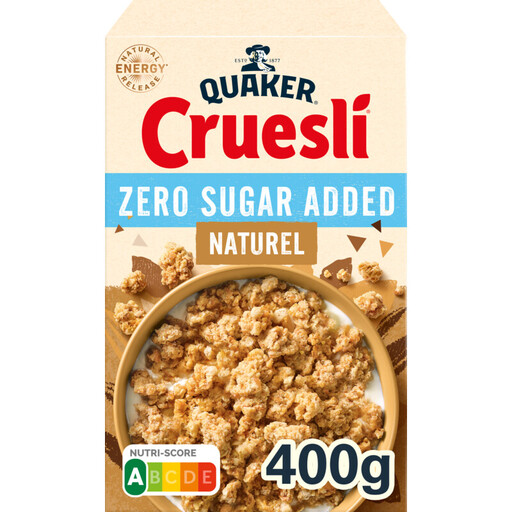 Image unavailable
A natural variety to compare if you’re looking for crunchy Cruesli without fruit or nuts in the product name. The pack contains 400 g; check the nutrition information and allergens for this variety.
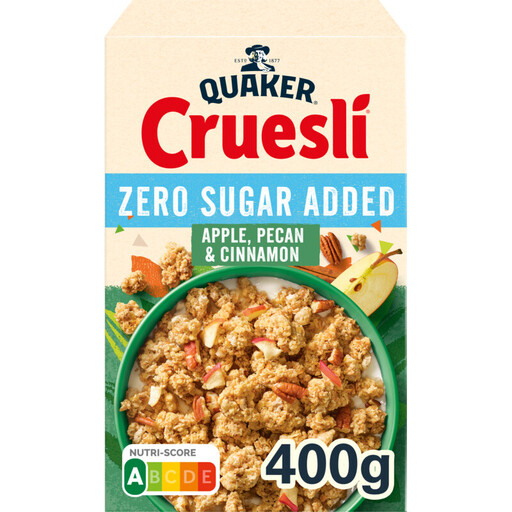 Image unavailable
A crunchy variety to consider if you’re looking for apple, pecan and cinnamon. The pack contains 400 g; if you have a nut allergy, check the up-to-date allergen information and read the sugars per 100 g, even when the product is labelled as having no added sugar.
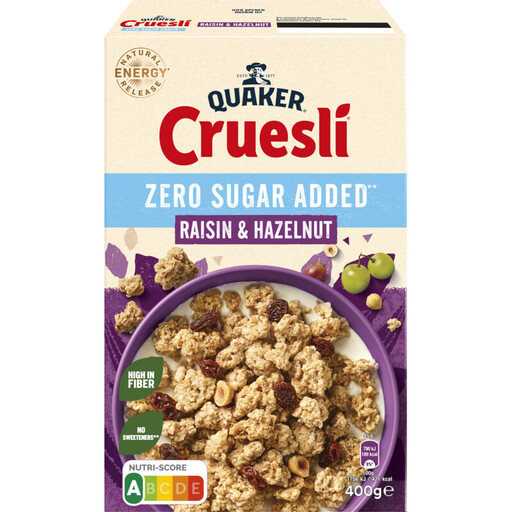 Image unavailable
A crunchy variety worth a look if you like raisins and hazelnuts. The pack contains 400 g; compare the sugars per 100 g and check the allergens if hazelnuts or other ingredients are a concern for you.
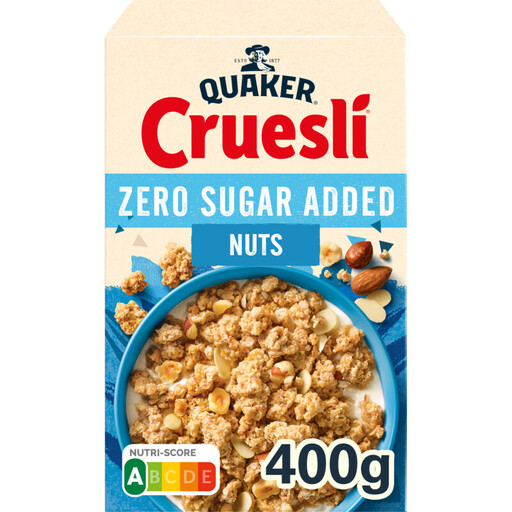 Image unavailable
A nut variety for anyone looking to compare crunchy Cruesli by fibre and sugars. The pack contains 400 g. Joybuy lists 20 g of fibre per 100 g for the corresponding Quaker Cruesli Noten variety; check the other nutrition information and allergens on the pack you choose too.
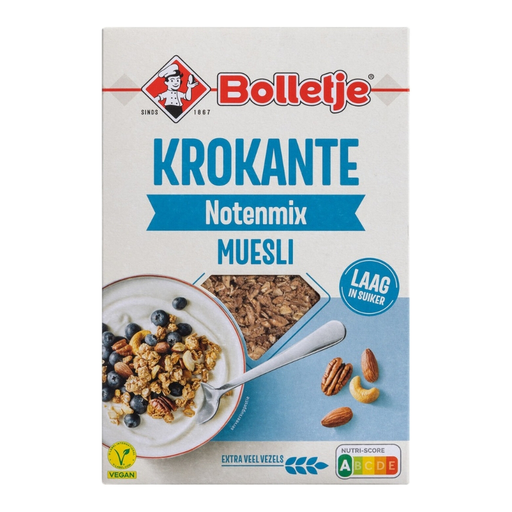 Image unavailable
A crunchy muesli to compare if you’re looking for a nut mix. The pack contains 375 g; check the fibre, sugars and allergens for this variety before choosing.
Under Regulation (EC) No 1924/2006, the ‘high fibre’ nutrition claim requires at least 6 g of fibre per 100 g or 3 g per 100 kcal. The claim doesn’t tell you how much sugar, fat or how many allergens the muesli contains; check the rest of the product information for those details.
Use the fibre value per 100 g alongside the amount of muesli you serve yourself. A bowl containing less than 100 g will provide less fibre than the amount shown per 100 g, so consider your portion rather than relying only on the number on the front of the pack.
No, the fibre content doesn’t determine the sugar content. Jumbo lists 10.0 g of fibre and 19.4 g of sugars per 100 g for Muesli Fruit, compared with 9.5 g of fibre and 7.8 g of sugars for Muesli Naturel. Compare both figures if you’re choosing between these varieties.
Yes, gluten-free doesn’t mean a product is free from other allergens. Albert Heijn lists soya and oats in AH Glutenvrij Muesli and says it may contain nuts. If you have a relevant allergy, always read the full information on the pack you choose.