
The brunch host who’s keeping an eye on fibre
You’re looking for a muesli whose fibre content you can compare per 100 g. The grain base and the amount you serve matter too.


For a high-fibre Easter brunch, start by comparing the fibre content per 100 g, then check the sugars, ingredients and allergens. A plain wholegrain muesli gives you the freedom to serve fruit and other toppings separately. A crunchy or fruity variety offers a different mix, but means paying extra attention to its sugar content and whether it’s suitable for your guests.
You’re looking for a muesli whose fibre content you can compare per 100 g. The grain base and the amount you serve matter too.
You want to put together a bowl with fruit, nuts or crunchy grains, while also checking the sugars and allergens in your chosen ingredients.
You want to offer muesli and toppings separately. Check the allergens on every pack and use separate serving utensils where needed.
Decide whether you want to serve a plain wholegrain base, a crunchy variety or a fruit muesli. Then compare the nutritional information per 100 g and check the label for the guests joining you.
| What to consider | What to check before buying | Who is this relevant to? |
|---|---|---|
| Fibre content | Compare fibre per 100 g and check which grains are listed in the ingredients. | If fibre is my main reason for choosing muesli, I want to be able to compare the value on the pack. Around 40% of consumers prioritise fibre content. |
| Flavour and sugars | Compare ‘of which sugars’ per 100 g and check the ingredients in fruity and crunchy varieties. | For a celebratory bowl, I want fruitiness or crunch without losing sight of the total sugar content. Around 30% of consumers put this balance first. |
| Allergens | Read the label for your chosen variety, including warnings about the possible presence of allergens. | When guests have different allergies, I want to be able to offer them separate options. For around 20% of consumers, suitability is the most important factor. |
| Pack size | Check the net weight and serving size against the number of guests. | If I’m serving a group, I want to put out enough muesli without having to guess. For around 10% of consumers, this is their first consideration. |
The nutritional information per 100 g doesn’t automatically tell you what’s in your bowl. The amount you serve determines how much fibre that portion of muesli contains.
Use the per-100 g value to compare packs, then check how much you’ll actually serve.
A product with no added sugars can still contain sugars. Fruity varieties may also have a different sugar content from a plain grain base.
Compare the ‘of which sugars’ figure per 100 g and check which ingredients give the variety its flavour.
Muesli may contain cereals containing gluten or nuts. Check the chosen pack for warnings that other allergens may also be present.
Ask your guests about their needs, check the latest labels and serve suitable options separately with separate utensils.
AH Volkoren muesli naturel is an example of a plain grain base for a brunch where you serve the toppings separately.
The Jumbo range includes plain and fruit muesli varieties to compare.
Quaker offers crunchy grain mixes, including varieties with nuts and seeds. Cruesli isn’t necessarily interchangeable with plain muesli.
Zonnatura Muesli Rijkgevuld is a fruit and nut variety for anyone weighing up the ingredients alongside the fibre content.
According to ALDI, Golden Bridge Volkoren muesli is available in varieties that include nuts, fruit, kernels or seeds.
Lidl offers, among other options, a crunchy 5-noten muesli for anyone considering a nut variety.
These products are crunchy Cruesli varieties in a range of flavours and pack sizes. For your Easter brunch, compare the nutritional information and the latest label for the variety you want to serve.
 No image available
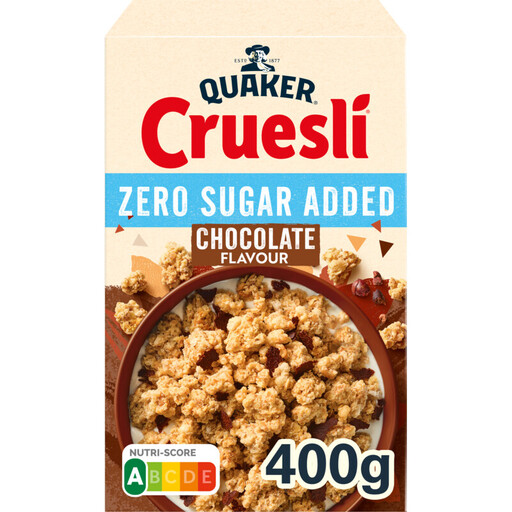
A chocolate variety for anyone who wants to offer a different flavour alongside plain muesli.
If your guests have allergies, check the label for milk, cereals containing gluten and warnings about nuts.
 No image available
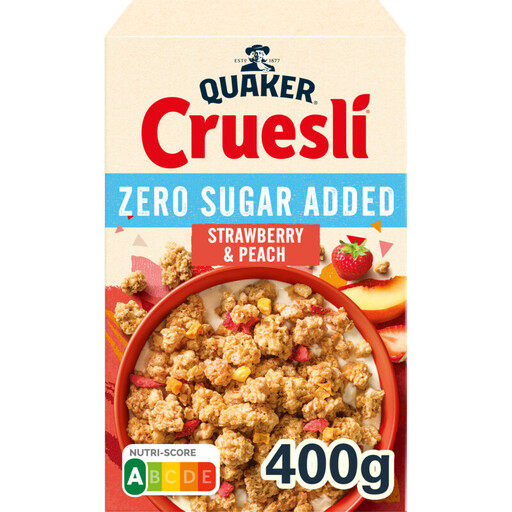
A crunchy fruit variety if you’re looking for a strawberry and peach flavour for brunch.
Check the label for cereals containing gluten and warnings about the possible presence of milk and nuts.
 No image available
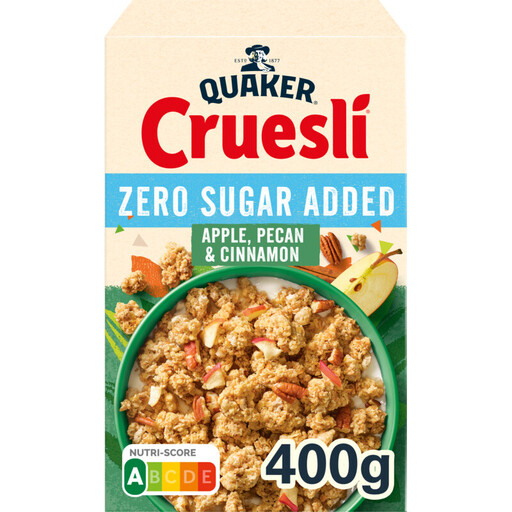
This variety is a good fit for a brunch table where you want to offer a crunchy mix of apple, pecan and cinnamon.
Keep it separate if anyone has a nut allergy, and check the label for information about cereals containing gluten and milk too.
 No image available
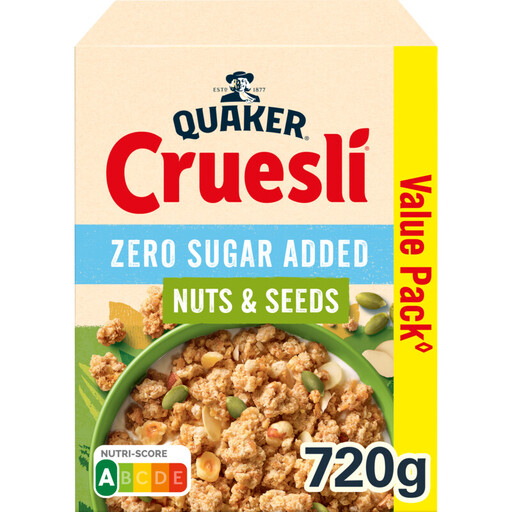
A larger pack with nuts and seeds if you’re looking for a crunchy variety to serve to several guests.
Before serving, check the allergen information for nuts, cereals containing gluten and the possible presence of milk.
 No image available
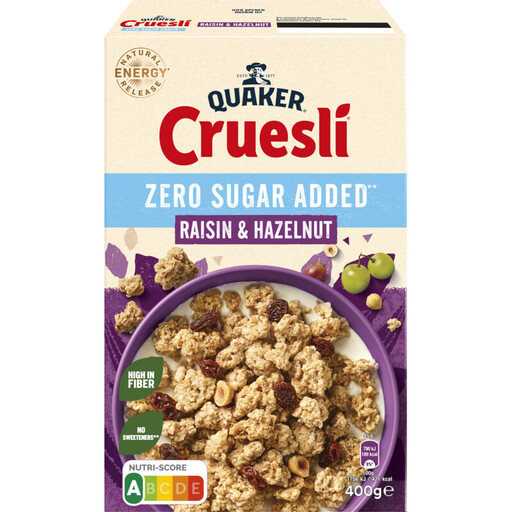
A crunchy option with raisins and hazelnuts if you want to serve fruit and nuts in one variety.
Compare the sugars per 100 g with other varieties and, if anyone has allergies, check the label for hazelnut, cereals containing gluten and the possible presence of milk.
No, the product may still contain sugars. So compare the ‘of which sugars’ figure per 100 g: for example, Jumbo lists 19,4 g of sugars per 100 g for Jumbo Muesli Fruit.
Check the ingredients and allergen warnings on every pack you choose, especially for cereals containing gluten and nuts. For example, Quaker lists hazelnut and almond in Cruesli Zero Sugar Added Nuts & Seeds. Have a suitable separate option available if any guests need one.
Follow the storage instructions on the pack for dry muesli and keep yoghurt chilled. The Voedingscentrum recommends setting your fridge to 4 °C. Only take chilled toppings out when you’re ready to serve them.