
Vandaag of morgen in huis

Kwaliteit gegarandeerd

Welkomstaanbiedingen ontgrendelen: GRATIS bezorging | Tot 80% korting | Gratis 30 dagen JoyPlus-proefperiode
Download de app
The search for a high-speed 3D printer can feel like navigating a minefield of marketing jargon. Speeds of 600 mm/s are promised, but the reality is often a print riddled with defects. If you're an advanced hobbyist or a small business looking to upgrade, you want efficiency without sacrificing quality. It's a waste of money if a printer becomes unusable after three months due to a design flaw or if its promised speed exists only on paper.
As a Product Recommendation Officer at Joybuy, I see the issues buyers face daily. Let's discuss the three most common pitfalls so you can make an informed decision when buying a 3D printer.
To sidestep these pitfalls, you need to look beyond the marketing. Focus on the technical specifications that genuinely determine performance and reliability.
High print speed is only valuable if the printer is stable enough to handle the associated forces and vibrations.
The extruder and hotend determine which materials you can print and how reliably you can do so.
Modern printers offer features that significantly simplify the printing process and reduce the chance of failed prints.
Based on the criteria above, we have selected a few models that suit different user profiles.
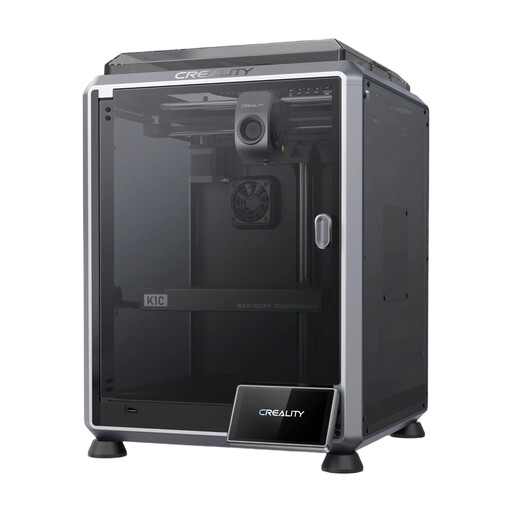
Why This Fits Their Persona: Ideal for prosumers and small businesses that need to produce functional parts and prototypes quickly. The focus is on speed, reliability, and the ability to work with high-strength materials.
The stable CoreXY system and vibration compensation tackle the "high-speed, low-quality" trap. The 300°C tri-metal nozzle and open-source software prevent you from being locked into a closed ecosystem.
Carbon Fiber Ready: The hardened steel nozzle and enclosed frame make it possible to print with abrasive materials like PLA-CF and PA-CF right out of the box.
Smart Monitoring: The standard built-in AI camera detects print failures, saving time and material.
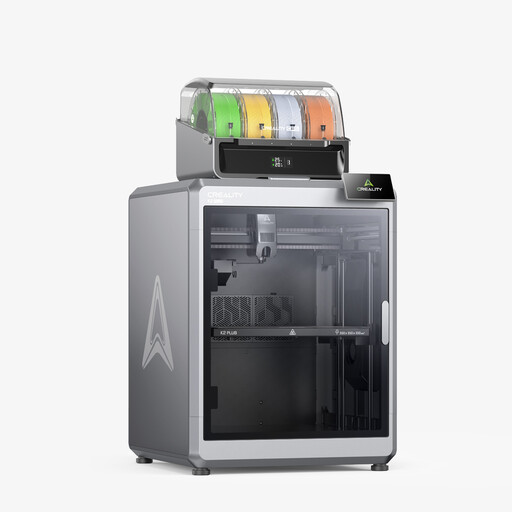
Why This Fits Their Persona: For the creative maker who wants to produce complex, colourful models without the hassle of painting. This is a multi-colour 3D printer that combines speed with a large volume.
This model offers an integrated multi-colour system (CFS) that works seamlessly, unlike unreliable third-party add-ons. The 'anti-tilt' auto-leveling system is truly 'hands-free' and avoids the frustration of manual calibration.
Large-Volume Colour Printing: A rare combination of a 350x350x350mm build volume with the ability to print in up to 16 colours.
Heated Chamber: The chamber can be heated up to 60°C, which is essential for printing materials like ABS and ASA without warping.
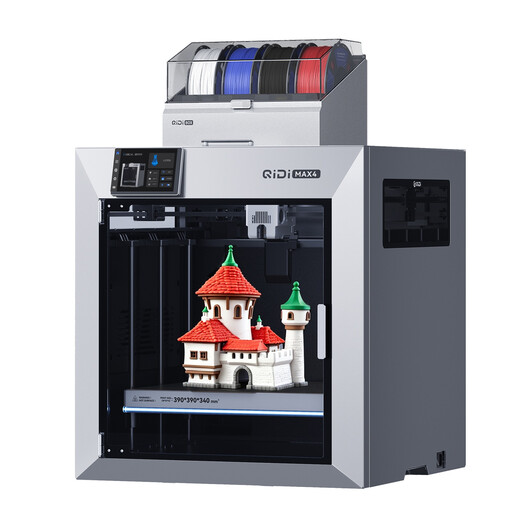
Why This Fits Their Persona: For the user who wants to print large functional parts, jigs, or prototypes in a single run. Speed is important, but stability and a large-volume 3D printer are the absolute priorities.
The actively heated chamber (65°C) and stable frame with closed-loop motors prevent warping and layer shifting—problems common in large prints on less capable machines. The high-flow hotend is designed for consistent performance, even at high speeds.
Industrial-Grade Capability: The enormous 390x390x340mm build volume and heated chamber make it possible to print large objects with demanding materials like PC and PPS-CF.
Multi-Colour Expandable: Compatible with the QIDI BOX for 16-colour and multi-material prints, making the printer extremely versatile.
An enclosure offers two key advantages. First, it keeps the temperature around the print object stable. This is crucial for materials like ABS and ASA, which tend to warp if they cool down too quickly. Second, it improves safety and air quality. It keeps curious hands (and pets) away from hot and moving parts and, when combined with a filter, helps contain fumes and particles released during printing.
A printer with a maximum speed of 600 mm/s isn't always 12 times faster than an older 50 mm/s printer. The actual time savings depend heavily on the acceleration (expressed in mm/s?) and the complexity of the model. For a model with many small details and corners, the printer will never reach its top speed. However, the high acceleration allows the printer to get up to speed and slow down more quickly, which significantly reduces the total print time. A realistic time saving for an average model is often between 50% and 80% compared to a traditional printer.
Not necessarily. While many high-speed printers support a wide range of materials, you often need special 'high-speed' filament for printing at high velocities. This filament is designed to melt faster and more consistently. For printing abrasive materials like carbon fiber or glow-in-the-dark filaments, a hardened steel nozzle is absolutely necessary to prevent rapid wear of the standard brass nozzle. Always check the printer's specifications, particularly the maximum nozzle temperature and the nozzle material.
