
Vandaag of morgen in huis

Kwaliteit gegarandeerd

Welkomstaanbiedingen ontgrendelen: GRATIS bezorging | Tot 80% korting | Gratis 30 dagen JoyPlus-proefperiode
Download de app
Green algae on your patio, a muddy driveway after an autumn storm, or a car that's begging for a wash. A good high-pressure washer seems like the perfect solution. But the market is flooded with models that promise the world. Many people fall for marketing traps and end up with a device that's ready for the scrap heap after just one season.
As a Joybuy Product Recommendation Officer, I see where things go wrong every day. Before you buy a high-pressure washer, it's crucial to recognise three common pitfalls that can cost you money and frustration.
To avoid a bad purchase, it's wise to look beyond the sales pitches. Pay attention to these three technical specifications that determine whether a high-pressure washer will do its job well.
The effectiveness of a high-pressure washer is not just determined by the working pressure (bar), but by its combination with the water flow rate (litres per hour).
A model with 130 bar and 450 L/hr will often clean a patio faster than a model with 150 bar and 350 L/hr. Look for a good balance that suits your tasks.
The motor and pump determine the lifespan and reliability of your high-pressure washer.
The classic corded electric high-pressure washer is an excellent choice for most jobs around the house. You have a constant power supply and don't have to worry about a dead battery.
A cordless high-pressure washer, on the other hand, offers ultimate freedom. Ideal for places without a power outlet, like an allotment, a campsite, or the back of the garden. Keep in mind that the working pressure and runtime are often lower than with a corded model. Perfect for a quick car wash or cleaning your mountain bike after a ride.
Based on these criteria, we have selected a number of models that suit different user profiles.
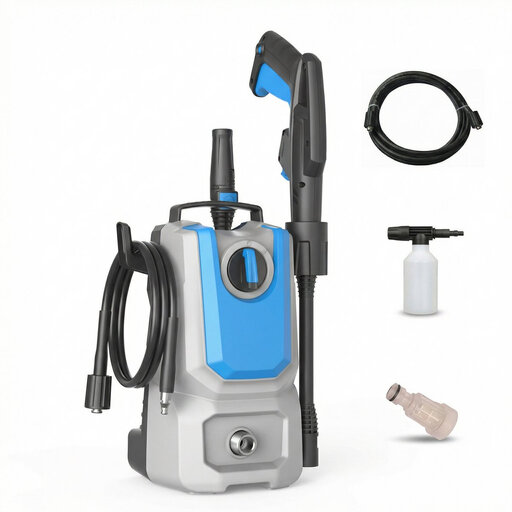
Why This Fits Their Persona: Perfect for those who occasionally need a pressure washer for light-duty tasks, such as cleaning a bicycle, garden furniture, or a small balcony. Compact, easy to store, and simple to use.
This model features an aluminium pump, which is uncommon in this price range and avoids the pitfall of a fragile plastic pump. The specifications (90 bar) are realistic for the intended tasks.
Compact and lightweight. Equipped with an automatic start/stop system to save energy and reduce wear.
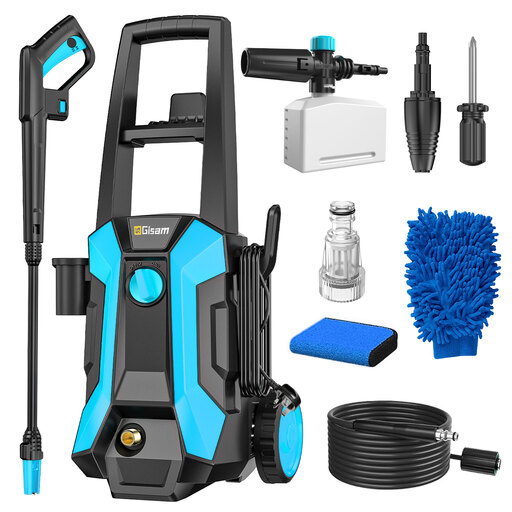
Why This Fits Their Persona: For those who regularly want to clean their patio, driveway, fence, and car. This model offers a strong combination of power and convenience for the most common jobs around the house.
This model doesn't just focus on its 180 bar pressure but also delivers a solid 480 L/H water flow. This balance ensures efficient cleaning and avoids the 'empty power' trap.
The integrated hose reel and 8-meter long hose provide a large operating range and easy, tangle-free storage. The included accessories, like a foam sprayer, are practical for washing your car with a pressure washer.
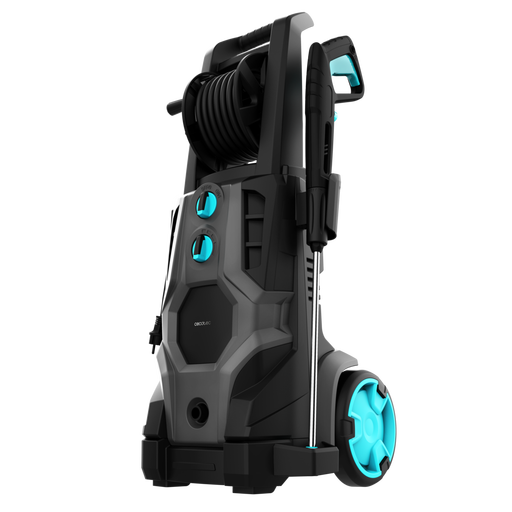
Why This Fits Their Persona: For those who need to clean large surfaces, like a long driveway or a large patio, and won't settle for less. Suitable for intensive and heavy-duty use.
This model is equipped with an aluminium pump and a brushless motor, components designed for durability and heavy loads. This avoids the pitfall of an overheated motor or a worn-out pump after a few tough jobs.
Very high cleaning power with 225 bar and 540 L/hr. The large 14-meter operating range provides plenty of freedom of movement without constantly having to move the machine.
We have compiled a complete, up-to-date list of products that meet these strict selection criteria and comply with current safety regulations.
For a standard patio with green algae, a pressure washer with a working pressure between 120 and 140 bar is usually sufficient. It's best to use a special patio cleaner accessory. This prevents damage to the joints and ensures an even, streak-free result. Always start with a lower pressure and increase it if necessary.
Yes, you certainly can, provided you do it correctly. Always maintain a distance of at least 30 centimetres between the spray lance and the car. Use a wide fan spray, never the hard, concentrated jet (dirt blaster). Start by rinsing off loose dirt, then use a foam lance with car shampoo, and finally rinse the car clean from top to bottom. Be extra careful around stone chips or damaged paint.
A patio cleaner is a round accessory with rotating nozzles under a hood. The hood prevents water and dirt from splashing and ensures an even cleaning of large, flat surfaces like patios and driveways. A dirt blaster (or turbo nozzle) produces a very powerful, rotating point jet. It is intended for extremely stubborn dirt on hard, non-sensitive surfaces like concrete or brick, but is unsuitable for delicate materials like wood or car paint.
