
Vandaag of morgen in huis

Kwaliteit gegarandeerd

Welkomstaanbiedingen ontgrendelen: GRATIS bezorging | Tot 80% korting | Gratis 30 dagen JoyPlus-proefperiode
Download de app
As a dog owner, you naturally want to make the best nutritional choice for your four-legged friend. The shelves are packed with options, and every package makes big promises. It can be challenging to see through the marketing and determine what actually ends up in your dog's bowl. This article is designed to help. We'll examine the specifications of high-meat dog food and give you practical advice to make an informed decision.
Before we look at specific products, here are a few key points to help you evaluate natural dog food.
The order of the ingredients is important; what's listed first is most abundant. Look for clearly named animal ingredients like fresh chicken, raw turkey, or dried fish. Vague terms like ‘meat and animal derivatives’ offer less clarity on quality. Many owners now opt for grain-free dog food, especially if their dog is sensitive to grains.
Some brands, like Acana and Orijen, use a WholePrey diet approach. This means the food contains not only muscle meat but also organs, cartilage, and bone in natural ratios. The idea is to mimic the diet of a dog's ancestors, providing a broader range of nutrients without a long list of synthetic additives.
A growing dog has different nutritional needs than an adult dog. Puppy food often contains more protein and fat for healthy growth. For dog food for large breeds, it's important to look for a balanced calcium and phosphorus content and additives like glucosamine to support their joints.
Based on product specifications and composition, we've rounded up a few options for you.
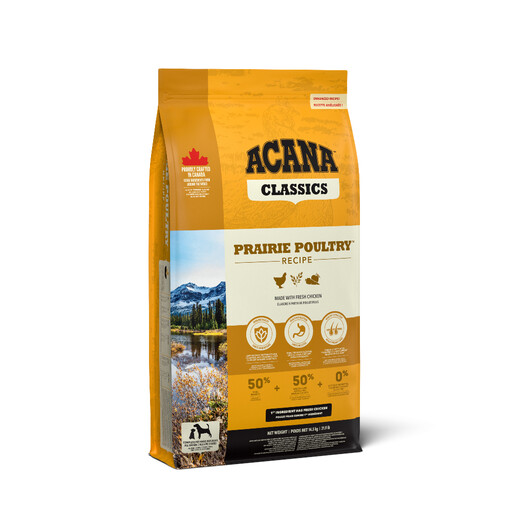
Why it stands out This food from Acana contains 50% high-quality animal ingredients, including fresh chicken and raw turkey. A unique feature of this variety is the addition of whole oats. Oats provide fibre and slow-release energy, which can help maintain stable blood sugar levels.
Pros
Who is it for? This is an interesting option for owners of dogs at all life stages who are looking for a high-protein diet but prefer a kibble that includes healthy grains instead of being completely grain-free.
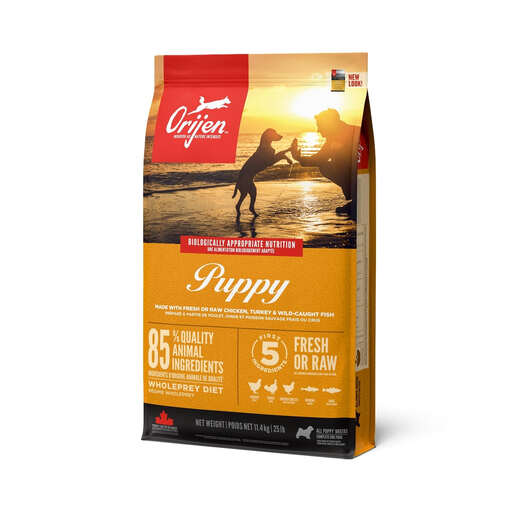
Why it stands out Specifically developed for the growth stage, Orijen puppy food contains an impressive 85% animal ingredients. The formula is completely grain-free and rich in protein to support muscle mass development.
Pros
Who is it for? Ideal for owners who want to give their puppy of any breed a nutrient-dense, grain-free, and very high-protein start. Also suitable for pregnant or nursing dogs.
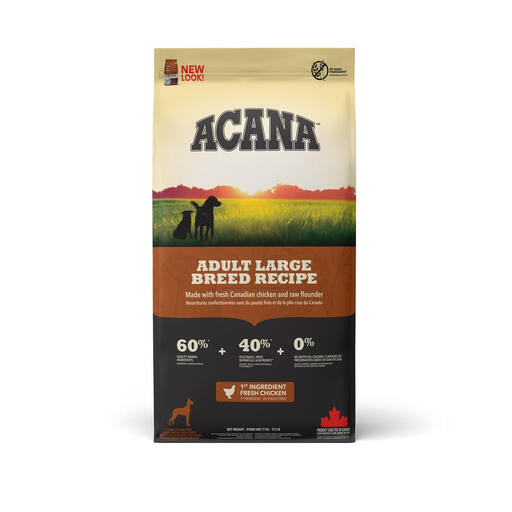
Why it stands out This variety of Acana dog food is tailored to the needs of adult large-breed dogs. The formula contains 60% animal ingredients and is completely free of grains, soy, corn, and potato. The focus is on supporting a healthy weight and strong joints.
Pros
Who is it for? This is an excellent choice for adult large-breed dogs (over 25 kg) who need a grain-free, high-protein diet that pays extra attention to bone and joint health.
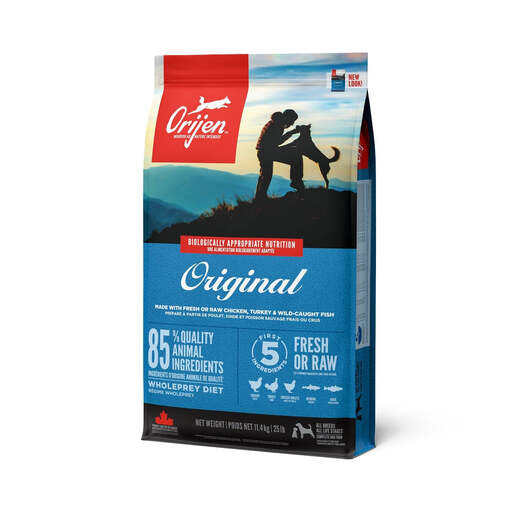
Why it stands out The Orijen Original formula is a classic and a prime example of a biologically appropriate diet. With 85% animal ingredients, including fresh chicken, turkey, and a variety of fish, it closely follows the WholePrey principle.
Pros
Who is it for? For dog owners looking for one of the most protein-rich and nutrient-dense Orijen kibbles on the market, which closely mimics a dog's natural diet.
If the perfect match for your dog isn't here, or if your dog is particularly fond of poultry, check out our full range of Turkey & Chicken dog food for even more choices.
There is no official, legal definition for 'high meat content'. Generally, it refers to food where meat or fish are the first and most prominent ingredients on the list. Products that specify they consist of 50% or more animal ingredients, like the Acana and Orijen options mentioned above, clearly fall into this category.
Not necessarily. Grain-free dog food is an excellent option for dogs with a proven sensitivity or allergy to grains. However, dogs without these issues can thrive on food with a limited amount of healthy, whole grains like oats. These provide useful fibre and energy. The choice depends on your dog's individual needs and tolerances.
A sudden switch can disrupt your dog's digestion. It is recommended to transition gradually over a period of 7 to 10 days. Start by mixing a small amount (about 25%) of the new kibble with the old food. Every few days, increase the proportion of the new food until you have fully switched over. Always provide plenty of fresh drinking water.
