
If fibre comes first
You want a muesli with a verifiably high fibre content for weekdays. So check the nutritional information per 100 g rather than relying only on words such as ‘wholegrain’ on the front of the pack.


For a weekday breakfast, start by choosing a muesli whose fibre content you can compare per 100 g. Then consider whether you’d prefer a simple wholegrain blend, a crunchy texture or a high-protein option. Check the sugars, ingredients, allergens and portion size too: a high fibre content doesn’t tell you anything about these on its own.
You want a muesli with a verifiably high fibre content for weekdays. So check the nutritional information per 100 g rather than relying only on words such as ‘wholegrain’ on the front of the pack.
You’re looking for crunchy muesli to have with milk, yoghurt or quark. As well as the texture, you want to know how much sugar your chosen option contains and what counts as a portion.
You’re looking for a breakfast cereal where both fibre and protein matter in your choice. Ingredients and allergens are important too, especially if you’re considering an option with grains or nuts.
Start by comparing fibre per 100 g. Then decide which texture you prefer and check the sugars, ingredients and portion size of the options that remain.
| What to consider | What should you check? | Who is this important for? |
|---|---|---|
| Fibre content | Check the amount of fibre per 100 g; ‘wholegrain’ on the pack is no substitute for the nutritional information table. | I want to choose weekday muesli based on its fibre content before letting taste make the decision. Around 50% of consumers put this check first. |
| Texture and sugars | For crunchy options, compare total and added sugars per 100 g, and check the portion size. | For a quick breakfast, I mainly want a crunchy bowl without losing sight of the sugars. This combination is the main concern for around 30% of consumers. |
| Protein and ingredients | Check the protein content per 100 g and read the ingredients and allergen information for the option you’ve chosen. | If I’m looking for protein as well as fibre, I want to know which grains and any nuts are in my choice. Around 20% of consumers prioritise this combination of factors. |
Albert Heijn lists 6.6 g of fibre and 9 g of added sugars per 100 g for AH Biologisch Krokante muesli naturel. One characteristic doesn’t tell you what the label says about the other.
When comparing products, look at the fibre, total sugars and information about added sugars side by side.
Choosing a high-fibre breakfast doesn’t show how much fibre you get throughout the rest of the day. The Voedingscentrum lists a range of plant-based foods as sources of fibre.
Think of muesli as part of what you usually eat, not as a replacement for other foods.
A crunchy option with nuts and a high-protein option may contain different ingredients and have different allergen information. Even within the same product range, the specific option you choose matters.
If you have an allergy or intolerance, check the current ingredients and allergen information on the exact pack you’re buying.
These product names don’t automatically mean the products have the same ingredients. For example, in the ALDI range reviewed, Brinta is listed as a wholegrain breakfast cereal, not as muesli.
First choose the type of breakfast cereal you want, then compare the nutritional information for the individual products.
AH’s own-label range is worth considering if you want to compare a crunchy wholegrain muesli with stated portion and nutritional information.
Jumbo’s own-label range includes plain muesli as well as options with fruit, seeds or nuts.
Golden Bridge is an ALDI brand with options including wholegrain muesli made with oat flakes, wheat flakes and raisins.
The Cruesli range reviewed includes options with nuts and a Protein option with stated nutritional values.
Lidl’s Dutch range includes options such as fruit muesli and crunchy muesli.
Brinta is an alternative if you’d rather have wholegrain breakfast cereal than muesli.
This selection includes crunchy Cruesli options, muesli with nuts and seeds, and a crunchy option with Protein in the name. Compare your chosen flavour and pack with the current nutritional and allergen information.
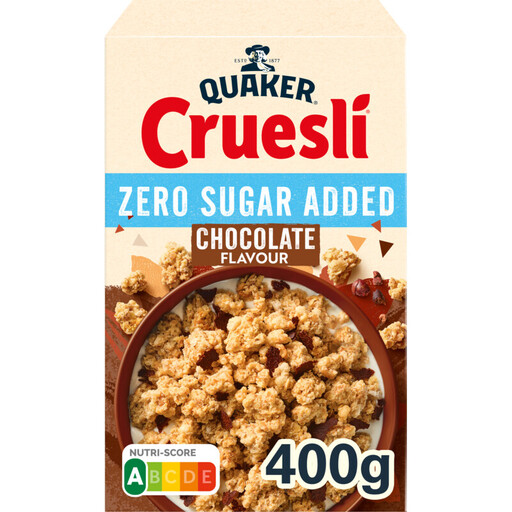 Image unavailable
A crunchy, chocolate-flavoured option for a weekday breakfast. Check the current pack for nutritional information and details of oats, wheat, milk and possible nuts. Work out the figures per 100 g based on your own portion.
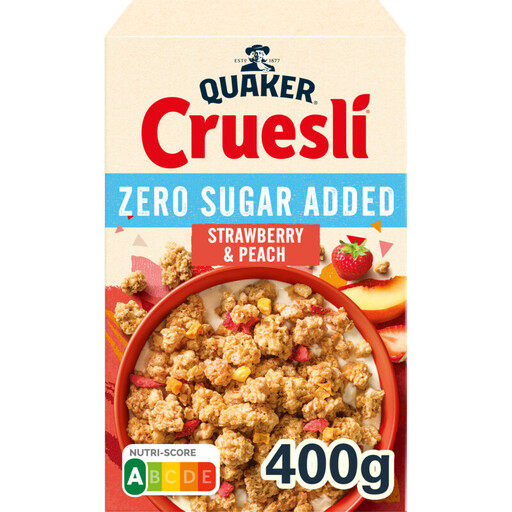 Image unavailable
A crunchy fruit option for anyone who likes muesli with milk or yoghurt. Compare the nutritional information per 100 g and check the pack for oats, wheat and possible milk or nuts. When comparing portions, use the amount you’d actually have.
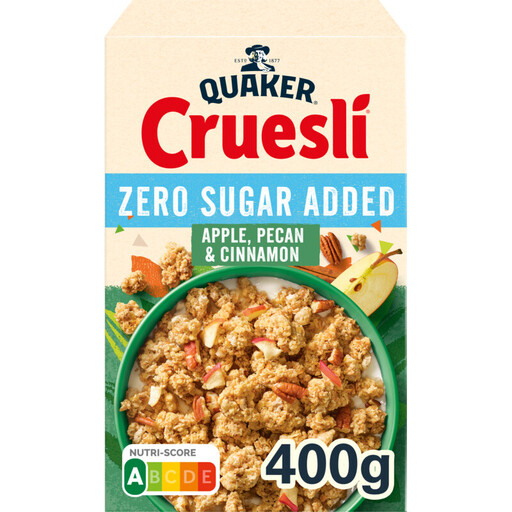 Image unavailable
A crunchy option with apple, pecan and cinnamon. Pecans are an important difference from the fruit option above, so check the current pack for full allergen information and compare the nutritional values per 100 g.
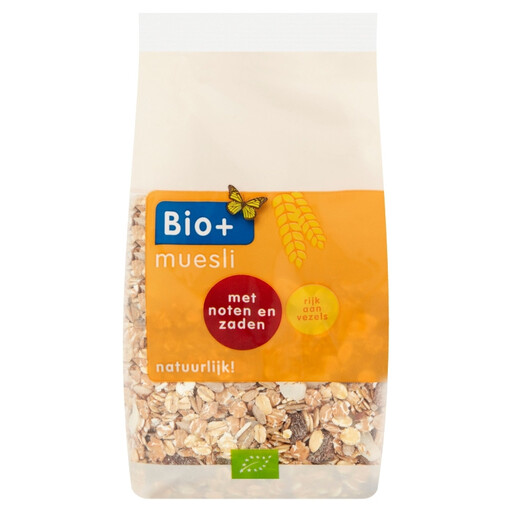 Image unavailable
For anyone looking for muesli with nuts and seeds rather than a crunchy Cruesli option. If you have an allergy, check the current pack carefully: the available ingredients information lists wheat flakes, but the accompanying allergen information differs. Compare the sugars and fibre per 100 g on the pack.
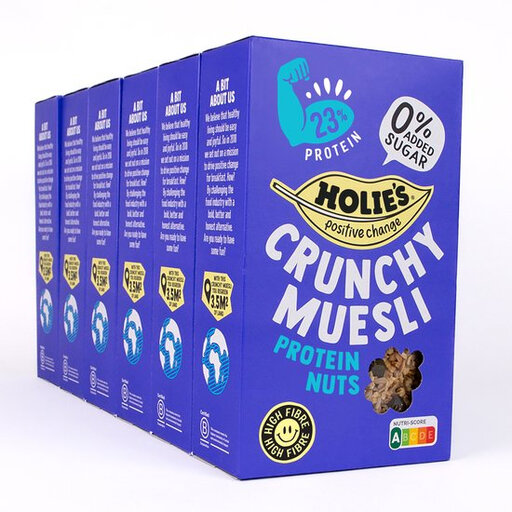 Image unavailable
An option for anyone considering crunchy muesli with nuts in a pack of 6 × 400 g. Check the nutritional information on the current pack before comparing fibre, protein or sugars with other options: the available tables for this product show different values. Check the allergen information for oats, wheat and nuts too.
Under EU Regulation (EC) No 1924/2006, the nutrition claim ‘high fibre’ requires at least 6 g of fibre per 100 g or 3 g of fibre per 100 kcal. So check the nutritional information table for your chosen muesli: ‘wholegrain’ alone doesn’t tell you whether it meets this threshold.
No. Fibre content and sugar content are separate characteristics. Albert Heijn lists 6.6 g of fibre and 9 g of added sugars per 100 g for AH Biologisch Krokante muesli naturel. Compare both figures for the option you’re thinking of buying.
Check the current ingredients and allergen information for the exact option. The European Commission sets out the rules for allergen labelling; the ingredients and warnings that matter to you will vary by product. If you have an allergy, don’t rely on the product range name.
Start with the nutritional information per 100 g, then consider how much you actually put in your bowl. Albert Heijn recommends a 40 g portion of AH Biologisch Krokante muesli naturel; don’t automatically use that amount for other options or as the size of your own portion.