
Fibre is your top priority
You mainly compare fibre per 100 g and are open to crunchy muesli, provided the other ingredients and nutritional values suit your breakfast too.


When choosing muesli for your Sunday breakfast, start by checking the fibre per 100 g, then decide whether you’d prefer a simple wholegrain base or a crunchy option. Quaker Netherlands states that Cruesli Zero Sugar Added Naturel contains 26 g of fibre per 100 g; Jumbo lists 9.5 g per 100 g for Muesli Naturel. Compare sugars, fats, energy and allergens too: fibre content alone doesn’t determine which option is right for your breakfast.
You mainly compare fibre per 100 g and are open to crunchy muesli, provided the other ingredients and nutritional values suit your breakfast too.
You want to combine plain muesli with, for example, yoghurt, milk or quark. Crunch and extra ingredients matter less to you than a simple recipe.
You like a bit of crunch and nuts with your Sunday breakfast, and compare the nutritional values per 100 g. If you have an allergy, check the latest allergen information.
Start by comparing the nutritional information per 100 g, then check the ingredients and choose a texture you enjoy.
| What to consider | What to check | Who is this most important to? |
|---|---|---|
| Fibre content | Compare the fibre per 100 g in the nutrition table. | If I mainly want plenty of fibre in my Sunday breakfast, I need to compare products using the same quantity. Fibre content would be the top priority for around 36% of consumers. |
| Simple base and sugars | Check the ingredients and total sugars; separately check whether added sugars are listed. | I’m looking for a plain base I can combine with other foods myself, and want to understand exactly what a statement about added sugars means. Around 29% of consumers would prioritise this preference for a simple base. |
| Crunch and nuts | As well as fibre, compare fats and energy per 100 g; read the ingredients and allergen information. | For a special Sunday breakfast, I’d rather choose a crunchy option with nuts or extra protein than plain muesli. Taste and texture would be the deciding factors for around 21% of consumers. |
| Availability | Check your shop’s range and the pack size of the option you choose. | I want to be able to buy muesli at the shop where I usually pick up my breakfast. Availability would matter most to around 14% of consumers. |
This statement doesn’t tell you how much fibre, fat or energy a muesli contains. For example, Quaker Netherlands lists 17 g of fat and 408 kcal per 100 g for Cruesli Zero Sugar Added Naturel.
Compare the full nutritional information per 100 g, then consider how much you actually put in your bowl.
According to Jumbo, Muesli Vier Noten contains 446 kcal and 18.3 g of fat per 100 g, compared with 348 kcal and 4.1 g of fat for Jumbo Muesli Naturel. So choosing nuts and crunch is different from choosing this plain option.
For the options you’re considering, compare fibre, energy, fats and ingredients too.
The ingredients vary between muesli products: the options discussed here may contain, among other things, cereals containing gluten or nuts. If you have a relevant allergy, make your choice based on the current packaging.
Read the ingredients list and allergen information again before buying, even if you’ve bought the product before.
Quaker offers crunchy cruesli options for people mainly looking for fibre, or who also want to compare protein content.
AH Volkoren muesli naturel is a plain wholegrain option for anyone looking for a simple breakfast base.
At Jumbo, you can compare plain muesli with a crunchy option containing nuts.
ALDI includes Golden Bridge Volkoren muesli in its breakfast cereal range.
These products suit two kinds of Sunday breakfast: crunchy cruesli or muesli with nuts and seeds. Compare the latest nutritional information and allergen details on the packaging for each option.
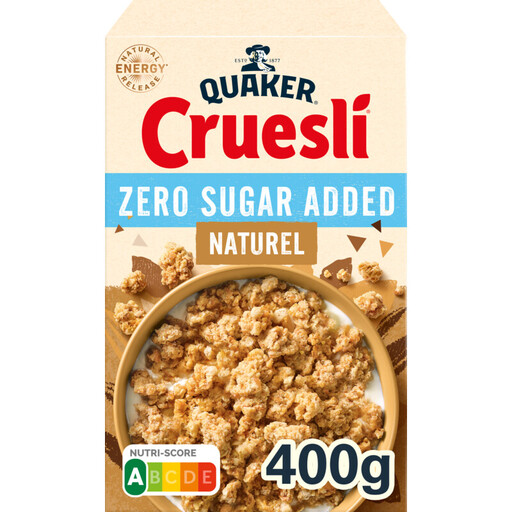 Image unavailable
A natural cruesli to consider if you’re looking for a crunchy option for Sunday breakfast. The pack contains 400 g. If you have an allergy, check the current label for oats, wheat and possible traces of milk or nuts.
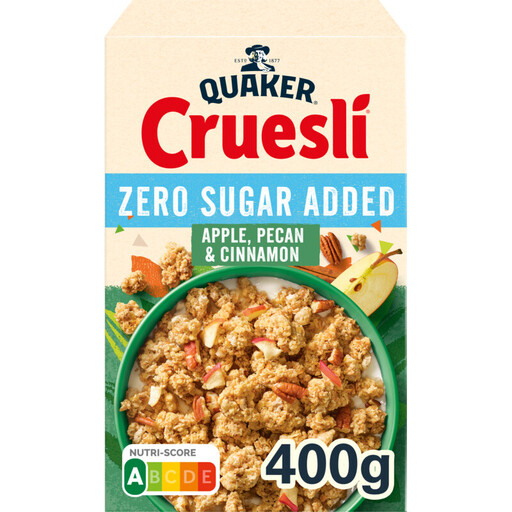 Image unavailable
A cruesli option for anyone who enjoys apple, pecan and cinnamon at breakfast. The pack contains 400 g. Check the latest ingredients and allergen information, especially if nuts or cereals containing gluten are relevant to you.
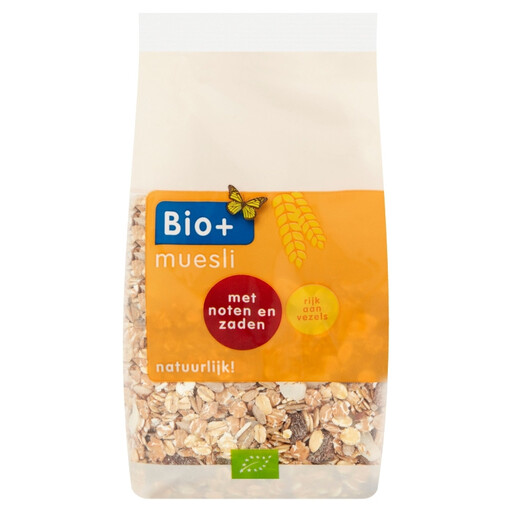 Image unavailable
A muesli to consider if you’d like nuts and seeds in your Sunday breakfast. The pack contains 450 g. Read the latest allergen information before buying, and check the ingredients too if added sugars are important to your choice.
Under European Union Regulation (EC) No 1924/2006, the ‘high fibre’ nutrition claim requires at least 6 g of fibre per 100 g or 3 g per 100 kcal. The claim alone doesn’t tell you anything about the other nutritional values, so compare the rest of the nutritional information too.
No. A statement about added sugars doesn’t determine the fibre content. Quaker Netherlands lists 26 g of fibre per 100 g for Cruesli Zero Sugar Added Naturel, but compare the fibre, total sugars and fats per 100 g for each option individually.
Before buying, read the ingredients list and allergen information on the current packaging. Muesli options can vary in their grains and nuts, so don’t assume another option from the same brand has the same ingredients.
Follow the storage instructions on the packaging and seal it properly after use. Albert Heijn and Jumbo recommend storing the plain muesli options discussed here in a cool, dry place.