When comparing muesli, start by checking the fibre and total carbohydrate content per 100 g, then consider how much you actually eat. A variety with no added sugar may suit your taste preferences, but it still contains carbohydrates. According to diabetes.nl, the amount that’s right for you varies from person to person. Also check the ingredients and allergens in the variety you choose.
Who might find this choice relevant?
People with diabetes comparing labels
You want to know how many carbohydrates your breakfast contains, so you compare the nutritional values per 100 g with the amount you actually eat. According to diabetes.nl, the right amount of carbohydrates varies from person to person.
Consumers looking to cut down on added sugars
You’re looking for muesli or cruesli with no added sugar, but you also want to check the total carbohydrates and fibre. These figures tell you more about the variety you’ve chosen than the wording on the front of the pack alone.
Fans of crunchy varieties with nuts
Taste and texture matter to you, but the ingredients and allergens also help determine which variety you can choose. If you have an allergy, check the current label, even if you’ve bought the product before.
What should you look for when choosing?
Start by comparing products per 100 g, then work out how much you’ll have in your own bowl and check the ingredients and allergen information for the variety you’re considering.
Plain wholegrain muesli
A good choice if: You’re looking for a grain-based option to which you can add your own ingredients.
Keep in mind: The word ‘wholegrain’ doesn’t tell you how much fibre or how many carbohydrates are in the portion you choose.
Crunchy cruesli with no added sugar
A good choice if: You’re looking for a crunchy variety and want to avoid added sugars.
Keep in mind: No added sugar doesn’t mean no carbohydrates. If you choose a nut variety, check the allergens too.
| What to consider |
What to check when buying |
Who it matters to |
| Fibre and carbohydrates |
Compare both values per 100 g, then work out the carbohydrates in your own portion. |
If I’m keeping track of my carbohydrates, I also want to know how much fibre the muesli I’ve chosen contains. Around 42% of consumers say this combination is their top priority. |
| Added sugars |
Read the ingredients list and compare both sugars and total carbohydrates per 100 g. |
I want to choose a less sweet, crunchy variety without losing sight of the total carbohydrates. Around 33% of consumers say this is their main consideration. |
| Ingredients and allergens |
Check the current ingredients list, allergens and any warnings about cross-contamination. |
If I have a relevant allergy, I need to be able to check whether a nut or grain variety is suitable for me. Around 25% of consumers put this check first. |
Common mistakes
-
Reading ‘no added sugar’ as ‘no carbohydrates’
According to Quaker, Cruesli Zero Sugar Added Naturel contains 44 g of carbohydrates per 100 g. So the claim about added sugars doesn’t replace the carbohydrate information.
Check the total carbohydrates per 100 g and work out how much you’ll get in the portion you eat.
-
Comparing fibre alone
Varieties can also differ in their sugar and carbohydrate content. For Quaker Cruesli 4 Nuts, Quaker lists 10 g of fibre, 57 g of carbohydrates and 12 g of sugars per 100 g.
Compare the full nutrition table for the specific products, using the same quantity each time.
-
Overlooking allergens in a nut variety
As well as nuts, a nut cruesli may contain other relevant allergens or warnings about cross-contamination. If you have an allergy, the product name alone isn’t enough to help you choose.
Check the ingredients and allergens on the current packaging every time you buy it.
-
Trusting an old product listing over the label
The information you use to compare a variety should match the pack you’re buying. Voedingscentrum explains that the nutrition table is where you’ll find values per 100 g.
Use online information to compare products, then check the label on the pack you’ve chosen before buying.
Brands to compare
Quaker (Cruesli)
Quaker lists fibre, carbohydrate and sugar values for individual Cruesli varieties. Compare the exact variety: Naturel, nut and standard Cruesli don’t have the same nutritional values.
- According to Quaker, Zero Sugar Added Naturel contains 26 g of fibre and 44 g of carbohydrates per 100 g, while Zero Sugar Added Nuts contains 24 g of fibre and 42 g of carbohydrates.
- For standard Cruesli 4 Nuts, Quaker lists 10 g of fibre, 57 g of carbohydrates and 12 g of sugars per 100 g. If you choose a nut variety, check the label for allergens too.
Albert Heijn
AH Volkoren muesli naturel is a separate muesli variety you can compare with other breakfast cereals.
- The product name makes it clear that this is a plain wholegrain variety.
- To compare fibre, carbohydrates, sugars and allergens, use the information on the specific pack.
Jumbo
Jumbo lists several different varieties, including Muesli Naturel, Muesli Noten en Zaden and Biologisch Volkoren Muesli Fruit en Noten.
- The varieties offer different ingredient combinations to compare on the label.
- Don’t assume the fibre or carbohydrate content from the variety name. Compare the nutritional information for each product separately.
Crunchy breakfast cereals on Joybuy
This selection includes five Quaker Cruesli varieties for anyone looking to compare crunchy breakfast cereals. Check the fibre, carbohydrates and your own portion for each variety. A sugar-related claim in the name doesn’t tell you how many carbohydrates you’ll eat.
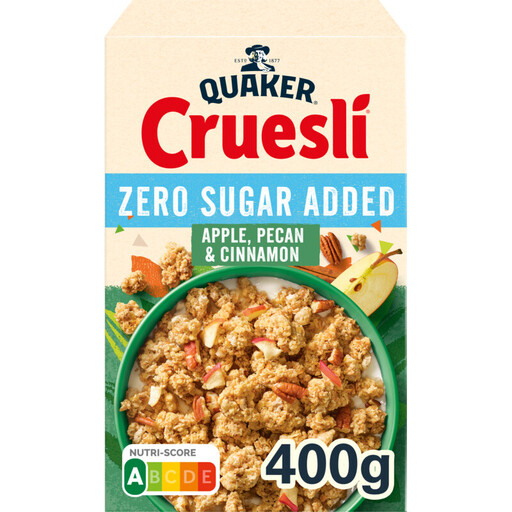 Image unavailable
Quaker Cruesli Zero Sugar Added Apple, Pecan and Cinnamon 400 g
A variety to consider if you’re looking for a crunchy breakfast cereal with apple, pecans and cinnamon. Check the nutritional information for your own portion and, if you have an allergy, read the current allergen information.
View on Joybuy
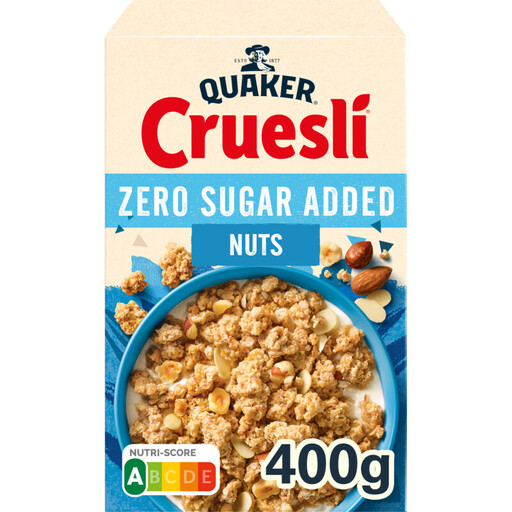 Image unavailable
Quaker Cruesli Nuts Zero Sugar 400 g
A crunchy nut variety for anyone who enjoys this flavour and can eat nuts. Compare the total carbohydrates and fibre on the label, and check the allergens before buying.
View on Joybuy
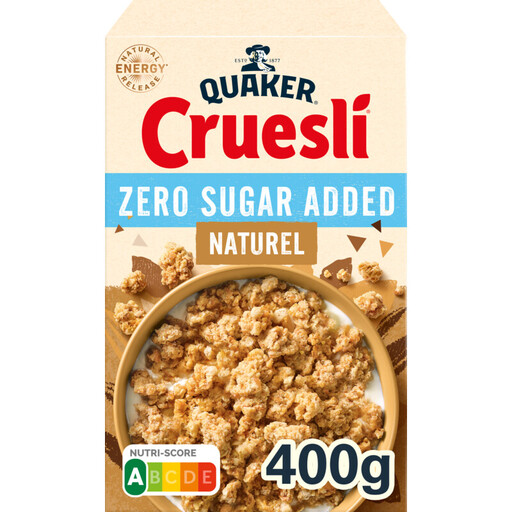 Image unavailable
Quaker Zs Cruesli Natural 400 g
A plain crunchy variety for anyone looking for a product without fruit or nuts in the name. Joybuy lists 24 g of fibre, 48 g of carbohydrates and 3.8 g of sugars per 100 g. Compare these values with your own portion and check the current label.
View on Joybuy
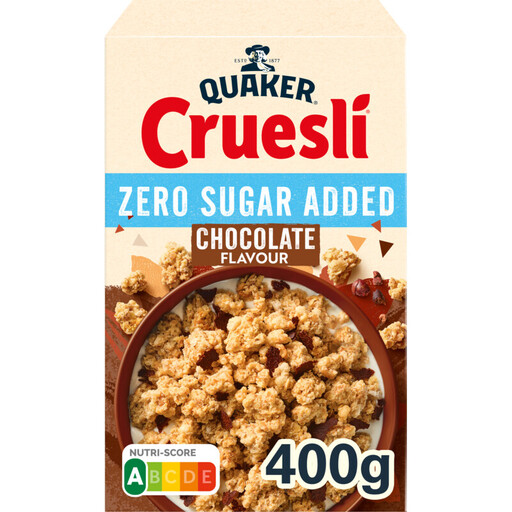 Image unavailable
Quaker Cruesli Choco Zero Sugar 400 g
A variety for anyone looking for a crunchy breakfast cereal with a chocolate flavour. Check the fibre value and its corresponding unit on the current pack, and compare the total carbohydrates per 100 g too.
View on Joybuy
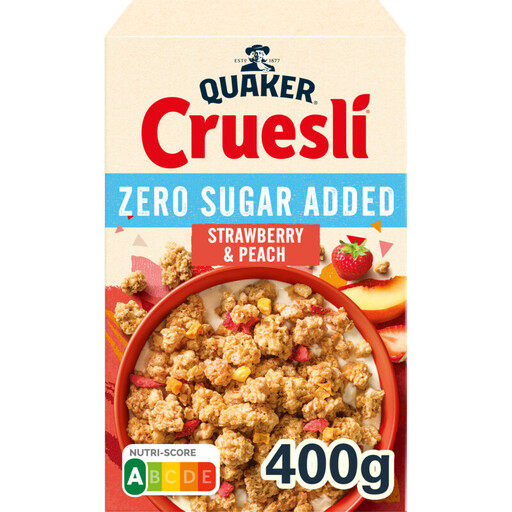 Image unavailable
Quaker Cruesli Zero Sugar Added Strawberry & Peach 400 g
A fruit variety for anyone looking for a crunchy breakfast cereal with strawberry and peach. Check whether the pack gives the fibre value per 100 g or per portion, and compare the total carbohydrates too.
View on Joybuy
Frequently asked questions
Is high-fibre muesli automatically suitable if you have diabetes?
No. Fibre is just one part of the comparison. According to diabetes.nl, carbohydrates affect blood glucose and the right amount varies from person to person. So also check the total carbohydrates in the portion you eat.
Should I still check carbohydrates when a product says ‘no added sugar’?
Yes. Quaker lists 44 g of carbohydrates per 100 g for Cruesli Zero Sugar Added Naturel. Compare the total carbohydrates on the label and work out how much is in your own portion.
How do I compare muesli and cruesli on the label?
First compare the fibre, carbohydrates and sugars per 100 g for the specific varieties. Voedingscentrum points to the nutrition table for these values. Then check the ingredients and the amount you actually use.
What should I check if I’m allergic to nuts or grains?
Check the ingredients and allergen information on the current pack of the variety you’ve chosen, including any warnings about cross-contamination. The Netherlands Food and Consumer Product Safety Authority lists 14 allergens that must be declared on the label.
How should I store an opened pack of muesli?
Store opened muesli in a cool, dry, dark place and keep it tightly sealed. Voedingscentrum recommends this way of storing muesli; also follow the instructions on your product’s packaging.


