What should you look for when choosing?
Start by checking for a gluten-free label, even if the ingredients list looks suitable at first glance. Then compare the fibre content per 100 g, followed by flavour, sugar and other allergens.
| What to check |
What to look for when buying |
Who it matters to |
| Gluten-free status and oats |
Look for an explicit gluten-free label, and if the product contains oats, check that they’re labelled gluten-free. The Dutch Coeliac Society explains that gluten-free means less than 20 mg of gluten per kg of product. |
When I’m buying muesli for someone with coeliac disease, I don’t want to rely on the fibre content if there’s no gluten-free label. For around 50% of shoppers, this reassurance is their first purchasing priority. |
| Fibre per serving |
Compare the fibre content per 100 g, then consider your serving size. According to the European Union, a product can be described as ‘high fibre’ if it contains at least 6 g of fibre per 100 g or 3 g per 100 kcal. |
For my everyday breakfast, I want to know how much fibre a typical serving provides, not just what the packaging claims. Around 30% of shoppers focus most on fibre content when choosing a gluten-free option. |
| Flavour and other ingredients |
For fruit muesli and crunchy varieties, check the sugar and fat content per 100 g, along with the ingredients and allergens. A statement about no added sugar says nothing about gluten. |
I’m looking for fruit or a crunchy texture, but I also want to check that the sugar and allergens suit my needs. For around 20% of shoppers, this is the main consideration once they’ve established that a product is gluten-free. |
Brands and product ranges to consider
The details below apply to the specific varieties mentioned, not every product from each brand. Always check the label on the pack you’ve chosen before buying.
AH Glutenvrij
Albert Heijn describes a muesli in its gluten-free range made with gluten-free wholegrain oats, soya and buckwheat.
- According to Albert Heijn, AH Glutenvrij Muesli is made in a completely gluten-free environment.
- For this variety, check the current packaging for information about soya, oats and possible traces of nuts.
Consenza
Consenza makes a gluten-free fruit muesli for anyone who likes dried fruit in their muesli.
- Jumbo lists the Crossed Grain symbol and 7,2 g of fibre per 100 g for Glutenvrije Bio Rijkgevulde Fruitmuesli.
- The same product information lists 15 g of sugar per 100 g, so compare this figure if sugar is a factor in your choice.
Zonnatura
According to Albert Heijn, Muesli appel kaneel glutenvrij combines gluten-free wholegrain oats with ingredients including rice, buckwheat and linseed.
- Albert Heijn lists 9,9 g of fibre per 100 g for this variety.
- When buying, check that this specific variety is available and read the pack label.
Leev
Leev Bio Muesli Fruit Flakes Glutenvrij is a fruity muesli variety described by Jumbo.
- Jumbo lists 5,7 g of fibre per 100 g for this variety.
- Jumbo also lists 30,3 g of sugar per 100 g. Check availability and the latest nutritional information when buying.
Quaker Cruesli
Quaker makes crunchy oat products, but the details of one granola variety don’t apply to the whole range.
- Quaker lists 22 g of fibre per 100 g for Cruesli Zero Sugar Added Granola Naturel.
- According to Quaker, this specific variety may contain barley and wheat. Don’t choose it as a gluten-free muesli if you have coeliac disease.
Crunchy granola at Joybuy
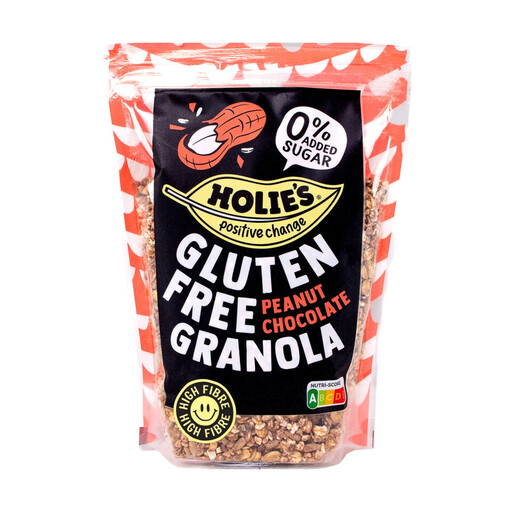
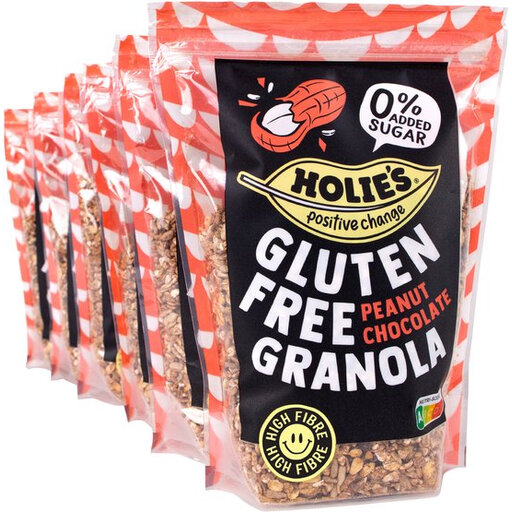
These two offers are for Holie's Peanut Chocolate granola in different pack sizes. Granola is a crunchy alternative to muesli, not an equivalent product category. If you have coeliac disease, check the gluten-free label on the packaging and compare the nutritional information for the variety you choose.
 No image available
Holie's Granola Glutenfree Peanut Chocolate, 330 g
A crunchy breakfast option with peanuts and chocolate. The product name says gluten-free; before choosing this granola, check the current packaging for that label, allergens and fibre per 100 g.
View at Joybuy
 No image available
Holie's Granola Glutenfree Peanut Chocolate, 6 × 330 g
For anyone who’d like to buy the same crunchy flavour in a pack of six 330 g bags. The product name says gluten-free; for this multipack too, check the current packaging for the gluten-free label, allergens and fibre per 100 g.
View at Joybuy
Frequently asked questions
Are regular oat muesli or Cruesli automatically suitable for coeliac disease?
No. Check that the specific product is explicitly labelled gluten-free. The Dutch Coeliac Society warns that oats can come into contact with gluten-containing grains during production; a high fibre content doesn’t change that.
When can muesli be called ‘high fibre’?
According to the European Union, a product can be described as ‘high fibre’ if it contains at least 6 g of fibre per 100 g or at least 3 g per 100 kcal. Also check the serving size to see how much fibre you’ll get from your own portion.
How should I check the oats in gluten-free muesli?
If you have coeliac disease, choose muesli that’s explicitly labelled gluten-free and check that the oats are described as gluten-free. According to the Dutch Coeliac Society, most people with coeliac disease tolerate pure, gluten-free oats, but a small number react to them too. If you’re unsure or your symptoms persist, speak to your healthcare professional.
Does ‘no added sugar’ also mean gluten-free?
No. A statement about added sugar says nothing about gluten. Quaker warns that Cruesli Zero Sugar Added Granola Naturel may contain barley and wheat, so if you have coeliac disease, always check separately for a gluten-free label.
Should I still read the muesli packaging after buying online?
Yes. Before using it, check the gluten-free label, allergens and nutritional information on the packaging you receive. Albert Heijn notes that ingredients and product information can change, so a product page you viewed earlier isn’t a substitute for checking the current label.


