
Anyone who wants to make hot porridge quickly
Fine flakes or instant portions are handy when you don’t want to spend long cooking coarse oats. Check how much liquid the product needs and how it should be prepared.


Choose fine or instant oats when you want to make soft porridge quickly, and compare the fibre per 100 g, ingredients and preparation instructions before choosing a product. If you need a prescribed consistency because of chewing or swallowing difficulties, soft porridge alone isn’t enough: follow your personalised care advice and check the prepared texture in the conditions in which it will be served.
Fine flakes or instant portions are handy when you don’t want to spend long cooking coarse oats. Check how much liquid the product needs and how it should be prepared.
Compare the fibre content per 100 g of the dry product and check whether the pack lists only oats or includes other ingredients too. The nutritional value of prepared porridge can depend on what you add.
Ordinary soft porridge is different from food with a personally prescribed consistency. According to Amsterdam UMC and the International Dysphagia Diet Standardisation Initiative (IDDSI), if you have swallowing difficulties, the appropriate texture must match your individual advice and the conditions in which the food is served.
First decide what texture you need. Then compare the preparation method, label and pack format. A shorter cooking time or a fixed portion won’t, on its own, tell you what the final consistency will be.
| What to consider | What to check when buying | Who it matters to |
|---|---|---|
| Suitable texture | Check whether the flakes are fine and how the porridge should be prepared. If you have a prescribed consistency, follow your personalised IDDSI advice. | If chewing is difficult, I want to know whether I can prepare the porridge to a texture that suits my needs. For around 36% of consumers, this texture requirement comes first. |
| Easy preparation | Compare the preparation method, stated time and amount of liquid needed; a sachet saves you measuring out a portion. | When I have little time to prepare a hot meal, I want something that fits into my mealtime. Around 29% of consumers put convenience first. |
| Fibre and ingredients | Compare the fibre per 100 g of the dry product and read the ingredients list, including for varieties with added ingredients. | I want to choose an oat product whose ingredients are easy to compare. For around 21% of consumers, this label information matters most. |
| Packaging and portions | Consider whether individual sachets or a larger pack better suit how often you make porridge and whether you want to measure it out yourself. | If I make porridge regularly, I want to choose how much I use each time. Portion flexibility comes first for around 14% of consumers. |
Fine flakes don’t guarantee that the prepared porridge will meet an individually prescribed consistency. Pieces and changes between preparation and serving can also matter.
If you have a prescribed swallowing diet, follow your healthcare professional’s advice. IDDSI recommends assessing the texture in the conditions in which the food will actually be served.
According to the Voedingscentrum, ordinary oats are not necessarily suitable for people with coeliac disease. Packaging may also carry warnings about other cereals containing gluten.
If you have coeliac disease, check the current packaging for the official Crossed Grain symbol and read the ingredients and allergen information.
A protein variety may contain soya protein, while a breakfast drink may have a different ingredients list from plain oats. These products aren’t interchangeable just because they contain oats.
Read the ingredients list and nutritional information for the specific variety. If a simple ingredients list is essential to your choice, look for a product made from oat flakes alone.
Oats Express Naturel is an option if you’re looking for instant oats in individual portions. Albert Heijn’s product listing names wholegrain oats and a two-minute preparation time; Quaker also has a separate Protein variety.
According to Albert Heijn’s product listing, Brinta Havermout is made from extra-fine oat flakes for porridge that’s quick to prepare. Brinta Wake Up! is a separate breakfast drink, not another name for plain oats.
ALDI Netherlands lists Golden Bridge fine wholegrain oats in a 500 g pack. This is an option if you prefer measuring out your own portions rather than using individual instant sachets.
These products include a finer oat base, an Express variety and a variety with added soya protein. First choose the ingredients that suit your meal, then assess the prepared texture separately.
 Image unavailable
For anyone who wants to use fine oat flakes to control the thickness of their hot porridge.
The Joybuy listing states that it contains 100% oat flakes and 9.7 g of fibre per 100 g. According to Albert Heijn’s product listing, the flakes are extra fine.
If you have relevant allergies, check the current packaging: the product information lists oats and notes that traces of wheat and rye may be present. If you have a prescribed swallowing consistency, the prepared porridge needs to be assessed separately.
 Image unavailable
For anyone looking for an Express oat variety for a quick meal.
The pack contains 324 g. Before buying, check the exact variety and the ingredients, fibre per 100 g and allergen information on the current product packaging.
If you want a soft texture, assess the porridge after preparation; the product name doesn’t confirm a prescribed swallowing consistency.
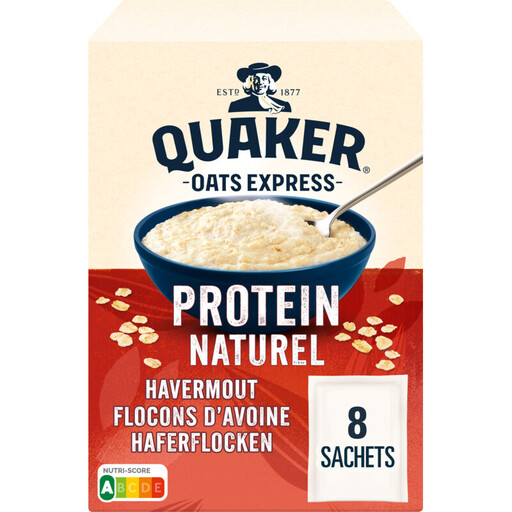 Image unavailable
For anyone who wants to compare oats with a variety that specifically contains added soya protein.
The Joybuy listing states that it contains 7.2 g of fibre and 22 g of protein per 100 g; the ingredients include 15% soya protein.
This variety isn’t suitable if you avoid soya. Check the current label if wheat or barley matters to you, and only assess any prescribed food texture after preparation, in line with your personalised care advice.
Not automatically: fine flakes or soft porridge don’t confirm that the consistency is right for you. According to Amsterdam UMC, food must match the prescribed IDDSI level; IDDSI recommends assessing the texture in the conditions in which the porridge will be served.
Fine oats can be a practical base for porridge when you want to choose the preparation method and amount of liquid yourself. The final texture depends on how you prepare it; if you have a prescribed consistency, your personalised care advice takes precedence.
Read the current ingredients and allergen information for the specific variety. According to the Voedingscentrum, ordinary oats are not necessarily suitable for people with coeliac disease; if you have coeliac disease, also check whether the pack carries the official Crossed Grain symbol. Quaker Oats Express Naturel and Brinta Havermout also state that other cereals may be present.